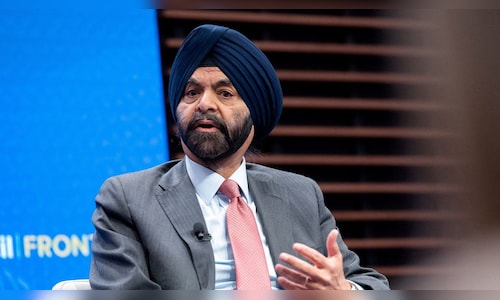
During his address at the ATX Singapore 2026 technology summit on Thursday, Banga shared an instance of a farmer in India’s Uttar Pradesh using an old mobile phone to send a photo of a sick crop leaf, receiving diagnosis and treatment guidance from local agricultural experts.
He also pointed out how a nurse in Indonesia could send a photo of a rash to a network of clinics utilizing a localized diagnostic model via basic internet or older mobile connections.
These practical applications of AI are often overlooked, Banga remarked to approximately 4,000 attendees from 50 countries gathered at the summit in Singapore from May 20-22.
Also Read: US H-1B visa registrations plunge 38% as government tightens regulations and prioritizes high-wage applicants
He emphasized that affordable local technology can serve as a positive force and present significant opportunities for emerging markets when implemented in rural areas.
Saurav Mukherjee, a technology entrepreneur from Singapore, noted that the adoption of AI is set to extend beyond manufacturing and services into agriculture and food production, emphasizing that expensive technology is not always necessary.
Farmers, he stated, could leverage AI tools to evaluate seed quality prior to planting, and gain access to vital information regarding weather patterns, soil conditions, rainfall, and water availability.
Mukherjee also indicated that patients in remote villages can utilize basic mobile technology to communicate symptoms with nurses or local clinics, facilitating initial contact for treatment. “Why not establish such connections for the benefit of the less privileged?” he proposed, highlighting the rapid expansion of internet connectivity across India and the reach of 5G services into remote areas.
He cautioned that while advanced technologies are drawing significant investments globally, a lack of skilled workforce could emerge as an obstacle to AI adoption. “There are no alternatives, as AI enhances efficiency and productivity in businesses, which are increasingly integrating it into their daily operations,” said Mukherjee, founder of Singapore-based ORCA Media.
He urged governments to take a more proactive stance on funding technology adoption and devising incentives for private sector investment.