This escalation has sparked concerns regarding global oil availability, maritime security, and commercial trade routes. For India, which relies heavily on crude oil imports via the Strait of Hormuz, these developments are of particular importance. Following an attack on a commercial vessel, one Indian national is missing, while 10 others were successfully rescued.
Despite the increasing military tensions, former diplomat Ashok Sajjanhar and ex-Foreign Secretary Shashank contend that the current situation is unlikely to devolve into an all-out war. They believe both nations are focused on showcasing military might while simultaneously steering clear of a conflict that could be detrimental to both.
Why do experts believe an all-out war is unlikely?
Sajjanhar points out that both Washington and Tehran have compelling reasons to prevent the situation from escalating beyond limited military operations.
“Regarding the attacks, an accidental escalation could certainly happen,” Sajjanhar noted. “However, I think both parties will be eager to ensure the situation remains under control… and that it does not escalate into a full-scale conflict or war.”
He believes both nations acknowledge the economic, political, and military repercussions of a prolonged regional dispute. Targeted strikes may persist, but neither side appears inclined to initiate a prolonged war.
Shashank echoed a similar perspective, characterizing the current phase as one of measured military pressure rather than preparations for an all-out conflict.
“I believe the confrontation will continue, but it is not a full-scale war,” he said. “There are limits since the MOU… is still in place.”
Why is the Strait of Hormuz so important?
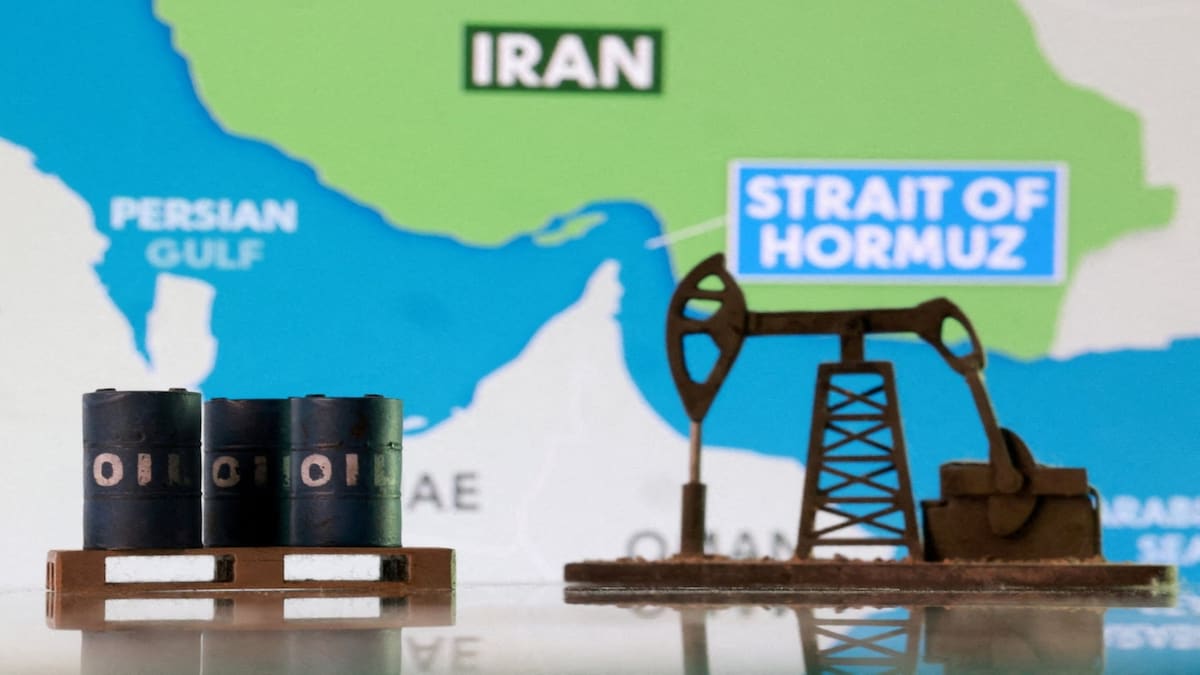
A significant reason this latest confrontation has garnered global attention is the Strait of Hormuz, one of the world’s most strategically critical maritime chokepoints.
Approximately one-fifth of the global seaborne crude oil supply passes through this narrow passage, making any disruption a potential threat to global energy markets. Countries like India, China, Japan, and South Korea depend heavily on oil shipments navigating the Strait.
Sajjanhar indicated that Iran’s recent maneuvers suggest it is striving to exert more control over transit through the waterway. Nonetheless, he emphasized that the Strait is part of the global commons according to international law and that freedom of navigation must be safeguarded.
He asserted that the United States views assaults on commercial vessels as crossing a crucial threshold, warranting military action to uphold the principle of unrestricted maritime navigation.
The disruption is already impacting shipping activities. As reported by shipping analytics company Kpler, only six tankers traversed the Strait during the latest tracking period, the lowest count in five weeks, reflecting increasing caution among shipping operators.
Is military pressure replacing diplomacy?
Experts do not believe that diplomacy has been entirely sidelined. Rather, they argue that military action is being employed to enhance each nation’s negotiating leverage.
Shashank noted that Washington aims to negotiate any future agreement with Tehran from a position of strength. Meanwhile, Iran is illustrating its capability to impose costs on the United States and its allies without triggering a full-scale conflict.
From their perspective, both nations are focused on building leverage for upcoming negotiations rather than aiming for a decisive military triumph.
Why does the interim MOU matter?
Both experts emphasized the significance of the interim memorandum of understanding (MOU) as a crucial factor in keeping the conflict contained.
Even with ongoing military exchanges, neither Washington nor Tehran has formally abandoned the framework that allows for diplomatic engagement.
Sajjanhar argued that the current arrangement predominantly favors Iran, offering Tehran little reason to disengage.
“The entire world has observed that this 14-point MOU is heavily weighted in Iran’s favor,” he said. “Iran will avoid crossing the red line by nullifying the MOU because it has benefited too much from it.”
Shashank similarly noted that the agreement continues to impose practical constraints on how far either side is prepared to escalate, despite ongoing military strikes.
Why doesn’t the US want another prolonged war?
According to Sajjanhar, Washington has also learned from past confrontations with Iran.
He argued that, despite its military superiority, the United States struggled to achieve its strategic objectives through outright military intervention.
“The United States has recognized that it cannot fulfill its objectives through an all-out war against Iran,” Sajjanhar stated.
Instead, he believes Washington will likely depend on a mix of military deterrence, economic sanctions, and diplomacy to avoid becoming embroiled in another protracted regional conflict.
What does this mean for India and global markets?
For India, the immediate concern is centered on securing energy supplies and commercial shipping through the Strait of Hormuz. Any long-term disruption could lead to increased crude oil prices, elevate freight and insurance costs, and contribute to imported inflation.
Global markets are anticipated to remain responsive to developments in the region. Oil prices, shipping rates, and investor confidence may continue to fluctuate as long as military exchanges take place.
However, if the experts’ evaluations hold true, the volatility may stem from intermittent military strikes and geopolitical uncertainties rather than from the sustained disruptions associated with a full-scale regional war.
For the moment, Sajjanhar and Shashank believe that both the United States and Iran are striving to maintain a delicate balance between military signaling and strategic restraint. While tensions are expected to stay elevated, they argue that neither side seems inclined to cross the threshold into an all-out conflict, recognizing that the economic and geopolitical repercussions would far outweigh any potential benefits.