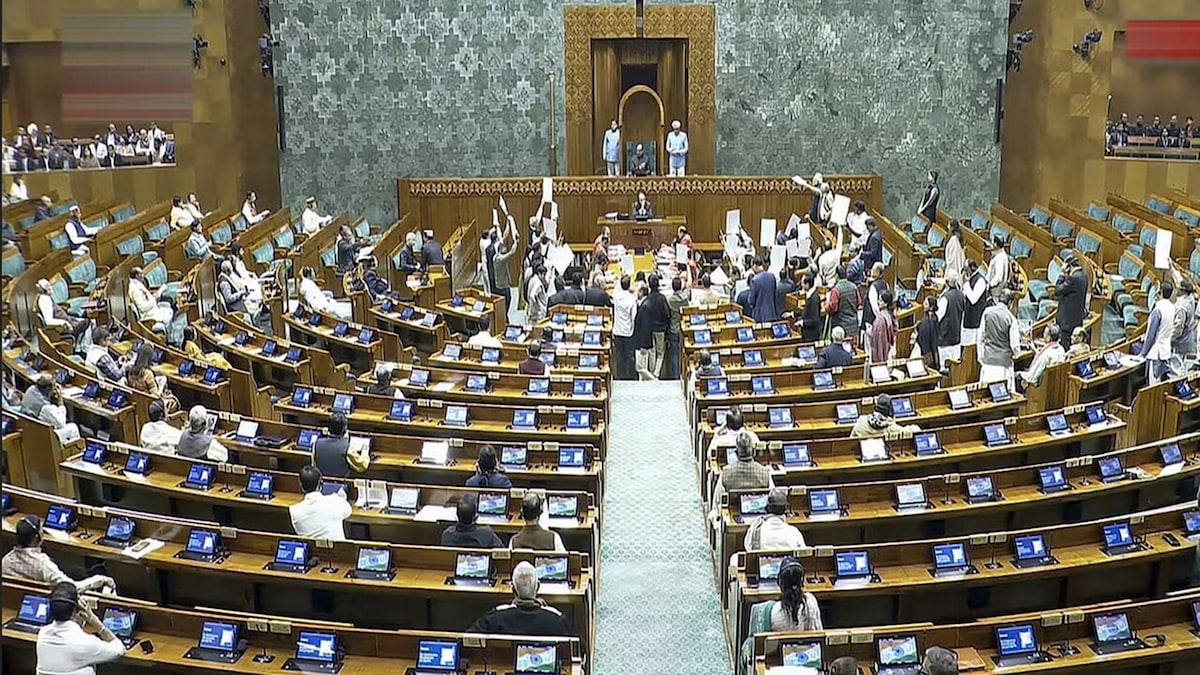
While these matters are poised to steer the political dialogue, a more significant struggle may unfold within the House itself — in terms of numbers.
Senior journalist Sanjeev Srivastava notes that the central issue likely to dictate the government’s success in this session revolves around its ability to secure the votes necessary to advance its legislative agenda.
“The pressing question is about the numbers,” Srivastava remarked in an interview with CNBC-TV18.
This question becomes critical if the government attempts to push constitutional amendments, which demand a higher level of support compared to standard legislation.
Importance of the numbers
It’s unlikely that the government and the Opposition will agree on the pressing political matters during this session.
The Opposition is anticipated to persist in raising issues such as the alleged examination paper leaks, ongoing student protests at Jantar Mantar, and the alleged theft of donations from the Ram Mandir Trust.
Conversely, the government is focused on its legislative objectives.
The distinction between political strife and legislative success will depend on the government’s ability to obtain the necessary votes for its proposed Bills.
Srivastava speculates that the BJP may aim for the “magical number” needed to secure a two-thirds majority in relevant voting scenarios.
This becomes particularly crucial if the government intends to advance constitutional amendment Bills. Article 368 specifies that such legislation requires both a majority of the total membership of each House and a two-thirds majority of members present and voting. Additionally, some amendments necessitate ratification by at least half of the state legislatures.
Therefore, the specific numbers could determine the government’s capacity to proceed with its ambitious legislative plans.
“Until then, both the Opposition and the government will be engaged in a kind of shadow boxing over various matters,” Srivastava noted.
In simpler terms, while protests and political confrontations are expected to persist, the real challenge may arise as the government attempts to translate its legislative intentions into actual votes on the Parliament floor.
What if the government secures the numbers?
Should the government attain the necessary support, protests and disruptions might not hinder its progress on the legislative front.
Potential Bills needing attention may include those related to women’s reservation and the One Nation, One Election initiative, according to Srivastava.
The key takeaway is that the level of political opposition does not always correlate with the government’s effectiveness in passing legislation.
A session can be tumultuous, marked by protests and political clashes, yet still yield productive legislative outcomes if the government possesses the requisite numbers to advance its Bills.
“If the government has the votes to pass constitutional amendment Bills, then regardless of how tumultuous this session may be, it will successfully implement its legislative agenda as desired,” Srivastava asserted.
This highlights that the numbers may hold more significance than the volume of protests regarding the government’s capacity to fulfill its legislative objectives.
What if the government falls short?
On the other hand, failing to achieve the required numbers for its constitutional amendment initiatives could yield a markedly different result.
The Opposition could gain substantial leverage to block, delay, or complicate the passage of legislation.
Simultaneously, Srivastava conveys that the government has demonstrated limited interest in meaningful engagement with the Opposition thus far.
This dynamic might contribute to challenges in effectively managing the session.
The Opposition can persist in highlighting contentious issues, while the government may struggle to build consensus necessary for advancing critical legislation.
“If they do not secure the right numbers, if they continue to fall short, this session is likely to devolve into chaos and noise,” Srivastava cautioned.
The numbers game could therefore lead to two distinct outcomes.
The session could be factionally noisy but legislatively fruitful if the government possesses the necessary votes.
Alternatively, it might be politically noisy and largely unproductive if the government lacks the numbers and both sides fail to establish common ground.
Significance of the Opposition’s protests
The emphasis on numbers does not render the Opposition’s protests insignificant.
The alleged NEET paper leak has emerged as a critical political concern, with Opposition leaders asserting that the futures of countless students are at stake. Mallikarjun Kharge, the Leader of the Opposition in the Rajya Sabha, brought up the examination controversy and demanded discussions on the matter.
The Opposition also aims to spotlight the alleged theft of donations from the Ram Mandir Trust.
Such issues have the potential to shape public sentiment, exert pressure on the government, and influence the political climate within Parliament.
They may also disrupt House operations if disagreements lead to recurring interruptions and adjournments.
However, Srivastava suggests that while these matters will remain in the political arena, the legislative outcome hinges on a separate question: whether the government can garner the votes necessary to enact its desired legislation.
This distinction lies at the core of the session.
Protests can influence the political narrative, but numbers are crucial for legislative outcomes.
Could economic reforms shift dynamics?
There may still be opportunities for collaboration between the government and the Opposition.
Prime Minister Narendra Modi, in his statements prior to the session, emphasized the importance of constructive discussions and underscored the resilience of the Indian economy amidst disruptions from the conflict in West Asia.
This could bring economic matters, such as taxation and financial reforms, to the forefront of discussions.
Srivastava mentions that these could provide a platform for cooperation, assuming both sides are willing to engage in dialogue.
“If the Opposition introduces appealing measures related to tax or financial reforms and involves the government in the conversation, it could prove less contentious than other issues like the delimitation Bill,” he suggested.
However, even potentially agreeable economic legislation is likely to be influenced by the overarching political climate.
As Srivastava aptly stated:
“At its core, everything revolves around politics.”
This could be particularly significant in a session where the government may possess the votes to pass certain legislation but still requires political engagement to garner broader support for more contentious initiatives.
Education reform as a litmus test for the government’s approach
Education reform may represent another area where the government can illustrate its willingness to combine legislative action with broader consultation.
India necessitates a more robust education system, especially as concerns linger regarding learning outcomes in government schools and the overall effectiveness of the examination framework.
Recent protests concerning alleged examination anomalies have also spotlighted issues of accountability and institutional reform in political discussions.
Srivastava posits that a comprehensive education reform Bill addressing the concerns of students, activists, and the Opposition might attract broader support.
However, this would require engaging with various stakeholders.
Consequently, education reform could serve as a test of the government’s larger political strategy during this session: whether it will primarily rely on its numbers to push through legislation or seek to develop a wider consensus on matters impacting millions of students.
What will ultimately shape Parliament’s Monsoon Session?
The immediate political narrative is likely to be influenced by protests surrounding examination leaks, student demands, and other divisive issues.
The Opposition will aim to leverage these issues to pressure the government, while the latter seeks to move forward with its legislative agenda.
Ultimately, the outcome may hinge on a fundamental parliamentary inquiry:
Does the government hold the numbers necessary to pass its intended legislation?
If it does, the government could still advance significant legislative and constitutional measures, even in the face of a tumultuous session.
If not, the Opposition may gain more leverage, complicating the government’s efforts to proceed without negotiations.
This underscores why the numbers game could overshadow protests in determining the legislative efficacy of the Monsoon Session.
While protests may drive headlines, the numbers will dictate what ultimately becomes law.