The intensity of polls
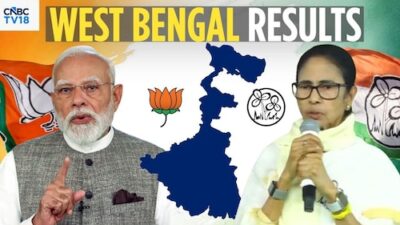
The Election Commission’s Special Intensive Revision (SIR) of electoral rolls resulted in substantial removals of ‘disqualified and deceased’ voters, particularly within districts such as Murshidabad and Malda. Home Minister Amit Shah led a vigorous campaign for the BJP, emphasizing development, governance reforms, and commitments like enhanced women’s welfare through initiatives such as Annapurna Bhandar.
In contrast, Mamata Banerjee, the TMC chief and long-serving Chief Minister, faced one of her most challenging contests. Her party relied on established welfare programs, such as Lakshmir Bhandar, and attempted to frame the election around safeguarding Bengal’s unique identity against perceived central interference.
However, the results expose underlying currents. Long-term incumbency fostered complacency within the TMC, where voter bases were presumed secure. Anti-incumbency driven by issues like law and order, scandals such as Sandeshkhali, and economic discontent proved more potent than traditional allegiances. A subtle shift among voters, overlooked by many analysts, spanned from rural areas to urban centers. Hindu consolidation, coupled with fragmentation in other communities, amplified the BJP’s gains. This was not solely a campaign victory but a verdict on governance, aspirations, and the limits of narrative control. West Bengal demonstrated that no political stronghold is invulnerable when voters prioritize change.
The myth of an indispensable face
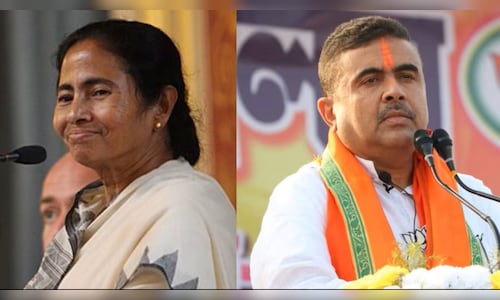
Mamata Banerjee remains a prominent figure in Bengal politics, with deep personal popularity cultivated over decades. Yet her performance in Bhabanipur, her traditional bastion, revealed vulnerabilities. Initial trends indicated she was trailing Suvendu Adhikari of the BJP before she regained the lead in subsequent counts, highlighting the contest’s closeness even in her own domain.
In contrast, the BJP entered the arena without a singular charismatic regional figure akin to Banerjee. Instead, it presented a collective leadership, with Prime Minister Narendra Modi and Amit Shah heralding the message of “Paribartan” (change). Suvendu Adhikari emerged as a significant campaign figure and potential chief ministerial candidate, leveraging his organizational skills and local appeal following his defection from TMC. This strategy proved impactful. In 2021, the BJP had reached 77 seats without a dominating presence; by 2026, heightened organizational depth and booth-level management secured the breakthrough.
This reflects trends seen elsewhere, such as in Delhi in 2025, where Arvind Kejriwal’s personal popularity faced challenges despite his arrest. Strong individual leaders facilitate mobilization, but they cannot replace a coherent strategy addressing governance failures. The BJP’s success illustrates that voters respond to promises of development, safety, and systemic change over personality cults when anti-incumbency peaks.
Banerjee’s personal brand could not shield her party from widespread discontent over unemployment, corruption allegations, and perceived appeasement politics.
Muslim vote bank cannot be taken for granted
Since 2011, the TMC had primarily secured Muslim support, constituting about 27% of West Bengal’s population, especially in border districts. This bloc voting yielded significant majorities in areas like Murshidabad (where Muslims comprise nearly 67%) and Malda. In 2021, the TMC dominated almost all Muslim-majority seats.
In 2026, that consolidation fractured. Voter roll revisions through SIR eliminated notable names in these regions—over 4.5 lakh in Murshidabad and 2.3 lakh in Malda—altering demographics and sparking debates over disenfranchisement. More critically, Muslim votes splintered across TMC, Congress, Left, and smaller entities like the AIMIM-backed alliances. This division paved the way for BJP inroads.
Trends indicated BJP leading in about 12 Muslim-majority constituencies, a significant jump from nearly zero in 2021. In Malda and Murshidabad, the party made noteworthy gains where Hindu consolidation merged with divided minority votes. Suvendu Adhikari underscored this “bifurcation,” noting a drop in TMC’s consolidation to 90-95% in these districts. Economic grievances, including concerns over Waqf issues and migration, coupled with anti-incumbency sentiments, fueled the shift. While TMC retained many seats, the erosion—losing ground in 9-12 critical ones—proved crucial in tipping the overall result.
Women voters seek more than welfare handouts
Women played a critical role in TMC’s achievements, with initiatives like Lakshmir Bhandar providing monthly transfers (increased to ₹1,500 for general and ₹1,700 for SC/ST categories) benefiting over 2 crore recipients. Programs like Kanyashree further solidified female support.
However, 2026 revealed limitations. Exit trends and results indicated a shift, with estimates suggesting a 10% swing toward BJP among women. While cash transfers provided immediate aid, voters balanced them against wider concerns: safety, law and order, education, and employment. Scandals involving violence against women heightened perceptions of governance failures. BJP’s counter-promises, including increased stipends via Annapurna Bhandar (up to ₹3,000) and a focus on security, resonated.
Women proved pragmatic, aspiring for more than doles. Urban and semi-urban female voters, in particular, emphasized stability and future opportunities for their families. This demographic, nearly half the electorate with high turnout rates, conveyed a clear message: welfare alone cannot sustain loyalty without effective governance. TMC’s reliance on “revdi” politics faltered against the BJP’s comprehensive approach.
Elections demand substance, not just event management
TMC, with support from I-PAC, invested significantly in narrative control, media management, and event-driven campaigns. The consultancy shaped messaging around welfare and Bengal’s pride but faced disruptions due to legal challenges and ED actions in early 2026, necessitating operational halts.
This strategy treated elections as a spectacle—managing appearances while minimizing ground realities like unemployment and crime. Voters recognized this. Core issues—anti-incumbency after 15 years, inflation, and governance lapses—overshadowed polished narratives. High voter turnout reflected a pent-up demand for accountability.
BJP’s robust ground strategy, booth management, and direct engagement through Modi and Shah rallies proved superior. While technology and data played a role, it was the substance of development and change that triumphed. Elections rely on delivery and trust, not mere perceptions. TMC’s approach temporarily diverted attention but could not obscure deeper issues.
The BJP’s historic victory in Bengal resets the state’s political landscape. It underscores that incumbency has limits, voting blocs can shift, and a genuine change is rewarded by voters. As the party prepares to govern, the real challenge begins: transforming this mandate into inclusive development. For opposition parties, including TMC, reflection on complacency and narrative missteps is essential. Bengal’s “Paribartan” is complete—for now.
—The author, Sayantan Ghosh, is a political observer and author of two books, Battleground Bengal and The Aam Aadmi Party. The views are personal.