This voter pattern underscores a growing religious polarization in the officially secular nation, alongside the significant ideological rift between the two largest political parties in India, as noted by analysts and commentators.
Modi came to power in 2014 on a clearly pro-Hindu platform, with his Bharatiya Janata Party largely adhering to a Hindu-centric ideology known as Hindutva. Such voter division aids in reinforcing its dominance nationwide, as Hindus make up nearly 80% of India’s population of 1.42 billion, versus around 14% for Muslims.
“The ascent of the BJP has led to a consolidation of Muslim support for so-called secular parties, particularly the Congress – a process of reverse polarization is occurring,” remarked political analyst Rasheed Kidwai, a visiting fellow at the Observer Research Foundation.
Muslim leaders and analysts indicate that voters from this community are increasingly opting for Congress or other strong regional parties rather than smaller parties that cater to their interests but have struggled to secure governmental positions in recent years.
In the recent elections held last month across four states and one federal territory, Congress performed poorly, securing control in only one state, while a BJP-led coalition dominated three, and a new regional party won the remaining seat.
The Muslim backing for Congress was particularly notable in Assam, a BJP-controlled state in the northeast, where 18 out of its 19 newly elected lawmakers are from the Muslim community, up from approximately 16 in the previous assembly. The party had fielded 20 Muslim candidates and about 80 non-Muslims for the state’s 126-member legislature, where the BJP captured 82 seats.
Also Read: China backs Iran talks, says West Asia stands at ‘critical juncture between war and peace’
The Assam-based All India United Democratic Front (AIUDF), which primarily garners Muslim support, saw its representation diminish to just two seats from 16 five years ago.
In neighboring West Bengal, which the BJP won for the first time with 207 lawmakers in a 294-member assembly, both Congress legislators elected were Muslims.
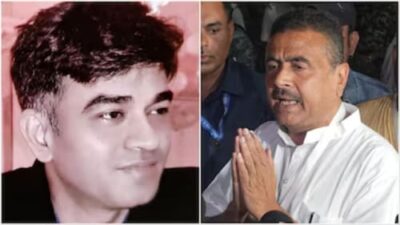
The BJP did not present any Muslim candidates in either Assam or West Bengal. BJP leaders in both states, including the prospective chief minister of Bengal, Suvendu Adhikari, attributed their victories to Hindu voter support.
“It was a victory for Hindutva,” Adhikari stated.
“Looking ahead – contingent on local political dynamics – if Muslim voters increasingly unify behind Congress, dominant Hindu voters may also regroup more strongly around the BJP,” observed political columnist Radhika Ramaseshan.
Congress has leveraged the fears and insecurities many Muslim voters feel under BJP governance, where they perceive marginalization and questioning of their citizenship, according to Badruddin Ajmal, leader of the AIUDF in Assam.
“The prevailing argument is that only a party equipped to challenge the BJP at the national level can sufficiently address these issues. While this is not accurate, voters are convinced of it due to their fears.”
After the BJP charged Congress with becoming a “new Muslim League,” Congress responded by stating that Muslims represent approximately 12% of its 664 state legislators nationwide, compared to about 78% who are Hindus, reflecting India’s religious demographics.
“I find it disheartening to discuss such matters in the 21st century,” remarked Congress spokesperson Pawan Khera, emphasizing that his party, which has governed India for 54 of the years since independence in 1947, enjoys widespread support.
“We have consistently stood by the marginalized and downtrodden and will continue to do so, regardless of their religion and caste.”
The BJP has also occasionally sought to engage with Muslim voters, though it did not run any Muslim candidates in the upcoming 2024 general election.
Modi has, however, denied resorting to religious appeals for votes.
“The day I start discussing Hindu-Muslim (in politics) will be the day I lose my ability to lead a public life,” he asserted while filing his nomination for election two years ago. “I will not engage in Hindu-Muslim. That is my commitment.”
However, Ramaseshan noted that communal rhetoric, particularly as elections approach, has become markedly more pronounced under Modi than in previous BJP administrations.
“The BJP and its broader Sangh (the party’s ideological parent) are forging a new vision of India as a ‘Hindu rashtra (nation)’—and that narrative is increasingly becoming ingrained in public consciousness,” she stated. “In the coming years, we may witness a complete transformation of the very concept of India.”