During a press conference at the Lok Bhawan Media Centre, Uttar Pradesh’s Chief Electoral Officer Navdeep Rinwa stated that the SIR was conducted from October 27, 2025, to April 10, 2026, across all 75 districts, 403 assembly constituencies, and polling stations throughout the state.
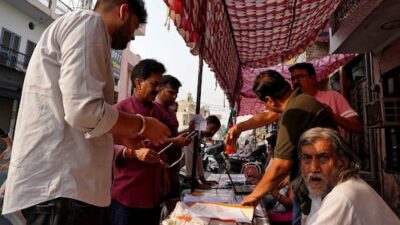
He explained that the 166-day initiative involved the efforts of 75 District Election Officers (DEOs), 403 Electoral Registration Officers (EROs), 12,758 Assistant EROs, 18,026 BLO supervisors, and 1,77,516 Booth Level Officers (BLOs). Additionally, 5,82,877 booth-level agents from recognized political parties and millions of voters contributed to this effort.
Print, electronic, and digital media were also instrumental in raising awareness, he mentioned.
Rinwa added that the draft electoral roll, released on January 6, 2026, included a total of 12,55,56,025 voters, comprising 6.88 crore males, 5.67 crore females, and 4,119 voters from the third gender.
The number of voters aged 18-19 was recorded at 3,33,981, with a gender ratio of 824 female voters for every 1,000 male voters.
The final electoral roll published on April 10 indicates the total number of voters reached 13,39,84,792, as stated by him.
Out of these, there are 7,30,71,071 male voters (approximately 54%), 6,09,09,525 female voters (45.46%), and 4,206 third gender voters (less than 0.01%).
The count of voters in the 18-19 age group has increased to 17,63,360, making up 1.32% of the entire electorate. The gender ratio has also shown improvement to 834 female voters per 1,000 male voters.
In comparing the draft and final rolls, Rinwa noted an overall increase of 84,28,767 voters. This includes an additional 42,27,902 male voters, 42,00,778 female voters, and 87 third gender voters.
Also read: Uttar Pradesh terminates Puch AI MoU over financial credibility issues
The 18-19 age group saw a boost of 14,29,379 voters, with the gender ratio improving by 10 points from 824 to 834, he confirmed.
Among the districts, Prayagraj had the highest voter increase at 3,29,421, followed by Lucknow with 2,85,961, Bareilly with over 2,57,000, Ghaziabad with 2,43,666, and Jaunpur with 2,37,590.
The CEO emphasized that the successful completion of the revision exercise showcases the collaborative efforts of election officials, political parties, and voters statewide.