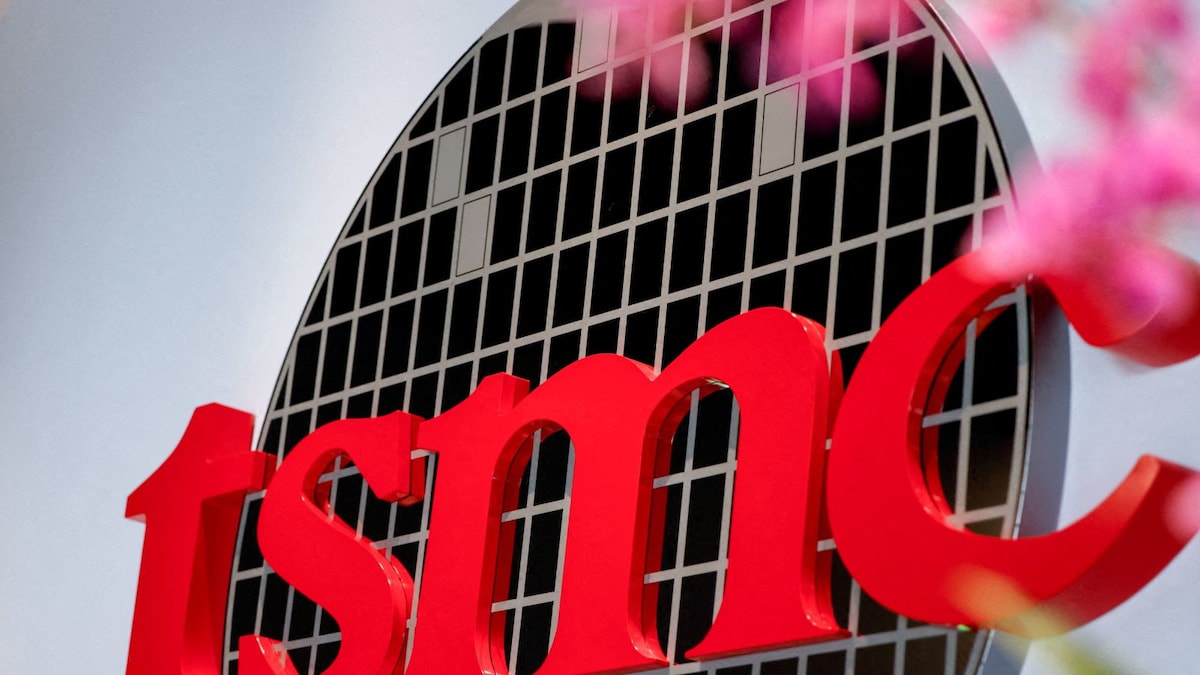
In remarks made following impressive second-quarter results on Thursday, Chief Financial Officer Wendell Huang expressed the company’s satisfaction with progress in Arizona. This positive outlook led TSMC to increase its investment to $265 billion.
“We will persist in our investments,” he stated during an interview, noting gratitude for the support received from the US government.
“We continue to experience strong demand from customers — a multi-year structural trend.”
As the primary producer of advanced AI chips and a significant supplier to Nvidia, TSMC’s aggressive capital expenditure and rising profit margins have positioned it as a key indicator of demand within the global semiconductor sector.
The commitment to expand in Arizona is a victory for US President Donald Trump, who has advocated for increased domestic chip production.
Trump has frequently accused Taiwan of appropriating American semiconductor business, claiming that by the end of his term, the US will account for 50% of global semiconductor manufacturing capacity.
ARIZONA FABS
TSMC’s first Arizona fabrication plant is now operational and achieving yields comparable to its flagship facility in Taiwan, Huang reported.
The second fab is about to start equipment installation, while construction for a third fab is in progress, and preliminary work for a fourth fab and the site’s first advanced packaging facility has commenced, Huang added.
Overall, current and planned initiatives will expand TSMC’s Arizona presence to 12 fabrication and advanced packaging facilities, along with a research and development center. He did not specify a timeline for the latest developments.
Nevertheless, Huang acknowledged “physical constraints — the availability of construction workers and infrastructure.” He mentioned, “We will collaborate closely with the government to address these challenges.”
At the same time, TSMC is continuing to invest domestically, planning to build 13 advanced fabs and packaging facilities over the next few years.
“Land is a limited resource in Taiwan,” Huang explained. “Therefore, we will utilize available lands for the most advanced technologies.”
“When implementing the most cutting-edge technologies, close collaboration between R&D and operations is essential,” he continued. “This must occur in Taiwan, and only after stabilizing can we consider moving operations abroad.”
BOND ISSUANCE
In response to whether the company would contemplate raising funds through new share sales in the US, Huang mentioned that issuing new bonds remains a possibility if market conditions are favorable.
Despite its bold expansion strategies, TSMC confronts challenges arising from geopolitical tensions between Washington and Beijing, particularly as the US aims to regulate advanced chip exports to China.
Last year, Reuters reported that TSMC could face a fine exceeding $1 billion as part of a US export control investigation related to a chip manufactured for a Huawei AI processor.
Huang directed questions concerning the investigation’s status and any potential penalties to the US government, though he noted that TSMC’s internal export control system is continuously reviewed.
“I must emphasize that there is only so much we can do to comply with all the regulations, but when customers sell to other customers, that’s beyond our visibility,” he commented.
“Eventually, you lose that visibility. That’s the reality.”
Concerns among investors about the sustainability of the AI boom amid extensive infrastructure spending have resurfaced recently.
TSMC’s shares listed in Taipei dropped 7.3% on Friday despite the company reporting record results. Nevertheless, the shares have risen nearly 50% this year.
Although TSMC has long dominated the market in producing the most advanced chips, competitors like Samsung Electronics, which has benefited from a resurgence in the memory chip market, and Intel, supported by the US government, are striving to close the gap.
Huang reaffirmed the company’s confidence in its business model.
“We do not intend to leave any opportunities untapped,” he asserted. “Our competitors are strong, but we are even stronger.”
Also Read: Spain stop Messi’s title defence, win second FIFA World Cup with extra-time goal