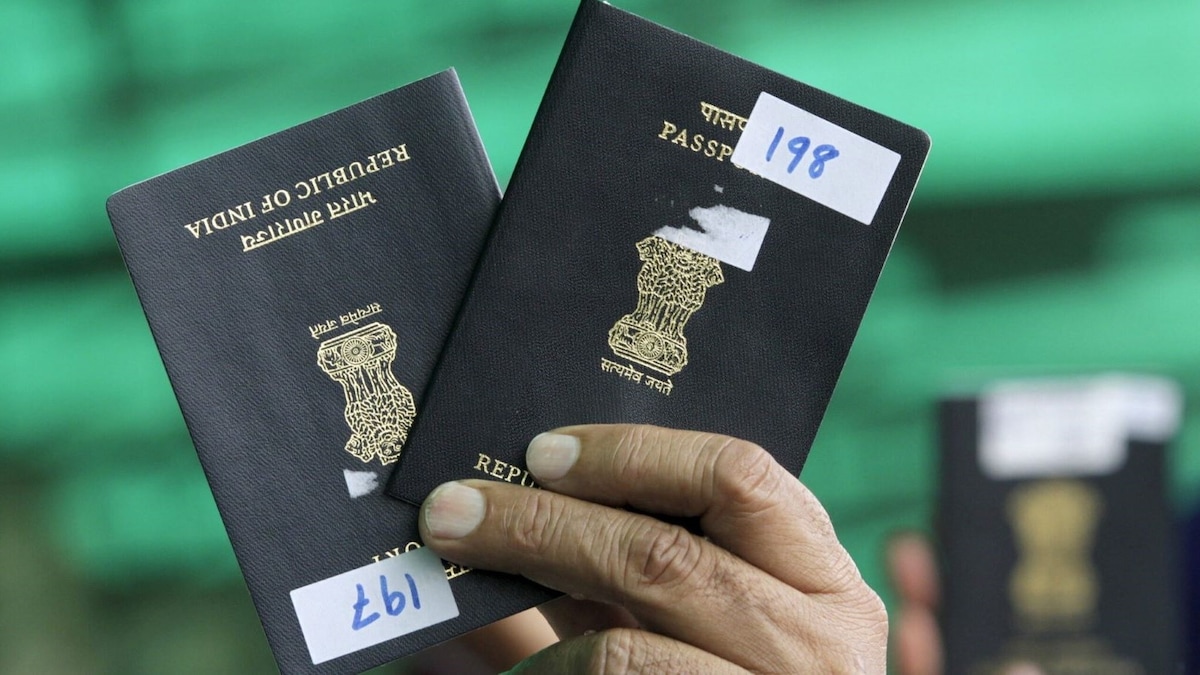
In response to inquiries about the role of passports in verifying citizenship, a MEA official stated that the primary function of a passport is to facilitate international travel, not to serve as proof of citizenship.
“A passport is fundamentally a travel document, not a citizenship document, which differentiates it from other types of documents. While it certifies your nationality when you are abroad, it does not confirm your citizenship status,” a senior official informed The Hindu.
This clarification was issued following a question about whether an Indian passport could be used to contest exclusion from electoral rolls during the ongoing Special Intensive Revision (SIR) exercise occurring in several states.
Another senior ministry official pointed out that the process of issuing passports involves rigorous verification measures before any applicant is granted the document.
It is distributed “after extensive due diligence, ensuring that the recipient is genuinely entitled, relying on documentation from various government agencies, such as Aadhar and PAN Card,” the official was quoted as stating by The Hindu.
This clarification follows recent remarks by the Supreme Court during hearings concerning the SIR of electoral rolls, where it acknowledged that Aadhaar serves as proof of identity but not as conclusive proof of citizenship.
The MEA underscored the government’s ongoing commitment to modernizing passport services and enhancing accessibility across the nation. Officials mentioned that nearly 10% of Indian passport holders now have the new chip-enabled e-passport.
These passports adhere to the international standards established by the International Civil Aviation Organisation (ICAO), thereby boosting security, minimizing fraud, and improving acceptance at global immigration checkpoints.
The ministry also emphasized the substantial expansion of passport services nationwide. India now boasts a network of 545 Passport Seva Kendras, broadening access to passport-related services for applicants. Officials noted that this network now encompasses nearly every Lok Sabha constituency, making passport facilities more reachable for citizens.
On another note, passport-related services have significantly improved in efficiency in recent years. According to officials, passport processing can typically be completed in as few as five to six working days in many cases, excluding police verification, while applicants generally spend less than 45 minutes at service centers.
Travel options for Indian passport holders have also enhanced considerably in recent years. During the 14th Passport Seva Divas on June 24, officials announced that 27 countries currently allow visa-free entry for Indian citizens. Additionally, 47 nations offer visa-on-arrival facilities, while 66 countries provide e-visa options for Indian travelers.