He mentioned that the “UK’s new steel measure wasn’t included in the negotiations,” and efforts are being made to address this.
The UK plans to reduce tariff-free steel import quotas by 60% starting 1st July 2026, a move that many analysts have likened to the EU’s steel framework by “combining safeguard restrictions with carbon-linked border taxes.”
Ajay Srivastava, founder of the Global Trade Research Institute (GTRI), highlighted that India already encounters a tough trading landscape in the EU steel market, where Indian steel exports will still incur the costs of the EU’s Carbon Border Adjustment Mechanism (CBAM) in addition to safeguard restrictions, even after the India-EU FTA is implemented.
He noted that for the EU, shipments that remain within quota limits and pay no customs duty could still face approximately $38 in CBAM-related expenses for every $100 worth of steel exported.
Moreover, if exports surpass safeguard quotas, the EU can impose a 50% over-quota duty, escalating the overall burden of safeguard duties and CBAM costs up to $95 per $100 shipment.
He urged for negotiations of similar terms with the UK as those established with the EU in the FTA to safeguard the commercial value of the trade agreement.
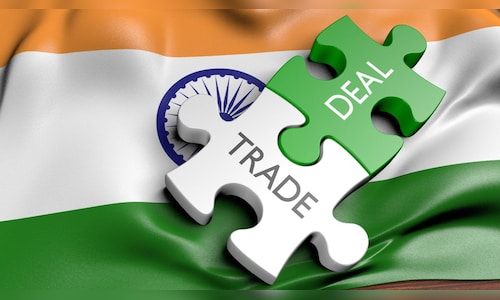
India and the UK finalized an FTA on 24th July 2025, including a convention to prevent double taxation. Prime Ministers Narendra Modi and Keir Starmer referred to it as a significant milestone, aiming to double trade to $120 billion by 2030.
The agreement reduced average tariffs on UK products in India from 15% to 3%, while allowing duty-free access for 99% of Indian exports to the UK.
Also Read: Economists caution that fuel and milk price increases may boost retail inflation by as much as 0.42%
(Edited by : Navneet Singh)