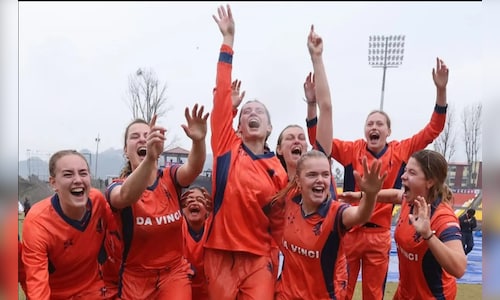
Here are some lesser-known insights about the Netherlands women’s cricket team.
Familiar with ICC events
Although this marks their first participation in the ICC Women’s T20 World Cup, the Dutch women are not unfamiliar with ICC competitions. Their initial appearance came during the Women’s ODI World Cup at a time when the visibility of women’s cricket was considerably less than today.
The Netherlands has taken part in four Women’s ODI World Cups, starting in 1988. Their most recent involvement was in 2000, resulting in a wait of over two decades to return to cricket’s premier platform.
Part-time athletes
Similar to many players from associate nations, several individuals in the Netherlands squad are not full-time professional cricketers. They often balance their cricketing pursuits with careers, studies, and other responsibilities, playing primarily out of passion rather than as their main vocation.
The team includes engineers, medical professionals, and students managing demanding schedules while proudly representing their nation on an international level.
Educated captain
In contrast to many of her teammates, Netherlands captain and wicketkeeper-batter Babette de Leede has transitioned to being a full-time cricketer. However, the limited opportunities for earning a living strictly through cricket in the Netherlands led her to attain higher education in econometrics.
Her circumstances improved when she landed a full-time domestic contract in South Africa, allowing her to commit to cricket professionally. Nevertheless, she retains her degree in econometrics, positioning her as one of the most academically distinguished captains in the tournament.
Medical professional to cricketer
Leg-spinner Caroline de Lange will capture attention for her cricketing performance during this World Cup, but until recently, she was practicing as a doctor in the neurology department of a local nursing home.
After the Netherlands qualified for the T20 World Cup, the 27-year-old realized she had depleted all her leave while participating in qualifiers and international duties. With no holidays left, she made the tough choice to resign from her medical position to chase her World Cup aspiration.
The Dutch team is acutely aware of the challenges ahead. Competing against teams like Australia, India, and England, which boast full-time professionals with greater experience and resources, will be a formidable task.
While securing the title remains their ultimate goal, the Netherlands has set a pragmatic target. Captain Babette de Leede emphasized that their aim is to finish in the top eight to ensure automatic qualification for the next Women’s T20 World Cup.
“We want to end in the top eight of the tournament so that we don’t have to go through qualifying for the next World Cup. That means we need to win two games. Tomorrow will be a crucial start for building momentum,” she stated.