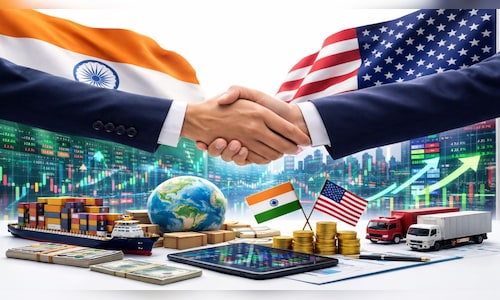
Sources indicated that the timeframe for concluding the Section 301 investigation has now contracted to approximately 30 days. They also mentioned that if the trade deal is not completed prior to the expiration of the current US tariff regime on July 24, Indian exports will be subjected to the applicable Most Favoured Nation (MFN) tariff rates.
The Section 301 investigation arises from a US inquiry into alleged forced-labor practices within global supply chains. Under a proposal currently being reviewed by the Office of the US Trade Representative (USTR), India may incur an additional tariff of up to 12.5% on specific exports if it is found that adequate measures to prevent the importation of goods produced with forced labor have not been implemented. Public hearings regarding this proposal are set to commence on July 7.
The Commerce Ministry has stated that India continues to engage with the United States on both the Section 301 matter and broader trade negotiations.
“India is also simultaneously working with the US to finalize a framework agreement as announced on February 2 and in line with the joint statement released on February 7,” the ministry previously mentioned.
Trade discussions between the two nations have accelerated in recent weeks.
Commerce and Industry Minister Piyush Goyal remarked that India and the United States held “excellent discussions” from June 2 to June 4, with a complete US trade delegation visiting New Delhi to progress the negotiations.
According to Goyal, both parties are moving swiftly to address remaining concerns and could be ready to implement the first segment of the bilateral trade agreement by mid-next month.
He referred to the proposed arrangement as the initial phase of a more extensive trade pact that would grant Indian exporters preferential access compared to competing nations. A higher-level US delegation is also anticipated to arrive in India later this month.
The Commerce Ministry indicated that conversations with the visiting US delegation were productive, covering topics such as trade in goods, non-tariff barriers, customs, trade facilitation, and economic security cooperation.
India and the United States had unveiled a framework for an interim trade agreement in a joint statement released on February 7, reaffirming their dedication to negotiating a comprehensive bilateral trade agreement.
Last month, US Ambassador to India Sergio Gor stated that the two countries were close to finalizing an interim trade deal, suggesting that only a few negotiation points remain unresolved.
Reiterating that perspective, Goyal noted that most issues had been addressed, with discussions now concentrated on final legal and technical details. Government sources mentioned that achieving relief from potential Section 301 tariffs and securing preferential market access for Indian exports are vital priorities in the ongoing negotiations.
Sources also indicated that USTR chief Jamieson Greer may visit India once the broad outlines of the agreement have been established.