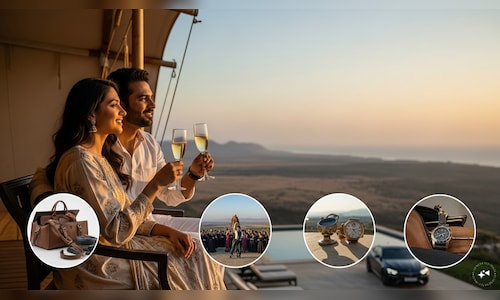
In its Visa Consulting and Analytics (VCA) Whitepaper, India’s Affluent Economy 2025–2026, the payments company noted that wealthy consumers are transitioning from ownership-based purchases to access-focused experiences, with their spending patterns closely linked to lifestyle choices and personal identity.
The study, drawn from a Visa-commissioned YouGov survey and VisaNet data across travel, dining, retail, and lifestyle sectors, indicates that India’s affluent demographic is growing quickly. Individuals earning over ₹10 lakh annually have nearly doubled, from 69 lakh to 130 lakh, reflecting a broader segment of consumers engaging in discretionary spending.
Visa observed that wealth is also spreading beyond major cities like Mumbai, Delhi, and Bengaluru, with emerging markets such as Ahmedabad, Surat, Jaipur, and Lucknow exhibiting similar consumption behaviors.
According to the report, annual dining expenditures among affluent consumers are set at roughly ₹2 lakh, while cross-border spending penetration in elite segments reaches 63%.
Travel constitutes 58% of discretionary expenditures among Ultra Elite consumers, followed by retail and luxury at 28%.
The report also noted that nearly 4 out of 5 affluent Indians dine at premium restaurants at least three times annually, while about 3 out of 4 make high-end retail purchases each quarter. Furthermore, 1 in 4 affluent consumers buy premium products as often as every two weeks.
Visa stated that credit cards play a crucial role in facilitating premium consumption, especially for categories like travel, dining, wellness, and luxury retail. More than half of affluent consumers utilize cards for elite memberships, while 7 in 10 are interested in limited-edition or exclusive product releases.
Sushmit Nath, Head of Visa Consulting & Analytics, India and South Asia, said the findings signal a fundamental shift in consumption behavior.
“Our analysis indicates that affluence is no longer a sporadic occurrence. Discretionary spending is not restricted to special occasions but is increasingly experience-driven, fueled by a desire for exclusivity and seamless access across travel, dining, wellness, and lifestyle,” Nath explained.
The report further noted that affluent consumers are looking for integrated ecosystems that merge multiple lifestyle services instead of isolated products, with convenience and access becoming significant factors in premium spending decisions.