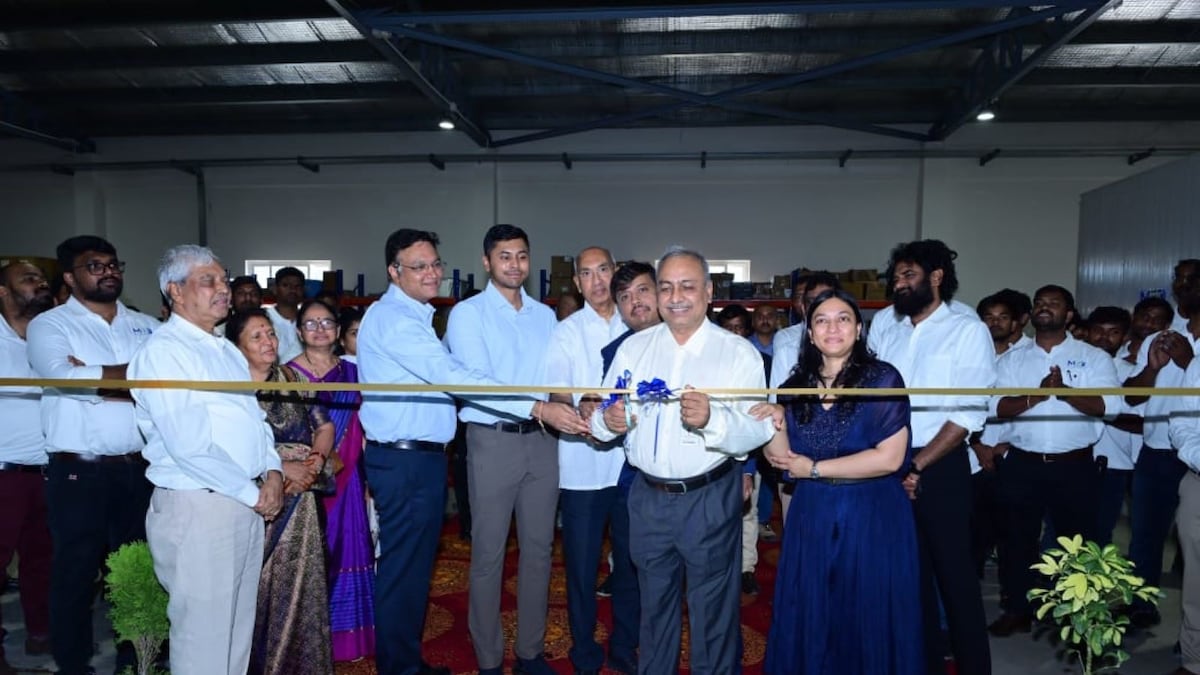
The investment for this facility is approximately ₹100 crore, not including land costs, positioning it as one of the company’s most significant clean energy manufacturing endeavors as India enhances its battery storage capabilities to support renewable energy.
The Bengaluru plant marks Midwest Energy’s first giga-scale battery energy storage manufacturing facility in India. Additionally, the company operates a rare earth permanent magnet manufacturing site in Hyderabad.
“We’ve allocated about ₹100 crore for this plant, excluding land costs, and we expect revenues to reach around ₹1,000 crore at full capacity,” Kukreti noted.
The facility is designed with a 1.2 GWh annual manufacturing capacity and offers integrated “cell-to-container” production capabilities. This includes the creation of battery modules, trays, racks, and fully integrated containerized battery energy storage systems for various applications such as commercial, industrial, renewable energy, and utility-scale operations.
Expansion to 6 GWh in three years
Midwest Energy is actively planning to increase capacity beyond the newly launched facility.
Kukreti revealed that the current facility can be upgraded to 2 GWh through additional automation, aiming for a total manufacturing capacity of 6 GWh within the next three years. The company has already acquired sufficient land for future growth.
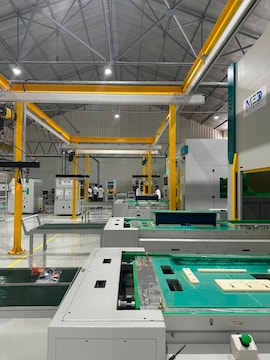
Midwest Energy commences commercial production at its 1.2 GWh BESS manufacturing facility in Bengaluru.
In addition to manufacturing growth, Midwest Energy plans to establish a 30,000 sq. ft. research and development center at the Bengaluru location by relocating its existing R&D efforts from Hyderabad.
The company currently employs around 50-55 individuals in manufacturing and R&D, with expectations to expand the workforce to 150 employees in the upcoming year.
Rare earth magnet plant to go live by Sept
Apart from battery storage, Midwest Energy is hastening its rare earth magnet manufacturing plans as part of India’s initiative to lessen dependence on Chinese suppliers.
The company announced that its 500-tonne rare earth permanent magnet plant is nearing completion and is set to begin operations by September, with plans to expand capacity to 5,000 tonnes over time.
Kukreti confirmed the company intends to apply under the government’s Production Linked Incentive (PLI) scheme for rare earth magnets before the July 29 deadline.
“We are applying for the PLI scheme. Our initial 500-tonne plant is almost ready and will be operational by September. Our ultimate goal is to reach 5,000 tonnes,” she stated.
As a mining operation, Midwest Energy is also pursuing backward integration.
“On the rare earth front, we consider ourselves a mine-to-magnet manufacturer. Our own mines are in the pipeline for backward integration,” Kukreti explained.
Localisation push, but battery supply chain remains import-dependent
While the company reports that around 40% of its battery system components are sourced locally, there remains a dependency on imports for certain critical components necessary to meet international certification standards.
Kukreti pointed out that some components are currently imported from China due to the absence of equivalent Indian suppliers capable of UL certification.
However, the company anticipates localizing most of these components within a year by fostering a network of domestic suppliers.
“We currently have to import certain components from China because Indian suppliers do not yet meet UL certification requirements. Within a year, we aim to replace most of them with local suppliers,” she noted.
Seeks incentives for battery manufacturing
Kukreti stressed that the battery manufacturing sector requires government support similar to other strategic manufacturing areas.
She mentioned that major industrial groups, including Tata and JSW, have approached the government on this matter, and Midwest Energy also intends to seek incentives for battery manufacturing.
“We certainly need some incentives,” she asserted.
The Bengaluru facility is designed to manufacture battery energy storage systems ranging from 3 kWh to 6 MWh, with products compliant with UL 1973, UL 9540, and UL 9540A standards. Midwest Energy aims to provide customized energy storage solutions for both domestic and international markets.