Mohammad Bagher Ghalibaf, the Speaker of Iran’s Parliament, expressed concerns on Tuesday (March 24) regarding speculations in global oil markets, indicating that fluctuations in futures trading may not accurately represent real supply conditions.
In a message on X, he highlighted attempts to sway the “paper oil” market, even as crude prices remain high due to geopolitical tensions.
“We are aware of the dynamics in the paper oil market, including entities engaged to sway oil futures. We are also observing the wider jawboning efforts.
But we will see if they can convert that into ‘actual fuel’ at the pump —or even fabricate gas molecules!”
By mentioning the “paper oil market,” Ghalibaf referred to trading in futures and derivatives instead of the actual crude supply. His mention of “firms engaged to influence oil futures” and a “jawboning campaign” implies a coordinated effort to manipulate market sentiment.
His commentary on “actual fuel at the pump” underscores the importance of tangible supply, while the note on “printing gas molecules” serves as a sarcastic reminder that financial maneuvers and discussions cannot replace the availability of physical energy.
Ghalibaf has made a series of incisive posts recently in response to rising tensions involving Iran, the US, and Israel, grappling with fears of potential strikes on Iranian infrastructure, conflicting reports on negotiations, sanctions strategies, and fluctuating oil markets.
In prior messages on X, he stated, “The Iranian people demand full and sincere punishment for the aggressors. All Iranian officials stand resolutely behind their supreme leader and the people until this aim is realized.”
He also claimed that “no negotiations have taken place with the US,” arguing that “fakenews is employed to manipulate financial and oil markets and to escape the dilemma facing the US and Israel.”
US stocks opened lower on Tuesday, losing momentum after a rally the day before driven by hopes of reducing tensions between Washington and Tehran.
Also read: Dow Jones opens lower as uncertainty over Iran ceasefire keeps markets on edge
The Dow Jones Industrial Average led the downward trend, dropping 0.8% at the start, while the S&P 500 declined by about 0.6%. The Nasdaq Composite fell 0.5%, as tech stocks also experienced slight selling pressure.
Oil prices exhibited volatility, with initial optimism about potential de-escalation affecting crude, before prices rose again amidst ongoing tensions between Iran and the US-Israeli alliance.
West Texas Intermediate climbed over 4% to surpass $90 a barrel, while Brent traded above $103.
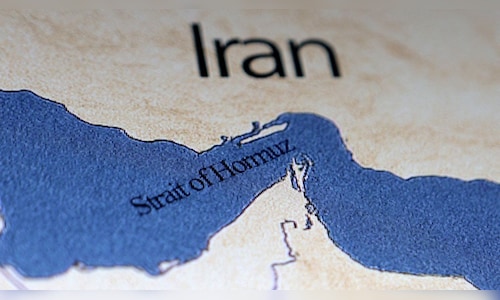
Investors are looking for updates on a potential in-person meeting later this week between US and Iranian officials. Meanwhile, Saudi Arabia and the United Arab Emirates are progressively moving closer to joining efforts against Iran, while energy movements through the Strait of Hormuz remain hindered.