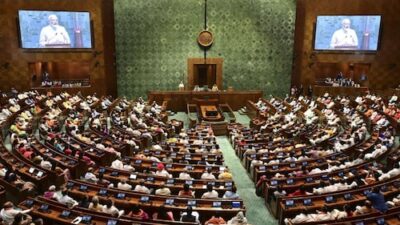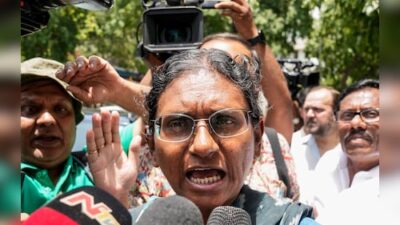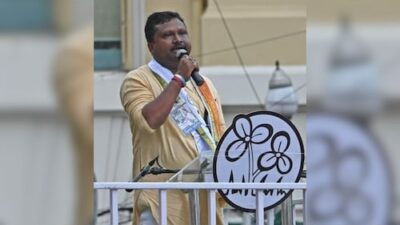
The underlying tensions within the multi-party coalition, formed ahead of the 2024 Lok Sabha election, have become more evident after the DMK chose to withdraw from the once-unified stance anchored in anti-BJP sentiment. M K Stalin, the DMK leader and former Chief Minister, expressed his discontent over Congress’s abrupt departure, labeling it a betrayal. To illustrate the growing distance, Lok Sabha party leader Kanimozhi requested the Speaker to assign seats for 22 DMK MPs away from the GoP.
The DMK ranks as the third-largest party in opposition in the Lok Sabha, following the Samajwadi Party (37 MPs) and the Trinamool Congress (28 MPs). Together with Congress, these three are the only parties with significant representation in double digits.
Following the DMK’s exit, the strength of the I.N.D.I. Alliance has dwindled from 232 to 210 MPs. Further losses in the opposition ranks could occur amid rising dissent within the Trinamool Congress. This volatility is likely to influence discussions during the upcoming Monsoon session of Parliament.
This opposition coalition successfully obstructed the BJP-led NDA Government’s move to amend the Constitution regarding the Women’s Reservation and the delimitation process.
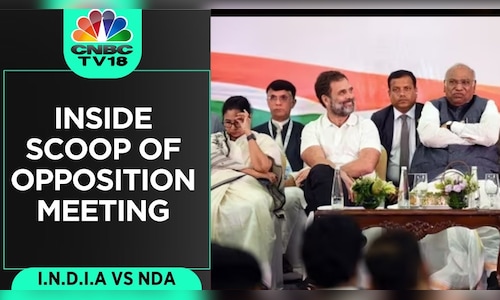
In this context, questions regarding the future of the alliance have emerged. Only a political oracle might predict how this loosely connected coalition will evolve. The June 8 meeting, attended by representatives from over 20 parties, aimed to showcase that the fundamental cohesion remains intact, resulting in three demands: the resignation of the Human Resource Minister due to paper leaks; a letter to the Chief Justice of India concerning SIR and voter list discrepancies; and an all-party meeting to discuss the economic situation.
Additionally, there was agreement to hold regular coordination meetings. This declaration of ongoing interaction evokes the nostalgic mid-1950s refrain: “Que será, será, Whatever will be, will be; The future’s not ours to see. Que será, será, What will be, will be”.
While it’s simple to understand the internal issues within the alliance, keen observers will notice indications from the opposition that this coalition has never functioned as a single unit. Parties with diverse priorities tended to operate independently and often diverged from the strategies proposed by Congress. Since the energizing summer of 2024, when the Opposition found renewed vigor and voice, several points of contention have arisen regarding approaches and tactics in Parliament.
First, there’s a persistent reluctance among some to acknowledge the Congress party (particularly Rahul Gandhi) as the coalition’s leader. Second, parties like the Trinamool Congress and Aam Aadmi Party have tended to stay separate from issues raised by Congress. Third, the Samajwadi Party, a key player in Uttar Pradesh, hasn’t felt compelled to align with Congress, especially regarding stalling parliamentary proceedings. Fourth, while the DMK has remained a loyal ally, this is also influenced by local dynamics—its adversary, the AIADMK, aligns with the BJP. Fifth, during state elections, Congress resisted pressure to accommodate allies like AAP in Haryana. Lastly, Congress’s defeat in Haryana tarnished its image as a challenger capable of directly contesting the BJP. The October 2024 assembly results reinstated the BJP’s position.
Kerala and West Bengal exemplify the pitfalls of these alignments. In both states, the Congress-led United Democratic Front was the main rival to the CPI(M)-led Left Democratic Front (in the South), while in the East, Congress and the Left vied for the third and fourth spots.
The irony of an electoral opponent’s willingness to form alliances elsewhere was aptly captured by the late Priyaranjan Dasmunshi of the Congress. During the formation of the United Progressive Alliance government in 2004, when asked how the Left and Congress, who competed against each other in Kerala and West Bengal, could collaborate, he humorously remarked: “Just like football, when we play in Kolkata we wear the East Bengal, Mohun Bagan or Mohammed Sporting jersey, but when we play for India, we become one team”.
If anti-Congress sentiment was the binding force that united disparate parties from the 1970s onwards, now it appears that anti-BJP sentiment serves that purpose. However, in states like Maharashtra, this connection has weakened. The BJP successfully loosened the ideological grip of the Shiv Sena and the Nationalist Congress Party, a strategy reportedly underway in Tamil Nadu as well.
The upcoming session of Parliament will clarify how these divisions are evolving. Will the DMK and a potential splinter faction of the TMC choose to align with the BJP-led government, potentially advancing a legislative agenda like “One Nation-One Poll” that necessitates a constitutional amendment?
In the aftermath of the setbacks surrounding the Women’s Reservation and Delimitation initiatives, the BJP may proceed once it secures the requisite two-thirds majority in either House, a possibility that could materialize in the coming weeks.
—The author, K V Prasad, is a political observer and writer. The views expressed are personal.