This crossover was first conceptualized in the mid-20th century by prominent figures like M Karunanidhi (also known as Kalaignar), M. G. Ramachandran (MGR) in Tamil Nadu, and N. T. Rama Rao (NTR) in Andhra Pradesh.
Karunanidhi, a political titan, initially made his mark in cinema as a pioneering screenwriter. Over five decades, he evolved from a scriptwriter to the chief minister of Tamil Nadu on five occasions.
MGR, a cinematic superstar who embodied the “champion of the people,” became chief minister in 1977 and left a long-lasting legacy of welfare initiatives. Following his footsteps, his mentee J Jayalalithaa transitioned from a well-known actress to a powerful political leader known affectionately as ‘Amma’.
In Andhra Pradesh, NTR accomplished what many deemed unlikely. Often cast as Krishna or Rama, he founded the Telugu Desam Party (TDP) in 1982 and ascended to the chief minister position within nine months, riding a surge of “Telugu pride”.
While these icons dominated the earlier era, Vijayakanth, affectionately dubbed “Captain,” established a distinct niche in Tamil Nadu. In 2005, he founded the Desiya Murpokku Dravida Kazhagam (DMDK) as an alternative to the long-established DMK and AIADMK.
In the nearby Andhra Pradesh, brothers Chiranjeevi and Pawan Kalyan both ventured into politics; however, it was ‘Power Star’ Kalyan who showcased resilience, enduring electoral defeats for nearly a decade. His efforts culminated in a remarkable victory in 2024, leading to his appointment as Deputy Chief Minister of Andhra Pradesh.
Meanwhile, ‘Megastar’ Chiranjeevi, who established the Praja Rajyam Party (PRP) in 2008, managed to secure less than 18% of the vote share in the following elections before stepping back from active politics.
Other noteworthy Telugu personalities include Nandamuri Balakrishna, an active MLA from Hindupur, who passionately upholds his father NTR’s legacy with strong regional allegiance.
Jayaprada served as a two-term MP, notably clinching a victory in Uttar Pradesh after serving in the Rajya Sabha.
Karnataka also boasts a rich tradition of actors-turned-politicians, such as Anant Nag, who is often referred to as a “gentleman politician.” Unlike many stars who depend on “larger-than-life” personas, Nag’s political journey was characterized by intellectual depth and grassroots engagement. He famously remarked that politics necessitates a degree of compromise that sometimes conflicted with his artistic values.
Another icon from Karnataka, commonly referred to as a kingmaker, is Dr Rajkumar. Unlike many contemporaries in nearby states, “Annavru” (Big Brother) never sought electoral office or launched a political party; yet, he wielded tremendous political and social sway. His cultural influence was so profound that his backing could reshape the political landscape of Karnataka without ever stepping onto a campaign stage as a candidate.
In Kerala’s political arena, Suresh Gopi, known as the “Action Hero” of Malayalam cinema, achieved a milestone that was previously deemed unreachable for his party. In the 2024 general elections, he became the first BJP candidate to secure a Lok Sabha seat in Kerala, challenging the state’s traditional bipartisan dominance.
Within South Indian politics, Sivaji Ganesan and Rajinikanth exemplify two contrasting “what if” narratives—one who immersed himself fully but confronted the stark realities of electoral dynamics, and another who kept fans guessing for decades before opting for a different path.
‘Nadigar Thilagam’ Sivaji Ganesan was a giant on screen, but his political path was fraught with challenges. Unlike his contemporary MGR, who founded a party that became a political mainstay, Sivaji faced a more tumultuous political journey filled with changing alliances.
In 1988, he established his own party, Thamizhaga Munnetra Munnani. Despite his legendary status, the party failed to secure any seats in the 1989 elections, prompting him to dissolve it and merge with the Janata Dal.
Rajinikanth’s ties to politics are perhaps the most analyzed in Indian history. Following his significant 1996 statement—”Even God cannot save Tamil Nadu if Jayalalithaa is voted back to power,”—which was credited with swaying that election, his eventual political entry seemed inevitable.
For two decades, the “Superstar” hinted at a vision of “spiritual politics” that would surpass caste and religious barriers. In 2017, he finally expressed his intention to create a party, the Rajini Makkal Mandram. However, in a shocking move for his vast fanbase, he officially withdrew in late 2021, citing health issues.
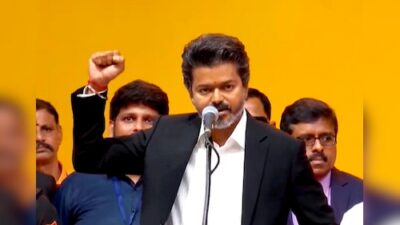
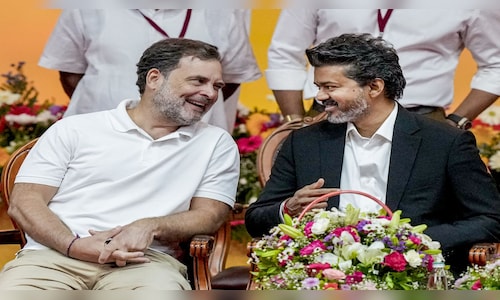
The longstanding tradition of film stars integrating into politics carries on with Vijay, whose party, Tamilaga Vettri Kazhagam (TVK), officially entered the political landscape in early 2024. Vijay has adeptly transformed one of India’s largest fan bases into a structured political body. His foray into the space left vacant by prior idols indicates that the “actor-politician” model is alive, evolving, and far from being a relic of the past.