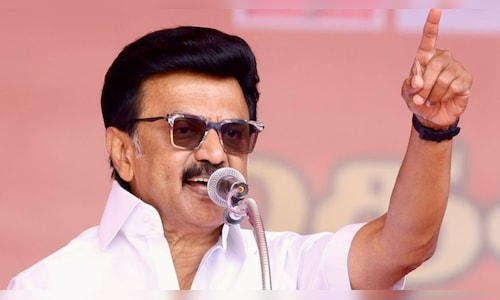
In the upcoming 2026 elections in Tamil Nadu, the significance of Kolathur remains unparalleled. For over ten years, this constituency has symbolized the political dominance of M. K. Stalin—an area he transformed from a competitive battleground to a bastion of power. However, that bastion fell on Monday. The person who breached it was none other than V. S. Babu, an individual who once contributed to its fortification.
Babu’s journey is not that of an outsider charging in. Rather, it is the tale of an insider who recognized the structural nuances of power and patiently awaited a moment of vulnerability.
At 75, Babu embodies a familiar yet often overlooked character in Indian politics: the grassroots strategist who quietly builds influence instead of seeking the limelight.
From trusted aide to political casualty
Looking back to 2011, Kolathur was a newly established constituency following delimitation. The DMK leadership decided to shift Stalin from Thousand Lights to Kolathur, entrusting V. S. Babu—then the party’s district head for north Chennai—with the campaign oversight.
The expectation was clear: a convincing victory for a leader being prepared for greater responsibilities.
Instead, Stalin won by a mere 2,700 votes. For someone of his stature, this was a disappointing margin. Consequently, Babu was blamed, stripped of his organizational role, and reassigned within the DMK.
This incident effectively ousted Babu from the party’s core, initiating a nearly decade-long political estrangement.
That moment marked a pivotal turning point.
Years in the wilderness—and a return
After his sidelining, Babu left the DMK and joined the AIADMK in 2016. Similar to many political figures operating in the middle tier, he navigated through without reclaiming a central position, remaining locally relevant but absent from the state’s overarching narrative.
Despite this, he retained strong networks in north Chennai, which would later be crucial.
In February 2026, he discovered a new platform—Tamilaga Vettri Kazhagam, the emerging party led by Vijay.
Looking back, it was an ideal match. TVK needed candidates familiar with the intricacies of elections, while Babu sought a platform to translate his experience into newfound relevance.
His transition was more tactical than ideological—aligning local knowledge with an ascending political tide.
The rematch—and the reversal
When Babu contested against Stalin in Kolathur, the match initially felt symbolic. Stalin had significantly increased his winning margins—over 37,000 votes in 2016 and more than 70,000 in 2021. The seat seemed virtually unassailable.
However, elections seldom follow a predictable path.
This time, rather than managing Stalin’s campaign, Babu dismantled it.
Securing victory by over 9,000 votes, he overturned a decade-long political formula. What had once been a narrow loss that cost him his position transformed, years later, into his most significant political achievement.
Ultimately, the same district that curtailed his rise within the DMK provided the foundation for his political resurgence.
How Kolathur flipped
Babu’s victory cannot be attributed to a single reason. It represents a convergence of various trends:
- Erosion at the margins: Even minor declines within a stronghold can prove crucial when opposition votes consolidate.
- The TVK effect: Tamilaga Vettri Kazhagam supplied the wider anti-establishment momentum, tapping into voter curiosity and dissatisfaction.
- Ground-level execution: Babu excelled in booth management, local outreach, and grasping constituency-level dynamics—critical areas where elections are ultimately determined.
- A shift in voter behaviour: Certain urban voting blocs, including younger and lower middle-class demographics, seemed more eager to venture beyond traditional parties.**
Importantly, the contest was not framed as a battle of personalities. Instead, it offered a subtler comparison between entrenched leadership and local accessibility—a narrative that resonates deeply in urban districts like Kolathur.
This reframing allowed Babu to sidestep a direct personality clash with a formidable state leader, instead localizing the campaign.
A victory beyond one seat
For the DMK, this loss carries profound implications. Kolathur was not merely a constituency; it was the political stronghold of its leader. Its decline raises doubts about the sufficiency of long-standing organizational strength in an evolving electoral landscape.
For TVK, it serves as validation. The party’s ascent is tangible, moving beyond theoretical discussions to real electoral impact.
And for Babu, this victory charts a remarkable political path: transitioning from trusted aide to scapegoat, from sidelined participant to “giant killer.”
Notably, there are no major criminal allegations against him widely reported in the public realm, enhancing his profile as a credible yet low-key grassroots player.
The larger signal
Tamil Nadu politics has traditionally adhered to a stable dichotomy between the DMK and AIADMK. The situation in Kolathur indicates that this structure may be evolving.
The emergence of TVK introduces a third force capable of transforming sentiment into meaningful electoral outcomes.
What makes Babu’s victory particularly significant is not just his opponent but also his identity:
- Not a mass leader
- Not a political heir
- Not a newcomer
He is a seasoned insider who recognized where the weaknesses lay—and acted when the opportunities arose.