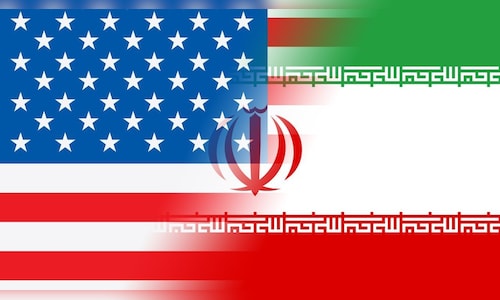
In an interview with CNBC-TV18, Dixon emphasized that the nuclear issue remains the primary hurdle for the proposed deal, anticipated to be formally signed in Geneva on Friday, June 19.
“If Iran fails to agree to halt uranium enrichment and address its current stockpile, that will be the point where this agreement disintegrates,” Dixon remarked. “That is ultimately the red line for Trump.”
These comments follow US President Donald Trump’s announcement that Washington and Tehran had come to a consensus to cease hostilities. Trump indicated that he had authorized the “toll-free opening of the Strait of Hormuz” and the lifting of the US naval blockade on Iranian ports, raising hopes for stability in global energy markets.
Crude oil prices dipped below $80 a barrel in the wake of the announcement, as traders reacted positively to the likelihood of uninterrupted oil shipments through one of the world’s critical shipping routes.
Nevertheless, significant questions remain unresolved. Iranian state media has reported that uranium and nuclear facilities will remain in Iran as part of the agreement, and talks for a final settlement are expected to continue for 60 days after the initial signing.
Dixon asserted that the Trump administration’s key aim has consistently been to prevent Iran from developing a nuclear weapon.
“This has been the main point reiterated by the Trump administration: no deal can occur until Iran demonstrates movement on its commitment not to pursue a nuclear weapon,” he stated.
He also noted that any agreement must be favorably perceived in Washington and compared to the 2015 nuclear deal negotiated under former US President Barack Obama.
“If this agreement doesn’t ultimately appear superior to the JCPOA, it will be politically unfavorable for Trump in the US,” Dixon warned.
The ceasefire itself is precarious. Israel has made a public effort to distance itself from aspects of the agreement. National Security Minister Itamar Ben-Gvir has criticized the deal, asserting that Israel is not a participant and that it does not ensure Israeli security. Defence Minister Israel Katz has also remarked that Israeli forces will not withdraw from territories seized in Lebanon.
Despite these reservations, Dixon believes the agreement holds more credibility than previous attempts to resolve the conflict.
“It seems that, in this instance, there is significantly more consensus, or at least it feels more genuine,” he said. “From what we are hearing, it appears we are at a juncture where peace will prevail.”
Hasaan Hashmi Pirzada, a geopolitical expert, characterized the arrangement as a “very fragile yet historic step towards de-escalation,” noting that Pakistan has been instrumental in bringing both sides together.
According to Pirzada, Pakistan served as the primary diplomatic bridge between Washington and Tehran, facilitating back-channel communications and contributing to the framework that led to the ceasefire.
“Pakistan has been an essential and pivotal player as the primary diplomatic link between Washington and Tehran,” Pirzada told CNBC-TV18.
While many specifics remain undisclosed, Pirzada indicated that the framework seems to involve an immediate ceasefire on all fronts, including Lebanon, the reopening of the Strait of Hormuz for commercial traffic, and partial access for Iran to frozen assets for reconstruction initiatives.
Reports from Iranian media suggest a potential creation of a $300 billion reconstruction or compensation fund for Iran, although no official confirmation has been issued. There are also claims that Iran might impose a service fee for vessels traversing the Strait of Hormuz.
Dixon questioned the long-term enforceability of such a fee.
“The critical question is whether it can be enforced. I doubt its viability,” he remarked.
The agreement has received positive reactions from various world leaders, while European governments have reiterated that Iran must never develop a nuclear weapon. The deal is slated to be signed in Switzerland on Friday, with mediators hopeful that it will lead to broader negotiations aimed at achieving lasting peace in the region.