Someone’s just gotten engaged. Someone else shared that classic Rajinikanth clip. Your uncle and cousin somehow turned a chat about mangoes into a political argument. And you’re completely lost about how it escalated to this point.
Following the AI sector feels much the same these days. Blink for a few days, and suddenly the industry has leapt ahead.
In just this week, OpenAI launched a new AI model. Elon Musk showered praise on a company he had been criticizing for months. Meta debuted a new AI image generator, then quietly retracted one of its features due to privacy concerns. China issued warnings to companies regarding a potential security flaw in an AI tool. Apple reinforced its privacy measures. Investors continued to pour funds into AI.
And we haven’t even reached India yet.
But what’s particularly intriguing isn’t that all this happened, but rather how these events, when combined, reveal the future direction of the AI competition.
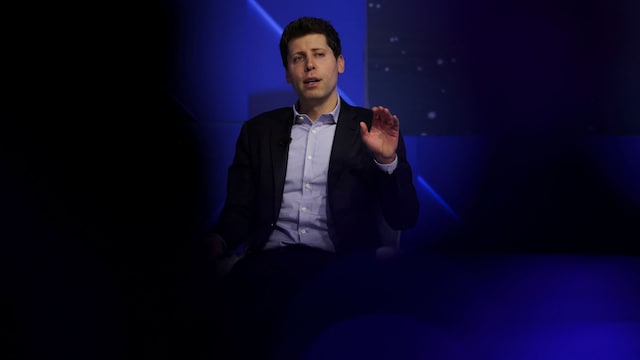
Take OpenAI, for instance. A year ago, every AI announcement revolved around a single question: Is this model smarter than its predecessor? This week, CEO Sam Altman emphasized a different angle during his interview with CNBC, focusing on efficiency.
Source: Reuters
In simple terms, he stated that OpenAI’s latest model achieves the same tasks while consuming significantly less computing power.
Consider it akin to purchasing a car that nearly doubles your mileage. It still gets you to your destination—it just uses a lot less fuel in the process. That might not sound groundbreaking—unless you’re the one covering the fuel costs.
Picture yourself as a CFO implementing AI for thousands of employees. Suddenly, saving money becomes far more thrilling than merely squeezing out additional, minimal gains in performance.
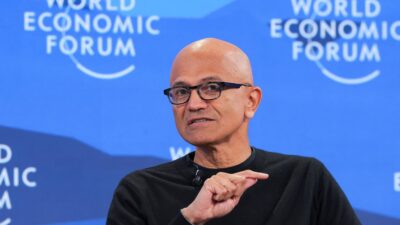
Microsoft CEO Satya Nadella’s comments indicated a similar shift. He wasn’t celebrating AI’s increased intelligence; instead, he was celebrating its enhanced utility.
Fantastic to see GPT-5.6 with Work IQ integrated into Copilot Chat, Cowork, M365 apps, GitHub, and Foundry today.
From multi-step agentic tasks to analysis and content creation, it offers improved reasoning and higher-quality outputs while maintaining efficiency. pic.twitter.com/4AF2Pr48Yq
— Satya Nadella (@satyanadella) July 9, 2026
This is a subtle shift, but one that can transform industries. Companies don’t invest in benchmark scores; they invest in lower expenses.
Then came one of the week’s unexpected surprises.
Elon Musk, who had spent months critiquing Anthropic, conceded on X that he had been “clearly wrong,” labeling the company’s latest AI model as the best in the industry. He also declared that he would never use his influence over computing infrastructure to disadvantage a competitor, insisting that competition shouldn’t compromise fairness.
Whether this marks a genuine transformation or just a rare admission, it certainly wasn’t expected by many.
Meta experienced a week reminiscent of everyone’s occasional missteps.
You create something you genuinely take pride in, only for the internet to swiftly point out the one oversight you missed. Suddenly, you find yourself explaining instead of celebrating.
The company initiated a new AI image generator to intensify competition with OpenAI and Google. Days later, it retracted a feature that enabled users to generate AI images using public Instagram accounts following user privacy concerns.
Then came another awkward revelation. A Reuters analysis discovered that Meta’s own software struggled to identify some AI-generated images after they had been slightly altered. It’s like a security guard failing to recognize someone simply because they changed their hairstyle.
Creating powerful AI is challenging. Developing AI that people actually trust may prove even more difficult. Governments seem to have reached a similar conclusion.
China cautioned companies about a possible security vulnerability in one of Anthropic’s AI coding tools, advising them to update or remove the affected versions.

Meanwhile, Apple discreetly added another permission prompt before certain AI requests are sent to Google Cloud.
Most will likely click “Allow” without a second thought. But these small pop-ups could subtly become one of AI’s most significant battlegrounds.
A year ago, the primary question was straightforward: Can AI actually accomplish this? Now the inquiries sound much different. Can we trust it? Can we afford it? Can we use it without security concerns?
This week demonstrated exactly why. Companies weren’t merely unveiling new AI models—they were raising billions, acquiring AI firms, expanding enterprise solutions, and investing heavily in the infrastructure necessary for scalable AI implementation.
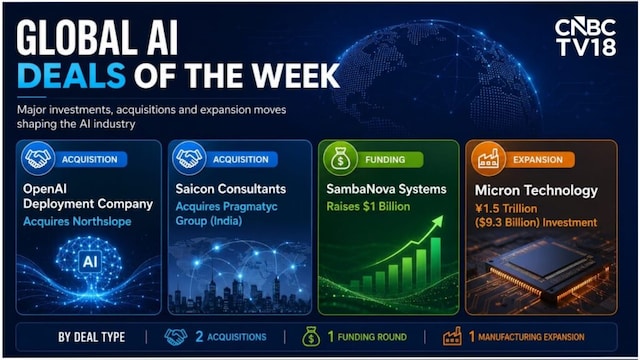
There were developments in India as well.
Fundamentum Partnership introduced a new ₹2,200-crore fund, spearheaded by Nandan Nilekani, with AI as a significant investment focus. Analysts at Wedbush Securities suggest that Indian IT firms may soon transition from experimenting with AI to actually generating substantial profits as more businesses adopt the technology at scale.
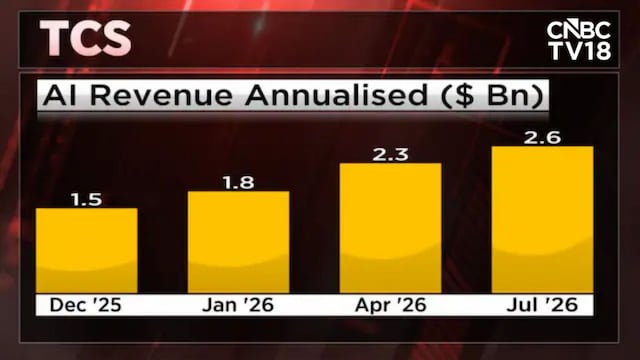
Indian startups secured over $219 million this week. Not every rupee was directed towards AI. That wasn’t necessary.
The broader message is that investors are still convinced that AI will not just transform technology but will also reshape business models.
Individually, these headlines may not seem particularly interlinked. However, collectively, they present a very different narrative.
The AI race is no longer solely about creating the smartest model. It’s about creating one that businesses can afford, one that customers trust, one that governments are comfortable approving, and one that companies can utilize on a daily basis.
Intelligence may have brought AI to the boardroom, but trust, cost, and utility will likely determine who remains there.