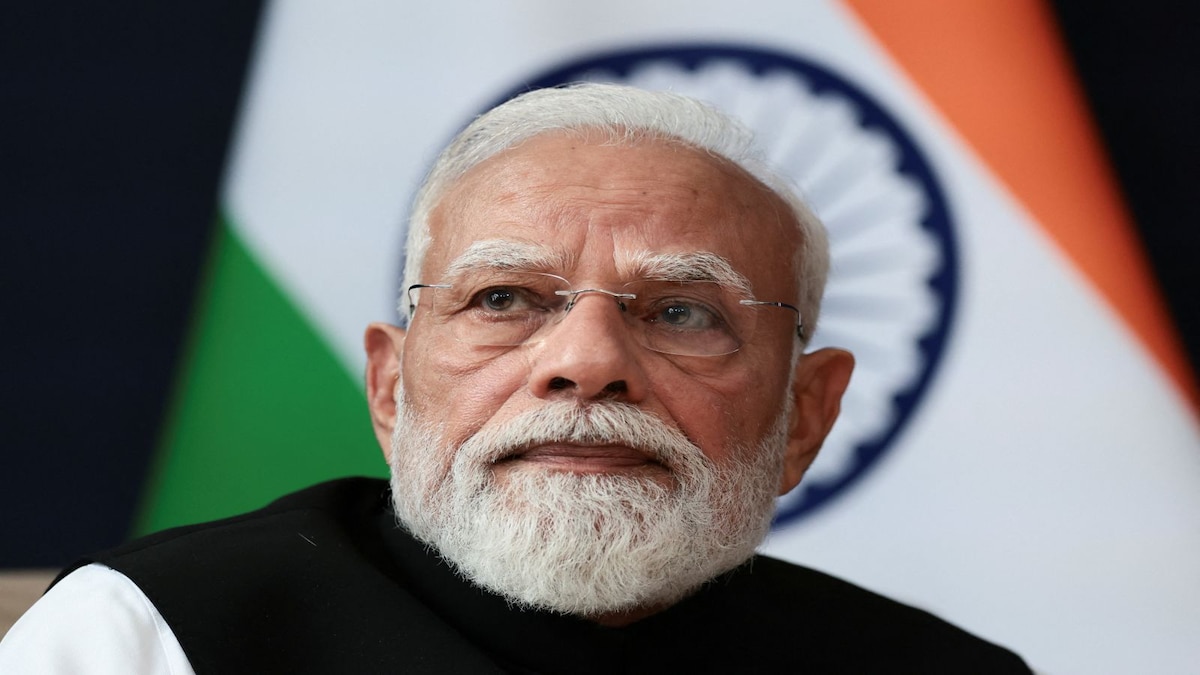
Paying tribute to all those who valiantly defended democratic principles during one of the “darkest times in India’s history,” Modi emphasized that the Emergency also showcased the remarkable bravery of numerous citizens who chose not to remain silent and upheld the ideals outlined in the Constitution.
“The Emergency marked a blatant assault on our Constitution. It led to the suspension of civil liberties, restrictions on freedom of expression, the detention of political figures, journalists, and social activists, as well as attacks on institutions foundational to our democracy,” he remarked in a post on X, referencing the Emergency’s proclamation on this day in 1975.
The Prime Minister noted that the Constitution represents the hopes, rights, and responsibilities of 1.4 billion Indians.
“We express our collective dedication to preserving constitutional values. Guided by the principles of our Constitution, we will work towards an India that steadfastly upholds justice, liberty, equality, and fraternity,” he stated.
From June 25, 1975, to March 21, 1977, India was under a state of Emergency as stipulated in Article 352 of the Constitution.
Since 2025, the government led by Narendra Modi has marked the day as ‘Samvidhan Hatya Diwas’.
A Gazette notification outlined that the Emergency was declared on June 25, 1975, resulting in a “gross misuse of power by the government at that time,” leading to widespread excesses and atrocities against the people of India.
In another post on X, the Prime Minister noted that ‘Samvidhan Hatya Diwas’ also serves as a reminder of that “dark era” when “Indian democracy faced brutal repression”.
“It encourages us to remain unwavering in our commitment to safeguard democracy, the Constitution, and citizens’ rights. I pay my respects to all those who opposed the Emergency,” he expressed in Hindi.
The formal declaration of the Emergency represented a crucial moment in India’s constitutional history. The executive gained extraordinary powers, while state authority became increasingly centralized.
After the proclamation, constitutional protections were systematically nullified.
The Emergency also imposed strict regulations on the press and public information flow via institutional mechanisms and administrative directives.
During this period, Parliament enacted a series of constitutional amendments that diminished judicial review and institutional safeguards. One of the most controversial elements was the forced sterilization campaign.
The Emergency officially concluded in March 1977 following a political shift driven by the general elections.