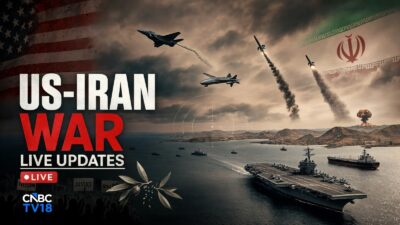
This action occurred while the US administration is urging Iran to negotiate a resolution to the ongoing conflict in the Middle East, which has strained the global economy and could lead to a hunger crisis in some of the most vulnerable countries worldwide.
The most intense fighting concluded with a preliminary ceasefire on April 8; however, the involved parties have yet to reach a consensus on a permanent resolution to the conflict.
Despite last week’s announcement of an extended US-brokered ceasefire, fighting persisted between Israel and the Lebanese militant group Hezbollah.
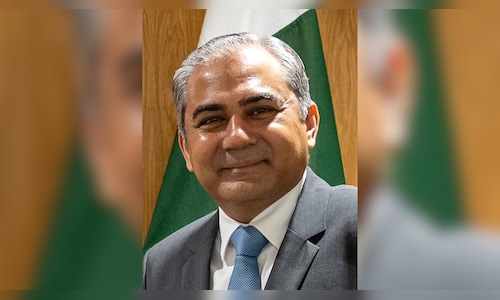
Pakistani Interior Minister Mohsin Naqvi is in Tehran to convey a message from Pakistan’s army chief, Field Marshal Asim Munir, to Iranian Supreme Leader Ayatollah Mojtaba Khamenei, as reported by the Iranian state-run IRNA news agency.
Khamenei has remained out of public view since he assumed leadership of the Islamic Republic after his father was killed on the war’s first day, February 28, during a bombardment campaign initiated by the US and Israel against Iran.
Naqvi met with Iranian Interior Minister Eskandar Momeni late Saturday and engaged in discussions with Foreign Minister Abbas Araghchi on Sunday morning, according to official Iranian media.
The specifics of the message were not disclosed. Pakistani officials stated that Islamabad, with support from regional allies including Qatar, Turkey, and Egypt, is working to bridge the divide between the United States and Iran, promoting efforts to de-escalate tensions and facilitate the reopening of the Strait of Hormuz.
Meanwhile, the newly announced ceasefire in Lebanon, initiated during US-mediated discussions between Israel and Lebanon in Washington last week, seems to be faltering.
Hezbollah, backed by Iran, rejected the US-brokered agreement and instead supports Iran’s position that any resolution to the conflict in Lebanon must be included in negotiations with the US.
Israel conducted airstrikes over the weekend, targeting what it claimed were more than 150 Hezbollah military installations, including rocket launchers and command centers in southern Lebanon.
Early Sunday, Israel reported intercepting or observing five projectiles launched from Lebanon towards northern Israel, which either fell in unpopulated areas or were neutralized. Hezbollah did not immediately claim responsibility for these projectiles but did acknowledge attacking Israeli soldiers in southern Lebanon.
According to the Israeli military, two Israeli soldiers lost their lives during the fighting in southern Lebanon on Saturday.
The clashes in Lebanon, where Israeli forces have occupied significant portions of the southern territory in their latest ground operations, jeopardize efforts to resolve the Iran conflict and reopen the Strait of Hormuz—a critical route for oil and gas shipments. Its closure has sent shockwaves through the global economy.
Iran has insisted that any lasting ceasefire must also encompass Lebanon. Israeli Prime Minister Benjamin Netanyahu aims to continue military operations until Hezbollah is deemed no longer a threat, especially with elections approaching later this year.
Lebanon’s army commander, Gen. Rodolphe Haikal, traveled to Pakistan on Saturday at the invitation of Pakistan’s army chief. Further details regarding this trip were not provided, nor was it clear if it ties to Pakistan’s mediation efforts between Iran and the US.
On Saturday, the US military announced it had downed several Iranian missiles and drones targeting the Strait of Hormuz and Gulf Arab allies, also striking some Iranian coastal surveillance radar sites in retaliation.
“The attack drones posed an immediate threat to regional maritime traffic,” stated US Central Command.
Iran’s Revolutionary Guard claimed it had targeted the Ali Al Salem air base, which hosts US forces in Kuwait, and the US Navy’s 5th Fleet in Bahrain, according to IRNA.
The US military reported no harm to its personnel.
Earlier this month, Iranian drones inflicted significant damage on a passenger terminal at Kuwait’s main airport, resulting in one death and numerous injuries.
In response to Tehran’s control over the Strait, the US military has maintained a blockade on Iranian ports, affecting a vital passage for global oil and natural gas shipping.
Energy prices have surged, creating political challenges for US President Donald Trump’s Republican Party with upcoming midterm congressional elections in November.