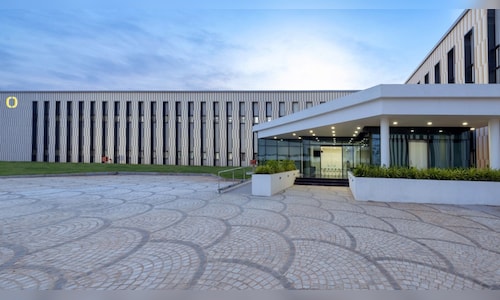
This certification pertains to the company’s integrated biologics manufacturing site, which manages both drug-substance and drug-product operations. The Unit II facility is also equipped to handle drug–device combinations and sterile injectable products.
In a statement last week, Neeraj Sharma, Managing Director and CEO of OneSource Specialty Pharma, remarked that injection pens for delivering semaglutide are considerably more costly than vials, primarily due to the complexities involved in manufacturing, the need for automation, and rigorous sterility standards.
Also Read: Onesource Specialty Pharma shares tumble 18% after semaglutide delay impacts Q3 results
GLP-1 medications, known for their efficacy in weight loss and diabetes management, are experiencing rapid global uptake. Semaglutide, which has lost its patent protection in India and is diminishing exclusivity across several emerging markets, is pivotal to this growth. The market for this drug is valued at around $34.5 billion and is projected to soar to over $85 billion by the mid-2030s, fueled by increasing demand and enhanced accessibility.
Addressing the cost discrepancy, Sharma commented, “Yes, it is significantly more expensive. However, the primary advantage is convenience. Patients can self-administer from home, typically once a week, a benefit that vials do not provide. The complexity of manufacturing pens is reflected in their pricing.”
The manufacturing process initiates in meticulously controlled sterile environments where human intervention is minimized. Central to the production is an isolator-based filling system that guarantees contamination-free conditions during the crucial phase when the drug, already in liquid form, is filled into cartridges.
Also Read: Injectables will continue to lead in weight-loss drugs, says OneSource CEO
“This represents a significant first step in the entire GLP-1 value chain, where the drug is filled on this line,” Sharma noted, adding that the automated system is capable of filling 150 to 200 cartridges per minute. However, actual daily production relies on batch sizes, currently averaging around 50,000 to 55,000 cartridges daily, with the potential to scale up to 1.2–1.3 lakh units.
Shares of Onesource Specialty Pharma Ltd closed at ₹1,539.75, reflecting an increase of ₹33.80, or 2.24%, on the BSE.
(Edited by : Jomy Jos Pullokaran)