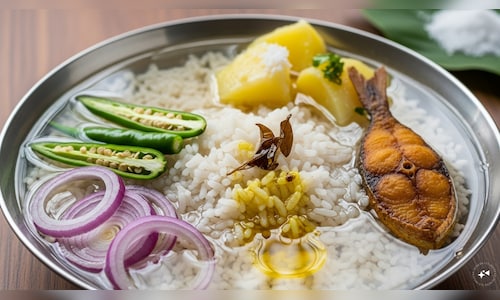
Mamata Banerjee simply suggested: “Ranna hobe na jodi dorkar hoy, ager din panta bhat baniye rakhun“, which loosely means, “don’t cook on voting day if needed, prepare panta bhat a day beforehand.”
The political backdrop highlighted the importance of facilitating smooth and early voter turnout, ensuring that no one misses their opportunity to vote.
However, the internet quickly seized on the mention of panta bhat. Clips featuring her remark spread rapidly across social platforms, with users recreating the dish, adding humor, and presenting it as an emblem of daily Bengali culture.
At the heart of this trend is a dish rich in nostalgia, intertwined with themes of survival, simplicity, and the quiet rituals of soaking, fermenting, and seasoning.
A dish older than headlinesPanta bhat consists of fermented or water-soaked rice, left to soak overnight and consumed the following day, typically accompanied by salt, green chillies, onions, mustard oil, or fried sides.
The process of overnight fermentation introduces beneficial bacteria, making the dish naturally cooling and hydrating—qualities that render panta bhat especially ideal for India’s scorching summer months.
Its origins can be traced back centuries, with 17th-century records noting it as a staple in the Bengal region, encompassing both modern-day India and Bangladesh, highlighting its deep-rooted connection to agrarian life.
In the humid Bengal delta, soaking cooked rice not only kept it from spoiling but allowed for natural fermentation, increasing its shelf life and nutritional benefits. Long before the advent of refrigeration, this method became crucial for food preservation in rural homes and served as a staple for farmers.
In agricultural households, it fulfilled various roles: minimizing food waste, cooling the body in sweltering summer heat, and providing quick, no-cook nutrition for early mornings in the fields.
Gradually, it transformed from a mere necessity into a symbol of cultural identity.
Beyond Bengal: regional variations across India
Though primarily linked to West Bengal and Bangladesh, comparable traditions exist throughout eastern India.
Pakhala bhata is Odisha’s closest counterpart to panta bhat, which is also fermented rice soaked in water, often served with fried vegetables, mashed potatoes, and badi chura (sun-dried lentil dumplings). It even boasts a dedicated observance, Pakhala Dibasa, celebrated on March 20.
In parts of Assam, leftover rice is similarly soaked and enjoyed with salt or curd-based accompaniments, especially in rural settings.
Similar practices are found in some tribal and rural communities in Jharkhand and Bihar, where leftover rice is repurposed in water-based dishes for convenience and relief from heat.
How to make panta bhat Ingredients:
- Cooked rice (preferably leftover, cooled)
- Water (at room temperature)
- Salt to taste
- Green chillies
- Sliced onions
- Mustard oil
Method:
- Take leftover cooked rice and put it in a bowl or clay pot.
- Add enough water to cover the rice completely.
- Cover and let it sit overnight at room temperature (6-12 hours).
- The next morning, drain slightly (or keep soupy, based on preference).
- Add salt, sliced onions, green chillies, and a few drops of mustard oil.
- Serve cold or at room temperature.
Common accompaniments:
- Fried fish
- Mashed or fried potatoes
- Pickles
- Lentil fritters
Take care not to leave panta bhat in the heat for too long, as this can heighten the risk of contamination. Those with sensitive stomachs may wish to enjoy it in moderation.