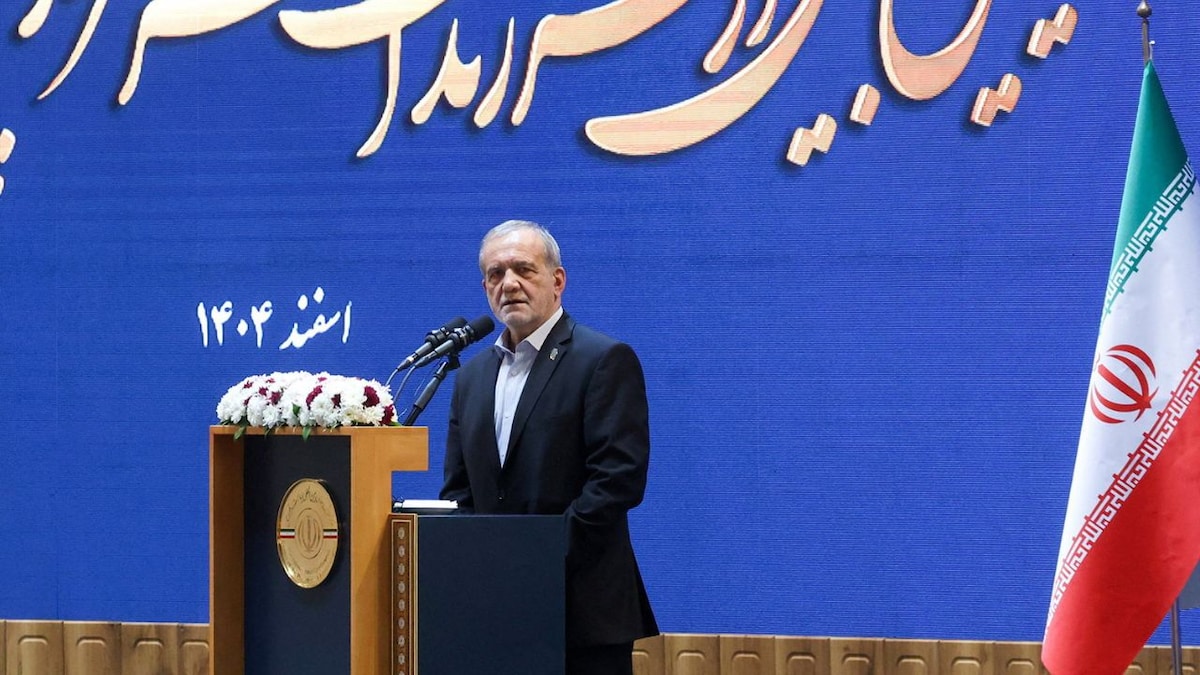
Pezeshkian, on a one-day visit, met with President Asif Ali Zardari shortly after receiving an official welcome from Prime Minister Shehbaz Sharif. Additionally, Army Chief Field Marshal Asim Munir met with President Pezeshkian, where they discussed regional dynamics and peace initiatives, according to an army statement.
During his conversation with Zardari, Pezeshkian praised Pakistan’s “constructive contribution” to the Iran-US dialogue and reiterated Tehran’s commitment to bolstering bilateral relations and fostering regional peace.
Zardari extended a warm welcome to Pezeshkian on his first state visit to Pakistan following the recent US conflict, emphasizing that this visit symbolizes the enduring brotherly ties between the two nations.
He congratulated Pezeshkian on the signing of the Islamabad Memorandum of Understanding and expressed hope that ongoing technical negotiations would lead to lasting peace in the region.
The US and Iran finalized the Islamabad Memorandum of Understanding (MoU) on Thursday, aimed at restoring peace in West Asia and advancing discussions on regional security and other contentious matters.
This visit follows recent talks between Iran and the US in Switzerland, where both parties reached an agreement on a roadmap to finalize a deal in 60 days.
The high-level discussions at the Lake Lucerne Summit in Switzerland, held recently, were conducted under the framework established by the Islamabad MoU, focusing on regional security and contentious issues.
In his meeting with Field Marshal Munir, President Pezeshkian expressed appreciation for Pakistan’s constructive and responsible efforts in promoting dialogue, de-escalation, and stability in the region.
“He recognized Pakistan’s ongoing initiatives to promote peaceful resolutions of disputes and foster understanding among regional stakeholders during these challenging geopolitical times,” stated the army.
Field Marshal Munir reaffirmed Pakistan’s steadfast commitment to achieving peace and stability in the region.
“Both sides emphasized their aim to further strengthen Pakistan-Iran relations and maintain close consultations on issues of mutual interest, with the shared goal of advancing peace, prosperity, and stability throughout the region,” the army mentioned.
Pezeshkian’s visit is intended to discuss the comprehensive implementation of all clauses outlined in the agreement between Iran and the US, as well as regional and international developments of shared concern.
The Iranian leader arrived at Nur Khan airbase, where he was greeted by President Zardari, PM Sharif, and other officials, as reported by state-run PTV. Pakistan’s JF-17 Thunder jets escorted President Pezeshkian’s plane upon entering the country’s airspace.
Separately, Iranian Foreign Minister Abbas Araghchi arrived from Muscat, having traveled there with Parliament Speaker and chief negotiator Mohammad Bagher Ghalibaf to hold discussions with Omani leadership regarding the Strait of Hormuz.
Before leaving Tehran, the Iranian president indicated that his visit “aims to ensure the full implementation of the memorandum under international law.” He noted that the agreement would enhance stability and security in West Asia, according to Iran’s state-run Press TV.
In a post on X, Pezeshkian stressed that “the effectiveness of the talks depends on unwavering commitment to the agreed obligations and their precise execution.” He stated, “Progress in this regard will be evaluated based on practical adherence to accepted responsibilities. Comments outside the agreed text do not facilitate further negotiations.”
During the visit, both parties will evaluate the entirety of bilateral relations and explore new avenues for cooperation across various sectors, including trade, energy, border security, people-to-people exchanges, and regional connectivity, as the Foreign Office highlighted on Monday.
This visit will also serve as a crucial opportunity to discuss ongoing diplomatic efforts following the signing of the Islamabad Memorandum of Understanding, along with regional and international developments of common interest, the Foreign Office added.
Security measures in Islamabad were heightened due to the Iranian leader’s visit. The government restricted access to bus terminals in the capital to manage movement into the city, and the Red Zone was closed off.
The Islamabad High Court and the Federal Constitutional Court also delayed case hearings, as both courts are situated in the high-security Red Zone, which is off-limits to visitors today.
Also Read: Poor monsoon may impact kharif crops, warns agri minister Shivraj Singh Chouhan; rainfall 43% below normal