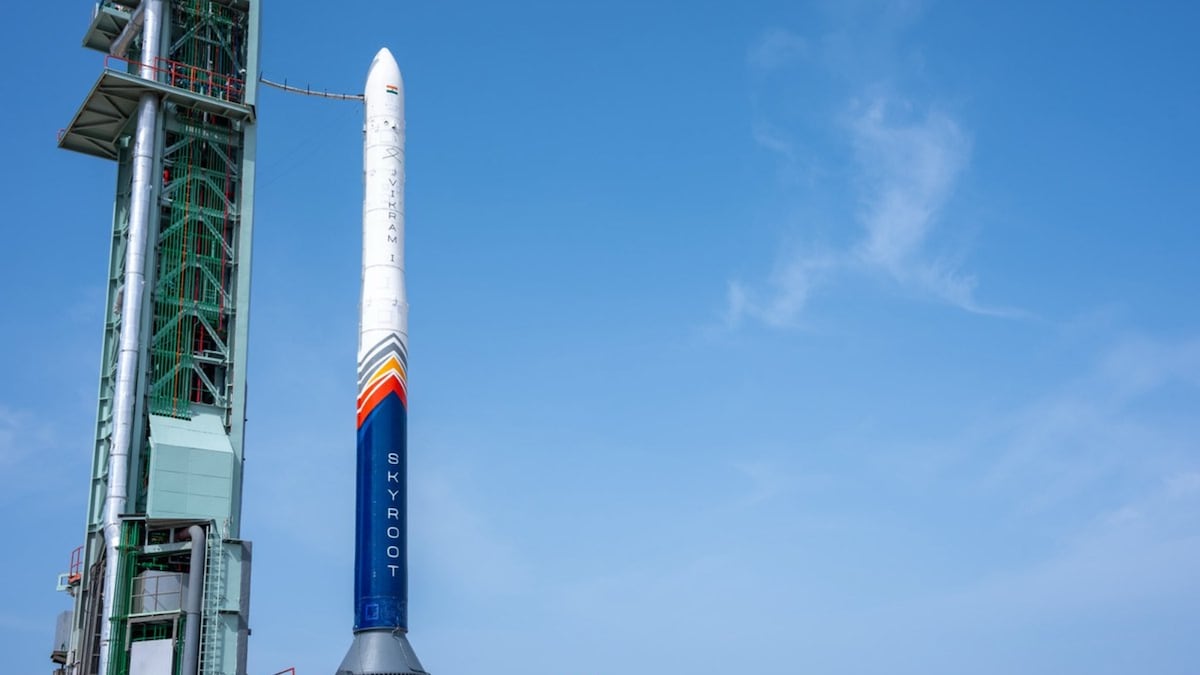
Skyroot Aerospace is poised to launch Vikram-1, India’s pioneering private orbital rocket, marking a significant advancement for the nation’s expanding $8.4 billion space industry…

 1/11
1/11Space Race | India is stepping into a novel era of space exploration, having already deployed spacecraft to both Mars and the Moon while launching hundreds of satellites. The countdown for its inaugural private orbital launch is now underway, scheduled for 18 July at 11:30 am IST. The Department of Space asserts that India is chasing ambitious objectives in deep-space exploration, human spaceflight, and orbiting infrastructure. The nation estimates its space economy at $8.4 billion, accounting for approximately three percent of the global market, with a goal to quintuple this figure by 2033, targeting $44 billion and reaching $100 billion by 2040.
 2/11
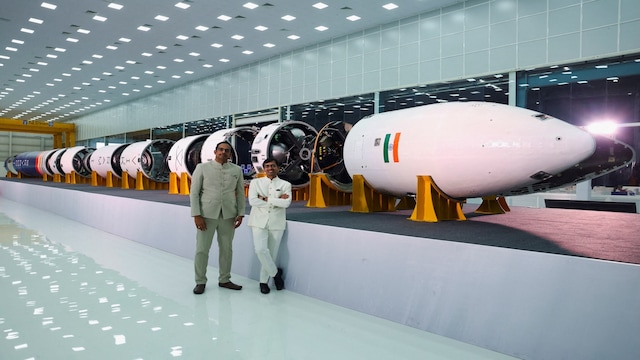
2/11Startup Surge | India opened its space sector to private investments in 2020, leading to rapid expansion. Over 400 startups have emerged since then, securing more than $500 million in funding, with $150 million captured in the last year alone. Numerous companies collaborate closely with the Indian Space Research Organisation (ISRO) while also catering to India’s defense sector, highlighting the growing intersection of space technology and national security. According to the government, this shift reflects an increasing confidence, technological sophistication, and a long-range vision for India’s role in the global space landscape.
 3/11
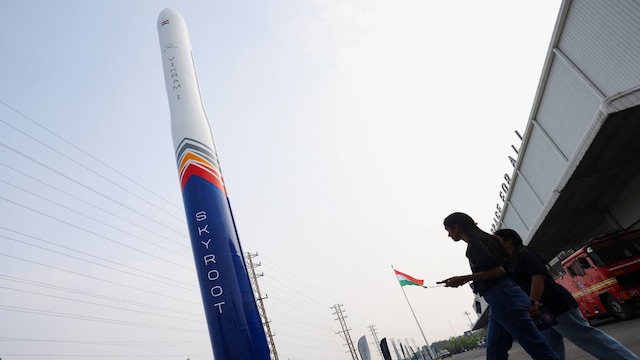
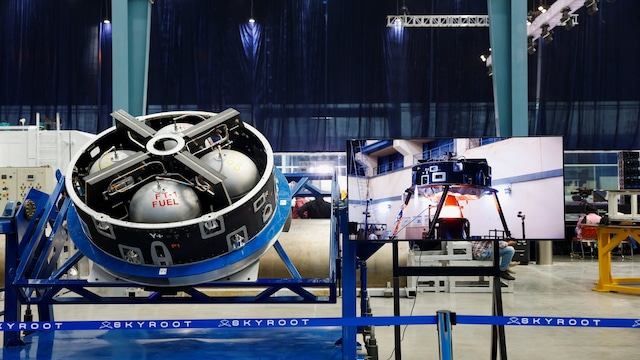
3/11Rocket Ready | Skyroot Aerospace, based in Hyderabad, will launch Vikram-1 during its Test Flight-1, dubbed Mission Aagaman, on 18 July at 11:30 am IST. Designed to transport small satellites into low-Earth orbit, the rocket will take off from the historic First Launch Pad at SDSC-SHAR, Sriharikota, representing India’s inaugural private orbital launch. Pawan Chandana, Skyroot’s co-founder, left a stable position at ISRO to establish the company in 2018. “This is a landmark moment for both Skyroot and India,” he stated to AFP, labeling it as the next significant milestone for the nation’s burgeoning private space sector.
 4/11
4/11Infinity Factory | Skyroot has become the first startup to establish a formal partnership with ISRO. In 2022, it successfully launched India’s first privately developed sub-orbital rocket. The company’s “Infinity” campus in Telangana is capable of producing one orbital rocket each month. Chandana credits India’s existing launchpads and decades of ISRO experience, noting the environment as one filled with “over a thousand thriving startups.” “We are leveraging the foundation built over 60 years,” he remarked.
 5/11
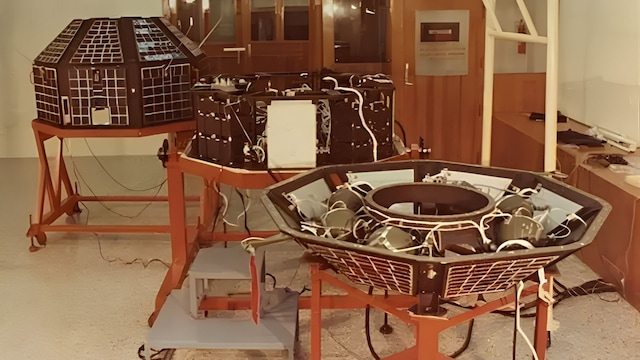
5/11ISRO’s Edge | India’s aspirations in space are bolstered by nearly sixty years of work by ISRO, which launched its inaugural satellite using a Soviet rocket in 1975, establishing its reputation for cost-effective missions. The agency has accelerated its pace since 2014, aiming for a larger slice of the commercial satellite market. ISRO has successfully launched over 430 foreign satellites, generating over $600 million, in addition to more than 144 of its own. In 2014, India became the first Asian country to achieve Mars orbit.
 6/11
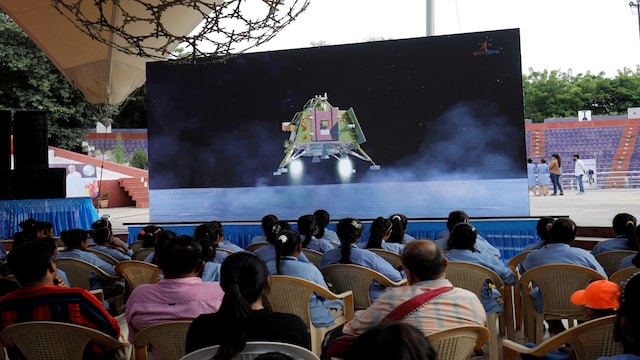
6/11Mars, Moon Mission | India’s lunar program, dubbed Chandrayaan, which translates to “Mooncraft” in Sanskrit, features a 2008 orbiter, a failed landing attempt in 2019, and a triumphant 2023 mission that successfully deployed a rover on the Moon. This achievement positions India as the fourth nation to land there, joining the ranks of Russia, the US, and China. A fourth Chandrayaan mission is slated for 2027, with ambitions to return lunar samples, while a Venus orbiter mission is scheduled for 2028. Ongoing is India’s Aditya mission, which monitors the Sun’s outer layers and space weather.
 7/11
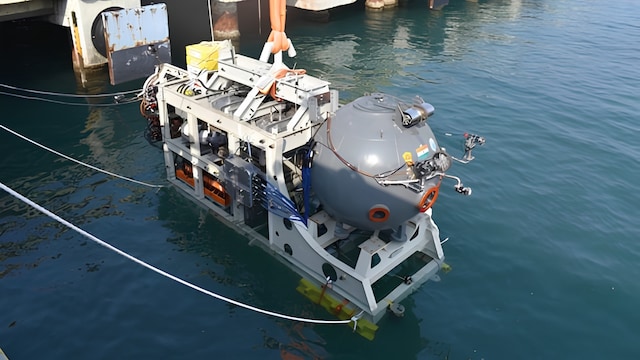
7/11Deep Sea Dive | ISRO technology is aiding India’s Matsya submarine—named after the fish avatar of the Hindu deity Vishnu—which aims to carry scientists six kilometers deep underwater by 2027 to tap into deep ocean resources, including rare earth elements, as stated by Science Minister Jitendra Singh. India is also expanding its Sriharikota launchpad and constructing a second spaceport at Kulasekarapattinam. The nation collaborates with NASA, the European Space Agency, France, Germany, Italy, Japan, and Saudi Arabia, while Russia is aiding its crewed spaceflight preparations.
 8/11
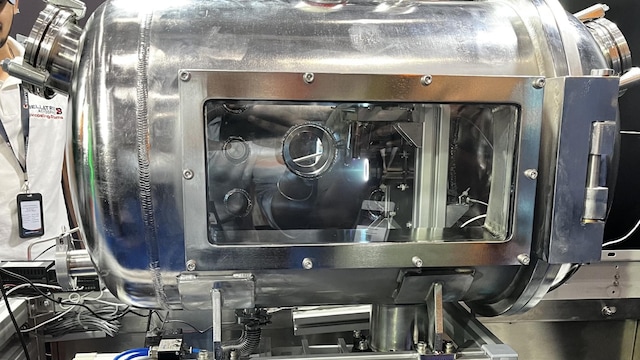
8/11Private Players | Alongside Skyroot, various other companies are instrumental in shaping India’s private space landscape. Bengaluru-based Pixxel develops hyperspectral imaging satellites that provide Earth observation data to clients in India, Europe, and the US, backed by investment from Google; its data aids in monitoring soil health and mining operations. Bellatrix Aerospace focuses on satellite propulsion systems, while Agnikul Cosmos manufactures small launch vehicles using 3D-printed rocket engines. Pixxel founder Awais Ahmed noted that the sector’s opening enables ISRO to focus on research, while private enterprises handle the production and export of commercial satellites.
 9/11
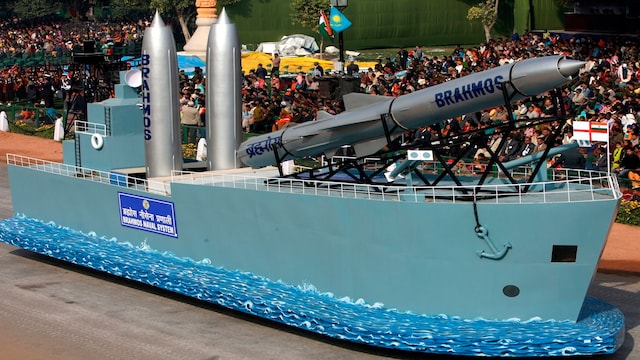
9/11Defence Boost | The nexus between India’s civil space and defence sectors is growing closer, with multiple companies supplying technologies like rockets, propulsion, and guidance systems to both fields. ISRO has emphasized its “active coordination” with the Defence Research and Development Organisation and maintains strong ties with the India-Russia BrahMos missile initiative. Demand for these technologies has surged following India’s 2025 conflict with Pakistan, where drones and missiles played crucial roles. GalaxEye founder Suyash Singh noted that the need for imagery is rising amid global conflicts, with the firm’s immediate focus shifting more towards defense work.
(Photo Credit : Screengrab)
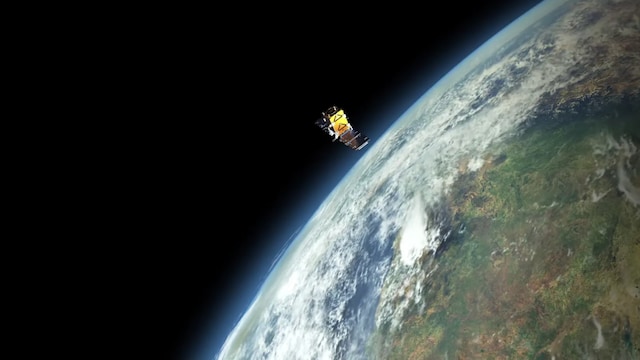
10/11Satellite Setback | Recently, GalaxEye lost connection with Drishti, India’s largest privately developed satellite and the world’s first multi-sensor OptoSAR satellite. Singh characterized the experience as “fantastic,” acknowledging that no private Indian company had attempted a project of that scale before. He envisions GalaxEye operating a “full-fledged constellation” serving global clients by 2030, declaring that “space must be India’s success story.” Founders have noted that access to skilled labor and funding remains a hurdle, emphasizing the importance of government support to bridge the gap with competitors.
 11/11
11/11Crewed Countdown | ISRO is gearing up for its inaugural crewed mission, Gaganyaan, translating to “sky craft,” with the first of three uncrewed test flights anticipated in late 2026, ahead of launching three astronauts into a 400-kilometer orbit for a three-day duration. In 2025, Indian Air Force pilot Shubhanshu Shukla participated in a SpaceX Dragon flight, marking him as the first Indian to arrive at the International Space Station. Prime Minister Narendra Modi has ambitions for India to establish its own space station by 2035 and to place an astronaut on the Moon by 2040.