Analyzing the election results in West Bengal, Tamil Nadu, Kerala, Assam, and Puducherry, Bhattacharya emphasized that voters have clearly indicated that effective governance and delivery are more important than populist promises. “Welfarism alone is not enough,” he noted, referencing the significant changes observed in key states despite established welfare programs.
In West Bengal, where the BJP is poised to conclude Mamata Banerjee’s 15-year rule, Bhattacharya attributed the results to a mix of governance issues and voter fatigue. “There was clear public dissatisfaction. Governance credibility and anti-incumbency collectively influenced this decision,” he remarked.
The BJP’s robust performance across both urban and rural areas, including traditional strongholds of the Trinamool Congress like Kolkata, Howrah, and Hooghly, underscores the magnitude of this shift. The party is also making strides in several North Bengal districts, indicating a widespread mandate that transcends isolated victories.
Bhattacharya also challenged the notion that identity politics distinctly dictated the outcomes. “In Bengal, identity politics did not resonate… voters seemed disenchanted with governance and opted for an alternative,” he stated, highlighting that the electorate was open to supporting a party viewed as an outsider in search of improved administration and economic results.
The implications for economic policy are profound. Bhattacharya remarked that reindustrialization, especially in Bengal, will be both essential and challenging. Given the state’s migration pressures and limited job creation, he asserted there is now a compelling economic rationale for reviving industry, even though past efforts have faced resistance. “There is now a strong economic case for industrialization… but implementing it will be demanding,” he added.
In Tamil Nadu, the rise of actor-turned-politician Vijay has disrupted the long-held sway of the DMK and AIADMK, with both parties significantly trailing behind. Bhattacharya characterized the initial performance as “very impressive,” although he warned that the state may face a hung assembly, making coalitions vital for government formation.

Also Read | Anti-incumbency, opposition splits fuel BJP’s multi-state assembly election gains: Experts
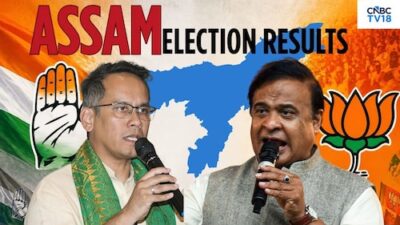
The broader electoral landscape underscores the shift in voter priorities. In Kerala, the Congress-led UDF has reclaimed power after a decade, ending Left governance in the state, with no Left-led government remaining in India for the first time in 50 years. In Assam, the BJP-led NDA is anticipated to retain power with a solid mandate, while in Puducherry, the current administration has maintained its position.
Overall, the results signal a transforming political economy where voters increasingly prioritize governance outcomes, job creation, and economic performance over traditional welfare-focused narratives. Bhattacharya indicated that this trend might influence future electoral strategies and policy priorities, with governments expected to concentrate more on implementation and less on headline announcements.