The four-day event drew over 400,000 visitors and featured 1,117 exhibitors, a significant increase from about 800 last year. This year’s conference saw more than 300 new products introduced, as reported by Channel NewsAsia (CNA).
China has created over 400 models of humanoid robots, making up more than half of the global total, as noted by state media referenced by The Associated Press (AP).
Humanoid robots fold laundry, make sandwiches and dance
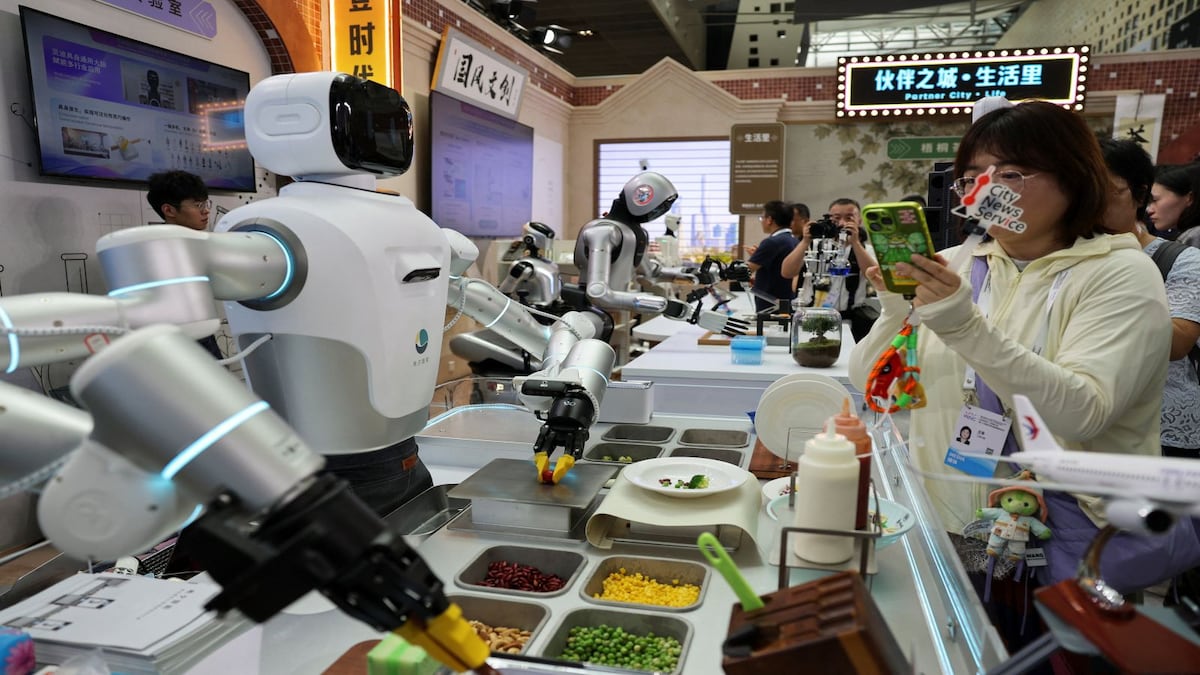
A video shared by AFP from the exhibition displayed humanoid robots folding laundry, preparing sandwiches, dancing, playing football, taking photos, and sorting packages. These demonstrations showcased the growing development of AI-powered robots for various settings, including homes, hotels, warehouses, and retail environments.
???????? Robots dance, fold laundry and make sandwiches at Shanghai’s AI expo
China’s array of humanoid robot manufacturers presented their innovations at the World Artificial Intelligence Conference in Shanghai. The nation has been keen to highlight its advancements in the field… pic.twitter.com/9Ghznfud3u
— AFP News Agency (@AFP) July 22, 2026
Humanoid robots move closer to everyday use
The exhibition included robots created for a variety of practical tasks, such as stocking shelves, sorting groceries, brewing Chinese tea, and offering customer service, according to CNA.
One of the exhibitors, Keenon Robotics, presented its XMAN-R1 humanoid robot. This robot is currently being tested in hotels across China, where it can deliver items to guest rooms, collect used linens, transport them to laundry facilities, and fold them post-wash.
Keenon, one of the pioneers in hotel service robots in China, emphasized that these machines are meant to support staff rather than displace them.
“Robots are primarily here to assist humans at work,” stated Wan Bin, the company’s chief operating officer.
He noted that robots can fill in during staff breaks, extend business hours, and collaborate with human employees.
While humanoid robots have started to be implemented commercially in controlled environments like hotels, restaurants, and office buildings, broader use in more complex situations will depend on further technological advancements.
AI-powered retail stores on display
Retail technology was another significant highlight of the conference. SenseTime, a Chinese AI firm, unveiled its SenseMart Go concept—a robot-operated convenience store where humanoid robots greet customers, take orders, fetch products, and replenish shelves.
Liu Hengyi, chief technology officer at SenseTime SmartGo, mentioned that each robot-operated convenience store can recover its costs in roughly a year.