The keynote at Apple Park in Cupertino, California, concluded a two-year anticipation since Apple first announced a more intelligent and capable Siri. This event also marked Tim Cook’s final keynote as CEO, adding a uniquely personal touch to the occasion.
A Revamped Siri, Powered by Google Gemini
The standout revelation was a complete redesign of Siri, built on a unique Gemini model from Google. This partnership, confirmed in January, is said to cost Apple approximately $1 billion annually.
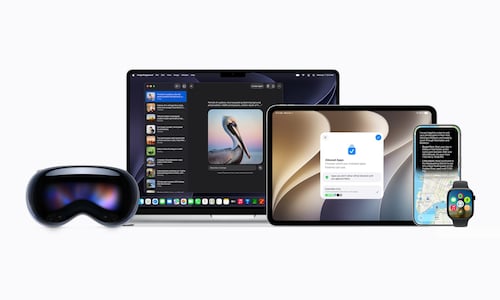
The redesigned assistant, now referred to as Siri AI, represents a considerable shift from what Apple users have been accustomed to for over a decade. It is now available as a standalone app on iPhone, iPad, and Mac, shows up within the Dynamic Island with a “Search or Ask” prompt, and allows multi-step commands with a persistent conversation history synchronized across devices via iCloud.
Users can now engage in comprehensive discussions with Siri for research and brainstorming. Apple showcased this feature by retrieving the FIFA 2026 World Cup schedule and then asking Siri to assist in planning a watch party for a specific match, including food suggestions from the competing nations.
On Mac, the new Siri integrates with Spotlight, while on iPhone, it resides in the Dynamic Island. Conversations sync across iPhone, iPad, Mac, Apple Watch, and Vision Pro.
However, there is a significant caveat. The new Siri will not be accessible in the European Union on iOS and iPadOS, at least initially, excluding a substantial number of customers from the keynote’s main feature. Apple did not share a timeline for EU availability.
Broader Apple Intelligence
In addition to Siri, Apple revealed a comprehensive expansion of its Apple Intelligence features. This includes App Actions, on-screen awareness, Siri AI in CarPlay and AirPods, system-wide automatic proofreading, Smart Reply in the user’s writing style, enhanced Image Playground and Genmoji tools, Call Context, advanced Shortcuts automations, and accessibility improvements such as detailed image descriptions in VoiceOver and the ability to Ask Magnifier about surroundings.
The Photos app is receiving a notable upgrade with natural-language editing that lets users articulate changes in simple language. iCloud Shared Albums will support full-resolution photos, extending compatibility to Android and Windows as well.
Support for third-party AI models was also mentioned. Users will have the option to direct queries to ChatGPT, Claude, or Gemini based on their preference.
macOS Golden Gate
Apple introduced macOS Golden Gate 27 as the next major version for the Mac, featuring refinements to the Liquid Glass visual design from macOS Tahoe 26, responding to widespread feedback that the prior iteration seemed incomplete. The new version includes a slider to adjust the intensity of the glass effect system-wide.
This release also carries a significant note. macOS Golden Gate signifies the official conclusion of Intel Mac support.
The transition to its own silicon, initiated in 2020, is now finalized.
homeOS: A New OS
One of the more surprising announcements was homeOS, a new operating system designed for Apple’s forthcoming HomePad device. The HomePad combines a HomePod speaker with a 7-inch display and an A18 chip. Apple has made the software developer preview available ahead of the hardware, expected in autumn 2026.
iOS 27 and Other Platforms
Apple characterized WWDC 2026 as a year focused on refinement, emphasizing stability, battery life, and broad device support. The iPhone 11 remains on the iOS 27 compatibility list.
Apple claims that apps now launch up to 30 percent faster, while AirDrop transfers have improved by as much as 80 percent. AirPods are also finally receiving a custom EQ in iOS 27. visionOS 27 includes Liquid Glass enhancements, Siri AI integration, and new accessibility features, including wheelchair controls. Developer betas for all platforms were made available immediately after the keynote.
Women’s Health: Perimenopause and Menopause Tracking
Apple announced the addition of perimenopause and menopause support to its existing cycle-tracking feature in the Health app. Since 2019, Apple has been delving deeper into women’s health, beginning with the introduction of a cycle tracker for Apple Watch and iOS. This latest update addresses a topic that has gained significant attention in mainstream media and social platforms.
The Health app will now monitor specific indicators of perimenopause and menopause in users’ body data and issue alerts for notable changes. The update also introduces tailored support for menopause education and fitness guidance within the Health app. This feature will be incorporated into watchOS 27 and iOS 27 and is set to launch for users this autumn.
Child Safety
Apple dedicated ample time to enhancing parental controls and child safety. Parents and guardians can now establish child accounts that are mandatory for those under 13 and can remain active until the age of 18. These accounts allow for age-customized safeguards, including restrictions on adult websites, age-appropriate content, and App Store limitations. Parents may also manage who their child can contact via Phone, FaceTime, and Messages.
Developer Tools
Apple revealed AI-assisted coding, testing, and documentation capabilities within Xcode. Significant performance upgrades were highlighted across Safari, Wallet, Maps, and other core system applications.
Tim Cook’s Farewell
Tim Cook concluded the keynote with a brief, personal message as he prepares to depart. Apple announced his transition from CEO in April, appointing Senior Vice President of Hardware Engineering John Ternus as his successor. Cook will assume the role of executive chairman on 1 September. He has led Apple since 2011, following Steve Jobs’ passing. Ternus has been with the company for 25 years.
Ternus did not make an appearance during the keynote itself.
All software updates are expected to be rolled out to users later this year, coinciding with the iPhone 18 lineup.