The British consumer technology brand Nothing is seeing success with India’s youthful and aspirational demographic, achieving its highest-ever day-one sales in the mid-premium segment for the Phone (4a) series, despite a significant price increase.
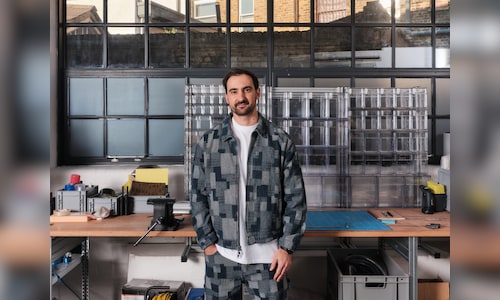
In an interview with CNBC-TV18, Nothing’s Co-Founder and India President Akis Evangelidis highlighted that the strong demand underlines the brand’s approach of prioritizing design and user experience over competing on price.
With the Phone (4a) series priced up to nearly ₹39,999 for the Pro variant, this represents a considerable increase from the previous model. Nevertheless, Evangelidis noted that the launch has seen “the best day-one sales ever across Amazon and Flipkart” in its category.
“We are becoming the preferred choice for that audience,” he remarked.
Focus on Gen Z in India
Central to Nothing’s strategy in India is a keen focus on younger consumers, especially those who are entering the workforce.
Evangelidis stated that the majority of Nothing’s user base in India is under 25, reflecting the country’s substantial Gen Z demographic. “These are users who are finishing college or starting their first jobs. We have noticed a trend where their first salary purchase is a Nothing phone,” he shared.
The company is concentrating on the mid-premium segment, aiming to establish a “generational brand” that evolves with its users as their financial capabilities grow.
Positioned as an ‘Apple alternative’
Nothing is positioning itself as an aspirational alternative to Apple Inc, particularly appealing to younger consumers moving beyond strict value-for-money considerations.
Evangelidis emphasized that the brand has deliberately steered clear of competing solely on price, focusing instead on product design and software experiences. “If you design just for value, users will switch the moment a cheaper option appears. We are fostering loyalty through experience,” he added.
Internal metrics, such as net promoter scores, suggest that user experience remains the primary motive behind purchases, he mentioned.
ALSO READ | Apple opens its second official retail location in Mumbai, sixth in India
Nothing’s market presence in India
Evangelidis disclosed that Nothing has been the fastest-growing smartphone brand in India over the past two years, with its market share nearing 3% last year.
The company continues its expansion efforts through both online and physical channels, experiencing robust foot traffic at brick-and-mortar stores. One such location saw nearly 800 visitors in a single day. “We are not slowing down anytime soon. Our goal is to become a leading brand in India,” he stated.
Beyond just demand, Nothing views India as a key long-term manufacturing and innovation hub.
Through its sub-brand CMF and a manufacturing alliance with Optiemus, the company aims to boost production in India for both local consumption and export opportunities.
Evangelidis expressed that India has the potential to mirror China’s role as a global electronics center over the coming decade, supported by government incentives and a talented workforce.
Nothing is also adopting a unique approach to product launches, opting not to introduce flagship smartphones annually.
Evangelidis stated that the company aims to take the necessary time to achieve significant innovation rather than offering minor updates. “We want to surprise users with every product. Flagships should redefine standards, not just adhere to a schedule,” he explained.
On the product front, Nothing is continuously enhancing its Glyph interface, now reimagined as the Glyph Matrix, designed to minimize screen dependency. This innovation aims to keep users informed without the need for constant phone unlocking, promoting more intentional smartphone engagement.
ALSO READ | Nothing Phone 3 to eliminate Glyph Interface — Implications for the brand’s identity
“With AI and hyper-personalization, smartphones should enhance user experience rather than encourage endless scrolling,” Evangelidis stated.
Despite the strong market response, Nothing acknowledged it underestimated the demand for the Phone (4a) series, which resulted in supply challenges. “We were somewhat conservative in our forecasting. Now we are increasing production. It’s a positive problem to have,” Evangelidis concluded.
(Edited by : Shoma Bhattacharjee)
First Published: Mar 24, 2026 8:20 PM IST