At the core of this shift lies a broader business question: Who truly holds the reins of creativity today—agencies, algorithms, or creators? In a data-driven landscape, does creativity still possess the ability to influence culture rather than merely generating numbers?
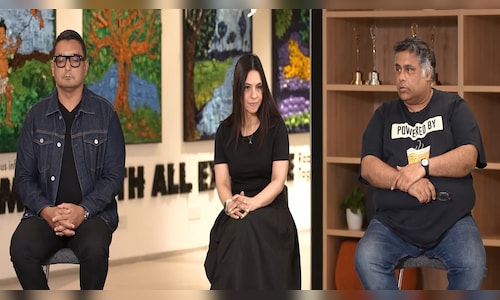
To delve into this change, CNBC-TV18 engaged with Sukesh Nayak, Harshad Rajadhyaksha, and Kainaz Karmarkar, Chief Creative Officers at Ogilvy India, about how the creative economy is evolving—and why claims of creativity’s decline might be overstated.
Creativity is not decoration—it is problem-solving
Sukesh Nayak asserts that the notion of creativity losing its relevance misinterprets the essence of advertising.
“At its essence, our business revolves around problem-solving,” he stated. “Advertising typically arises from a problem—be it launching a new product, countering competition, or shifting perceptions. Creativity is our tool for addressing these challenges.”
In that context, AI and automation do not usurp creativity; they elevate standards. While tools may evolve, the necessity for understanding human insight remains constant. Nayak draws an analogy to parenting a teenager: without creativity, even everyday issues become insurmountable.
From agencies to smartphones: Creativity gets democratized
If creativity still holds importance, where does its authority reside today? Harshad Rajadhyaksha points out that this is where genuine disruption occurs.
“Previously, the hierarchy was distinct. Agencies had the advantage of branding themselves as ‘creative,’” he remarked. “That advantage has now shifted.”
The smartphone has democratized creativity. A jalebi vendor in Raipur or a college student in Indore can now attract large audiences—not by chance, but by tapping into what people desire to see. This transition has fundamentally changed the power dynamics.
Brands are adapting accordingly, with increasing investments in influencers and creator-driven content. Rajadhyaksha contends that resisting this transformation is futile.
“The key word is collaboration,” he stated. “Instead of viewing them as adversaries, we should recognize, value, and draw energy from each other.”
Agencies vs influencers is the wrong debate
The rise of creators is often depicted as a win-lose scenario against agencies. The leadership at Ogilvy contests this narrative.
Creators offer cultural relevance, rapid execution, and audience connection. Agencies contribute rigor, consistency, and enduring brand stewardship.
Rajadhyaksha likens it to cricket; a new player may deliver spectacular performances, but sustained success across an entire tournament stems from years of dedication.
“That is rigor,” he explained. “And as brands adopt a long-term strategy, they still require partners who consistently deliver quality.”
Why craft still separates brands from noise
In a digital landscape fixated on trends and virality, craft often becomes the first casualty. Kainaz Karmarkar warns that this assumption is perilous.
“There exists a belief now that a lack of craft is acceptable—that it can be compensated for by influencers or trends,” she remarked. “However, in the long haul, craftsmanship is what distinguishes you.”
For Karmarkar, the creative process has evolved. Tasks that once required a small team now necessitate an entire ecosystem.
“The small group nurturing an idea has expanded into a village,” she said. “Ideas no longer progress sequentially. They now operate in parallel—across various formats, platforms, quick commerce, and on-ground activations.”
The takeaway is unmistakable: today’s creativity encompasses not only ideation but also orchestration.
The real test of relevance is not awards—it’s WhatsApp
Nayak emphasizes that true success is measured more by grassroots engagement than by accolades or industry recognition.
“Nobody wakes up thinking, ‘I can’t wait for the next advertisement,’” he noted. “If our work circulates in WhatsApp groups with family, friends, uncles, and aunties—and eventually returns to us—that’s the highest form of validation.”
In a world where attention is scarce, advertising competes not only with other ads but also with movie trailers, reels, memes, and live sports. Relevance, rather than mere reach, defines sustainability.
Also Read: Storyboard18 | Sir Martin Sorrell on AI, consolidation and India’s rising role in global advertising
Creativity after AI: accelerated, not replaced
Artificial intelligence is undoubtedly transforming content production and optimization. However, the leadership at Ogilvy asserts that while AI may expedite execution, it cannot replace human judgment.
Craft, insight, and cultural comprehension remain vital for whether a brand cultivates equity or merely garners impressions.
As Nayak highlights, creators possess their own craft. “Craft isn’t measured by time spent; it’s about understanding what differentiates you.”
The long game
As Indian advertising navigates its swiftest transformation yet, the outlines of the future are becoming clearer. Creativity is no longer solely the province of agencies. Influence is no longer confined. Execution is no longer linear.
Still, amid the cacophony, one element prevails: enduring brands are established through disciplined creativity, not shortcuts.
In the age of AI, creativity may be quicker, more fragmented, and more contested—but industry leaders maintain that its strategic significance is far from lessened.
Watch the accompanying video for the entire conversation.