In an interview with CNBC-TV18, Dhume noted that recent statements and policy decisions from Washington have unsettled Indian public opinion, despite Rubio’s efforts to stabilize the relationship through discussions with Prime Minister Narendra Modi and External Affairs Minister S. Jaishankar.
“It’s evident that US-India ties have been lacking momentum over the past year,” Dhume said. “A sizable portion of public opinion in India has been quite disturbed by what they perceive as hostile remarks and actions from Washington.”
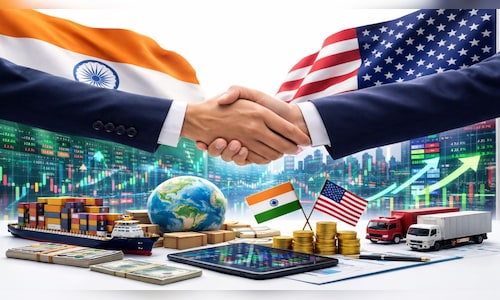
Rubio, at a joint conference with Jaishankar, labeled India as one of Washington’s key strategic partners and countered claims that the bilateral relationship has weakened. He also expressed optimism that a trade agreement between the two nations could be concluded in a matter of weeks.
However, Dhume advised that Rubio’s outreach should be interpreted through the lens of his diplomatic duties. “He has obligations to fulfill; that’s part of his role,” Dhume remarked, adding that Rubio is one of the few individuals within the US administration capable of mending the relationship.
“This is a profound relationship that has been built over 25 years,” he stated. “If anyone in the US government can genuinely work on repairing this, it would be someone like Secretary of State Marco Rubio.”
These comments come at a crucial moment for India-US relations, as there are increasing concerns in India regarding American trade rhetoric, visa restrictions, and recent political messages from Washington. US President Donald Trump recently supported a social media post labeling India as a “hellhole” while later praising bilateral ties during a virtual address at an event hosted by the US Embassy in India.
Dhume also cautioned that Indian technology firms and professionals should brace for a stricter US immigration climate, suggesting that the H-1B visa program is unlikely to return to the more lenient structure seen under previous administrations.
“It’s evident that the MAGA movement that brought Donald Trump to office is antagonistic to immigration,” he commented. “Some believed it was solely against illegal immigration, but that is not the case for legal immigration.”
Rubio had previously clarified that recent adjustments to visa and green card policies weren’t directed exclusively at India but were part of a broader immigration system reform. Nonetheless, Dhume contended that domestic American politics have fundamentally altered the landscape for skilled-worker visas.
“I personally believe the chances of the H-1B returning to its prior state during the Biden administration or earlier are very slim,” he remarked.
This comes amidst reports of a significant decline in new H-1B visa approvals for major Indian IT companies, including Infosys, Tata Consultancy Services, and Cognizant.
Dhume also suggested that some Indian outsourcing companies may have extended the original intent of the program, even without breaking any laws. “The US is rebooting it,” he stated.
Addressing broader strategic matters, Dhume expressed doubt about the future significance of the Quad grouping among India, the US, Japan, and Australia. His remarks come ahead of the scheduled Quad foreign ministers’ meeting in New Delhi.
“The prevailing sentiment indicates that the Quad is less critical to the US than it once was,” he stated, noting the absence of a Quad summit since Trump resumed office and Washington’s increasing focus on rejuvenating ties with China.
Rubio, however, emphasized that the Quad represents an important alignment of four nations capable of influencing global events and reiterated that India remains crucial to America’s Indo-Pacific strategy.
Also Read | Trump-Xi engagement won’t weaken Quad’s role in Indo-Pacific, say experts
This diplomatic outreach also coincides with ongoing negotiations between the US and Iran. Trump has remarked that talks with Tehran are “proceeding nicely” and maintained there would either be “a great deal or no deal at all.” Iran, however, has indicated progress has been made but that no agreement is imminent.
Dhume mentioned that the optimal outcome would be an Iran that renounces its nuclear ambitions and allows full commercial navigation through the Strait of Hormuz, one of the world’s most vital energy shipping channels.
“The best-case scenario for the world would involve an Iran that relinquishes any pursuit of nuclear weapons, opens the Strait of Hormuz, and allows shipping to resume,” he concluded.