According to Vladimir Saldo, the Moscow-appointed leader of the region, three drones targeted a cafe and hotel in the resort town of Khorly along the Black Sea coast. He noted that one drone was equipped with an incendiary substance, igniting a fire.
Ukrainian officials have not immediately responded to the allegations. The Associated Press has not been able to independently verify the attack.
The strike drew condemnation from various Russian officials. Valentina Matviyenko, chair of Russia’s upper house of parliament, the Federation Council, stated that the incident “strengthened” Russia’s commitment to expediently achieving its objectives in its nearly four-year invasion of Ukraine.
Also Read: Ukraine, EU dismiss alleged attack on Putin’s residence as US finds Kyiv didn’t target him
Matviyenko asserted that the strike “once again demonstrates the validity of our initial demands.”
This statement follows claims from Moscow regarding a long-range drone attack purportedly targeting one of Russian President Vladimir Putin’s official residences in northwestern Russia on Tuesday, which Kyiv has described as a “lie.”
The Russian Ministry of Defense announced on Thursday that its experts had accessed the navigation system of one of the drones allegedly used in the assault and used its data to assert that Putin’s residence was the drone’s intended target. This claim remains unverifiable, as the ministry did not provide corroborating evidence and mentioned it would share the data with U.S. officials “through established channels.”
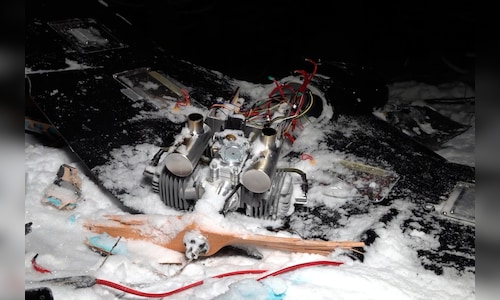
On Wednesday, Russia’s Defense Ministry released a video of a downed drone it claimed was involved in the attack.
The nighttime footage features a man in camouflage clothing, wearing a helmet and a Kevlar vest, standing beside a damaged drone resting in the snow. The man, with his face obscured, discusses the drone, but neither he nor the Defense Ministry provided a location or date, and neither the video nor its claims have been independently verified.
Kyiv has characterized the allegations regarding an attack on Putin’s residence as a ploy to disrupt ongoing peace negotiations, which have intensified in recent weeks across the Atlantic.
In his New Year’s address, Ukrainian President Volodymyr Zelenskyy mentioned that a peace agreement was “90% ready,” but cautioned that the final 10%, likely concerning key contentious issues such as territory, would “determine the fate of peace, the fate of Ukraine and Europe, how people will live.”
Trump’s special envoy Steve Witkoff stated on Wednesday that he, Secretary of State Marco Rubio, and Trump’s son-in-law and advisor Jared Kushner had a “productive call” with the national security advisors from Britain, France, Germany, and Ukraine “to discuss advancing the next steps in the European peace process.”
“We focused on practical ways to advance the discussions on behalf of (Trump’s) peace process, including enhancing security guarantees and developing effective deconfliction mechanisms to facilitate the end of the war and ensure it does not restart,” Witkoff noted in a post on X.
Lead Ukrainian negotiator Rustem Umerov confirmed that European and Ukrainian officials are scheduled to meet on Saturday, while Zelenskyy is set to hold discussions next week with European leaders.
In other developments in Ukraine, Russia conducted overnight attacks in the Odesa region, targeting civilian infrastructure through multiple waves of drone strikes, as reported by regional leader Oleh Kiper.
Kiper mentioned in a Telegram post that a two-story residential building sustained damage and a drone struck an apartment on the 17th floor of a high-rise building without detonation. Fortunately, there were no reported casualties.
In its daily report, Ukraine’s air force revealed that air defense forces had intercepted or neutralized 176 out of 205 drones aimed at the country overnight. It indicated that hits from 24 strike drones had been recorded at 15 locations, and the assault was ongoing.