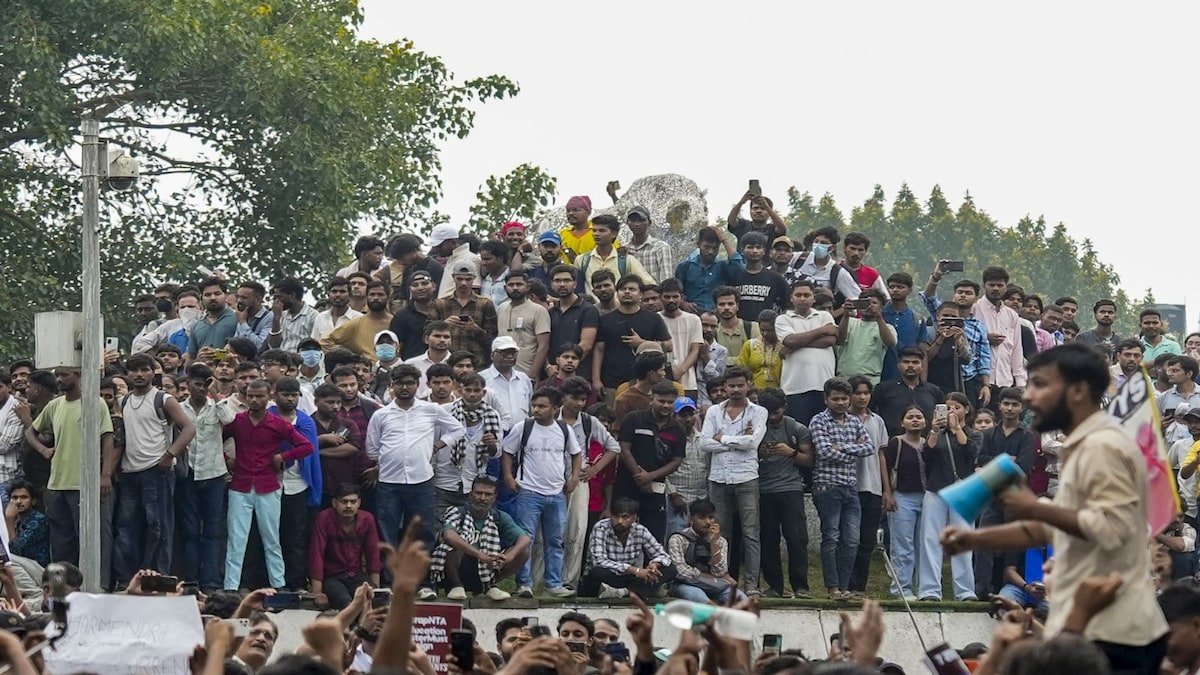
For weeks, young Indians leveraged reels, memes, and organic digital virality to demand accountability. Their primary demand—the resignation of Education Minister Dharmendra Pradhan—was fulfilled on July 25. This incident marked a rare ministerial resignation under continual public pressure during the prolonged tenure of the Bharatiya Janata Party-led government. More crucially, it exposed a deeper reality: the conventional methods of political communication have become outdated.
Scripted statements and centralized narrative control are challenged by a generation that engages with politics through short-form video and prioritizes authenticity. All political parties, including BJP, Congress, and Aam Aadmi Party, now face this truth. The Gen Z protest did not merely lead to a change in personnel; it transformed the tone, pace, and visual language of Indian political outreach. Future campaigns will be compared against the authenticity and swiftness that characterized this agitation.
By 2029, Generation Z is expected to reach nearly 380 million, becoming India’s largest adult demographic. This demographic strength, combined with digital adeptness and increasing expectations around education, employment, and governance, positions them to impact both electoral results and everyday political practices. Consequently, every organization must vet its messages, candidates, and priorities through a youthful perspective before they reach the public.
Authenticity in digital outreach
The agitation highlighted the shortcomings of traditional digital strategies with remarkable clarity. For years, the BJP honed rapid-response online systems based on coordinated messaging. When the Cockroach Janta Party’s content went viral, organic engagement led by students often surpassed institutional posts. The same challenge is faced by Congress and the Aam Aadmi Party. Both have invested in digital outreach, yet neither has fully embraced the formats that currently captivate young audiences.
Interestingly, when Abhijeet Dipke, the founder of the Cockroach Janta Party, led social media efforts for the Aam Aadmi Party during the 2020 Delhi assembly elections, the team created relatable, meme-heavy content that resonated with younger voters and aided the party’s strong performance.
This earlier initiative underscored the effectiveness of humor and cultural resonance. The protests of 2026 merely amplified this insight on a national scale amid a governance crisis. Political entities can no longer perceive Gen Z formats as optional additions. Each slogan, video, and visual must be evaluated through the lens of whether it resonates authentically with the generation that prompted a ministerial resignation. One of the notable outcomes of the protest was the resurgence of classical humor in political communication. Previous eras relied on witty wall writings and graffiti at university campuses and election rallies.
Over time, messaging became increasingly leader-centric. The Gen Z protest rejuvenated a lighter, sharper tradition. Slogans like “Kuchupuchu Resign De Do” expressed frustration without descending into pure vitriol. The message was unmistakable: political communication does not require animosity to be impactful. Humor can resonate more deeply and travel further. Parties that continue to depend solely on aggressive confrontation risk appearing tone-deaf to an audience that has shown a preference for wit over hostility.
The days following Pradhan’s resignation further highlighted the disconnect in understanding. Young Indians sought acknowledgment of their agency rather than didactic lectures. This generation demands innovation, not paternalism. Long-form speeches have similarly lost their appeal.
Formats that once thrived on lengthy addresses now feel sluggish compared to reels that convey complete arguments in under two minutes. Political messaging must become clearer, faster, and more concise if it aims to capture attention. Vocabulary itself is evolving. When Prime Minister Narendra Modi addressed young people in Instagram reels using “friends” instead of the familiar “mitron,” it demonstrated an awareness that older linguistic habits no longer resonate as strongly. The coming years will likely require an expanded political lexicon that feels relevant without sacrificing depth.
Genuine youth representation
At the heart of these changes lies a fundamental requirement for authentic youth leadership. Most parties continue to present leaders in their fifties and older as representatives of the youth. While there is no shortage of capable young candidates, the true question is how much real authority parties are willing to delegate to them. The protest was successful precisely because its organizers grasped both the political landscape and contemporary communication, gaining wide appeal. Indians aged 18 to 40 are estimated to comprise about 40% of the population but occupy only roughly 10% of seats in the lower house of parliament, down from more than double that in the 1950s. The average age of the cabinet remains above 60.
Until mainstream parties nurture and empower similar talent, they will continue to lag behind. Every political party must enhance youth representation—not just as token figures in campaigns, but in candidate selection, organizational decision-making, and policy development. The BJP, Congress, and Aam Aadmi Party must all confront this necessity. Cultivating a pipeline of young leaders who merge digital skills with grassroots insights will determine which organizations adapt effectively. Without this, parties risk remaining disconnected from the very constituency able to influence national events.
Youth-first policy priorities
All parties must adopt a youth-first approach to governance. The agitation brought to the forefront issues of examination integrity, institutional accountability, and the overarching aspirations of students and early-career professionals. Concerns around employment quality, education reliability, housing affordability, and environmental issues are likely to gain further political significance as Gen Z emerges as the country’s largest adult demographic. Parties can no longer consider these as secondary matters.
A youth-first perspective necessitates integrating these priorities into manifestos, legislative agendas, and administrative actions. It also requires that messaging and policy design directly address the lived experiences of this cohort rather than filtering through intermediaries. The spontaneous organization witnessed at Jantar Mantar revealed that young Indians are ready to mobilize when their core interests are at stake. Acknowledging that agency and responding with meaningful reform will be crucial for any party seeking sustained backing.
Adapting for the contests ahead
The upcoming years, including state elections and the 2029 general election, will test how thoroughly parties assimilate these lessons. The Gen Z protest has fundamentally shifted expectations regarding speed, authenticity, and visual language. Future campaigns will be evaluated against the benchmark set by organic, humorous, and participatory outreach. Every organization—from the BJP to the Congress and the Aam Aadmi Party—must now incorporate a youth perspective into message testing, leadership cultivation, and policy design.
Parties that successfully enhance genuine youth representation, embrace youth-first priorities, and communicate with authentic cultural awareness will be better positioned to engage with India’s emerging demographic majority. Those that perceive this shift as temporary risk remaining reactive. The events of 2026 demonstrated that a generation raised on digital platforms can organize, maintain momentum, and demand accountability. Integrating the insights from that moment into the daily practice of politics is the clearest route to relevance in the coming decade.
—The author, Sayantan Ghosh is the author of two books, Battleground Bengal and The Aam Aadmi Party, and teaches at St. Xavier’s College, Kolkata. The views are personal.