On Ishigaki Island, part of the Okinawa prefecture, small debris was seen swirling through deserted streets, with only a few vehicles daring to navigate the stormy weather.
Vessels at a local harbor swayed violently due to the strong currents generated by the powerful storm, which featured maximum sustained winds of 144 kph (90 mph) at its core. Authorities cautioned about gusts reaching as high as 198 kph.
Air and ferry services throughout Ishigaki, a popular tourist spot, were suspended for the entirety of Saturday.
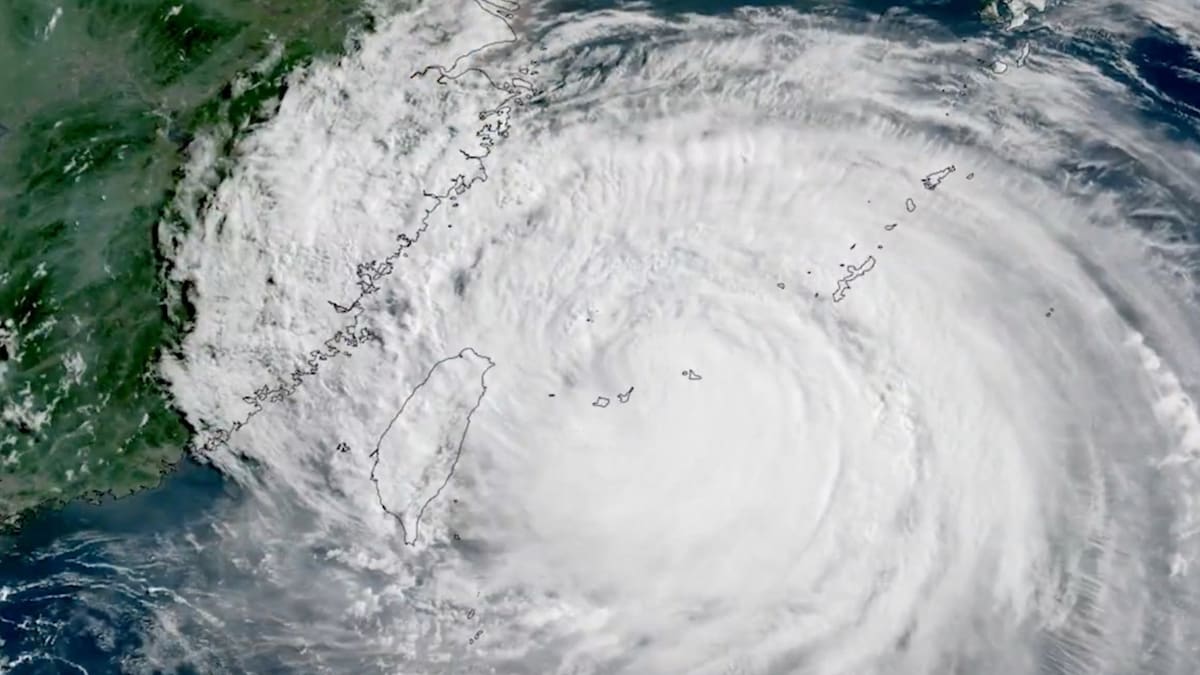
In neighboring Taiwan, the government evacuated over 14,000 individuals from primarily mountainous regions as the island prepared for Bavi’s approach from the north.
Although Bavi, which is gradually losing strength, will not make landfall in Taiwan, officials are taking all necessary measures to avert loss of life, anticipating nearly 1 meter (3.3 feet) of rain in certain areas.
Most of those evacuated were from northern and eastern regions, with 917 international flights cancelled alongside all 274 domestic flights.
Nearly all cities and counties in Taiwan declared a typhoon holiday for Saturday, shutting down any offices and schools that might have been open over the weekend. The main north-south high-speed rail line remained operational but with limited service.
In the capital, Taipei, gusty winds and rain persisted, although some people continued to be out on the streets.
“It’s fine, it’s not too serious,” remarked Taipei resident Yeh Mao-hsiung, 68, who was out for a morning stroll with his dog. “It’s just a bit more windy.”
After passing northeast of Taiwan, Bavi is projected to impact the eastern Chinese city of Wenzhou, which has a population of 10 million, early on Sunday.
Also Read: Auto wrap this week: From ₹10.5 lakh Nissan Tekton to Yamaha’s ₹2.81 lakh Aerox-E
(Edited by : Juviraj Anchil)