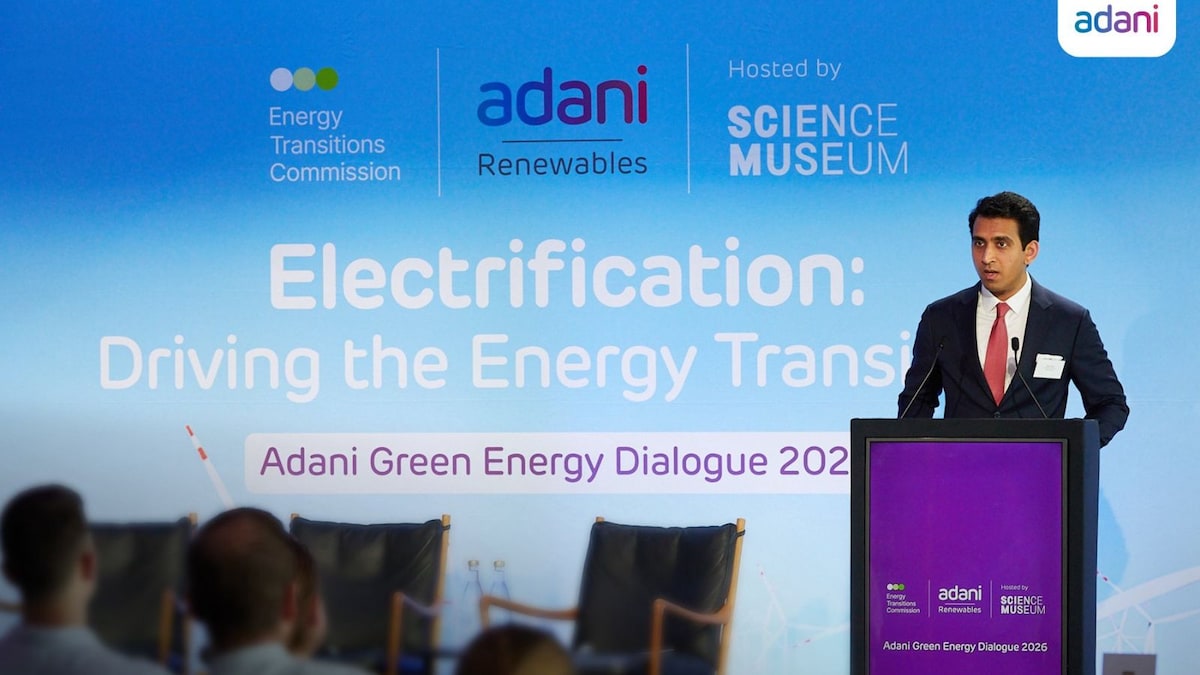
While speaking at the inaugural Adani Green Electrification Dialogue in London, Adani noted that India faces the dual challenge of satisfying rising electricity demand and ensuring that energy remains affordable, accessible, and cleaner amid escalating geopolitical tensions.
“We’re discussing a significant advancement, aiming to add nearly 2,000 gigawatts of new capacity over the next two decades, all while keeping this energy affordable, accessible, and cleaner. This is the magnitude of the opportunity—and it represents India’s defining challenge,” he stated.
He highlighted that India consumed approximately 10,000 terawatt-hours of energy across all sources in 2024, compared to China’s 32,810 terawatt-hours, underscoring the scale of India’s future energy needs as incomes and electricity use grow.
“For India, the way forward is evident. We must electrify everything to lessen our structural dependence on imported energy. We need to establish an energy infrastructure supported by domestic resources,” he said.
Advocating for a practical approach to the energy transition, Adani suggested India should utilize “renewables, hydro, efficient thermal, and nuclear” power, noting that “without firm, scalable baseload power, the equations simply don’t add up.” He credited government reforms over the last decade for enhancing the investment environment through infrastructure growth, renewable energy initiatives, transmission updates, and regulatory changes.
Discussing the Adani Group’s role, Adani stated that the conglomerate operates throughout the electricity value chain, aims for 50 GW of renewable energy capacity by 2030, plans to develop a 10-GW nuclear portfolio by 2035, and is investing in energy storage, transmission infrastructure, and green hydrogen.
“To turn this into reality, our Chairman, Gautam Adani, has committed over $100 billion toward the energy transition—one of the largest private-sector commitments globally. This is more than just isolated investments; it’s an integrated strategy,” he explained.
Adani emphasized that successfully navigating India’s energy transition will necessitate collaboration among governments, industry, and financial institutions.
“The energy challenge and opportunity before India is far more extensive than any single business entity can tackle independently. Achieving it will require collective action throughout India and the developing world, ongoing policy innovation, and billions of dollars in financing to ensure energy security, affordability, and sustainability,” he remarked.
His remarks were made during the inaugural Adani Green Energy Dialogue, organized by Adani Green Energy Limited (AGEL) in partnership with the Energy Transitions Commission (ETC) at the Science Museum, London, as part of London Climate Action Week. The dialogue gathered policymakers, investors, business leaders, and climate experts to discuss the policies, investments, and infrastructure needed to expedite the clean energy transition.
In his address, he stated: “Energy security, affordability, and sustainability are among the pivotal challenges of our era.
“Electrification is becoming one of the most efficacious pathways to tackle all three challenges. For nations pursuing resilient growth and enhanced energy independence, speeding up electrification is no longer optional; it’s a necessity.” He added that “Renewable energy achieves its full potential when paired with storage technologies such as Battery Energy Storage Systems (BESS) and Pumped Storage Projects (PSPs). These solutions make clean power reliable, affordable, and continuously available. At Adani Green, we are bringing this vision to fruition as we progress towards 50 GW of renewable energy capacity by 2030, led by the world’s largest renewable energy facility at Khavda, Gujarat, where clean energy is being integrated with large-scale storage.” The dialogue, held during London Climate Action Week, one of the largest independent climate events globally, showcased the increasing need for international cooperation in driving climate action, fostering policy innovation, and mobilizing investments for the energy transition.
The program included two high-level sessions chaired by Adair Turner, co-chair of the ETC, and Nigel Topping, co-founder of Ambition Loop and Chair of the UK Climate Change Committee. Senior leaders from Octopus Energy, Schneider Electric, the Climate Bonds Initiative, the Green Finance Institute, and the Adani Group participated, sharing expertise across energy, finance, technology, and sustainable infrastructure, as stated by the company.
During the dialogue, Turner noted, “To construct zero-emission economies and keep global warming within manageable levels, we must activate numerous levers; however, clean electrification is by far the most crucial—electrifying as much of the economy as possible and decarbonizing electricity generation to the fullest extent.
“The encouraging news is that electrification is already economical in numerous sectors like road transport, building heating, and low-temperature industrial heat; furthermore, technological advancements are increasingly enabling the electrification of even high-temperature heat demands in heavy industry.” Topping mentioned, “While investment in decarbonizing power systems is gaining momentum, the true economic and climate advantages emerge from electrifying sectors of the economy that are still predominantly powered by fossil fuels. A clear comprehension of how technology costs continue to decrease and the importance of flexibility in a modern grid are essential to unlocking the significant investments needed.” The Adani Group has committed over $100 billion toward the energy transition and related infrastructure, marking one of the largest private-sector commitments of its kind globally. In addition to renewable energy, the Group continues to invest in transmission, energy storage, green hydrogen, digital infrastructure, and next-generation industrial ecosystems to facilitate the transition to a low-carbon economy.
Earlier this week, during the Adani Group’s annual general meeting (AGM), Chairman Gautam Adani reaffirmed the conglomerate’s commitment to satisfying India’s increasing energy demands through a diversified energy portfolio that includes renewable energy, green hydrogen, energy storage, transmission, digital infrastructure, and nuclear energy.
He also unveiled plans to develop up to 10 GW of nuclear energy capacity as part of the Group’s diversified energy strategy, with nuclear complementing renewable sources and storage to provide reliable, affordable, and low-carbon electricity at scale.