The event raised concerns among authorities, prompting a meeting earlier this month attended by three agencies, including the Ministry of Industry and Information Technology, along with officials from cities that host robotaxi services or autonomous-driving trials. Regulators urged local governments to perform thorough self-assessments and enhance safety monitoring to avert such incidents in the future, according to these sources, who spoke on the condition of anonymity due to restrictions on public commentary.
The moratorium on new licenses bars self-driving companies from increasing their fleet sizes with new robotaxis, initiating new test projects, or entering new markets. The duration of this suspension remains uncertain, according to insiders.
Baidu’s stock dropped by up to 3.9% during Hong Kong trading on Wednesday. Competitors in the robotaxi sector, Pony AI Inc. and WeRide Inc., saw their shares decline by about 2%.
This suspension represents a setback for a rapidly expanding industry projected to reach 83.1 billion yuan ($12.2 billion) by 2030, according to research from Soochow Securities. Chinese companies lead the way in introducing this technology to international markets, competing against firms like Alphabet Inc.’s Waymo in the United States.
This is at least the second instance where regulators have paused new permits linked to an incident involving Baidu.
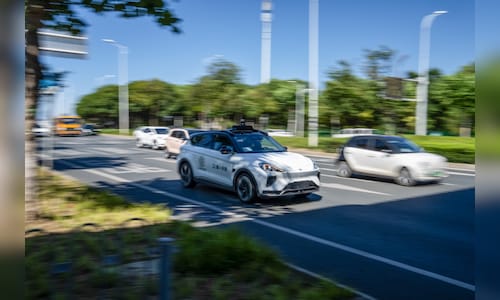
In the Wuhan event, over 100 Apollo Go robotaxis reportedly stalled on city streets on March 31, per local news reports. Authorities speculated that the outage was due to a systems malfunction, although Baidu has not yet publicly commented on the cause. Apollo Go stands as the largest robotaxi service in China, operating hundreds of vehicles across multiple cities.
Baidu’s operations in Wuhan have also been suspended pending the local authorities’ investigation into the incident, informants disclosed.
Requests for comments sent via fax to MIIT, the Ministry of Public Security, and the Ministry of Transportation went unanswered. A representative for Baidu has yet to respond to emailed inquiries.
Pony AI confirmed that its services in Beijing, Shanghai, Guangzhou, and Shenzhen continue to operate as usual. Preparations for deploying services in Changsha and Hangzhou are also on track, according to a spokesperson. WeRide expressed its support for regulatory efforts to uphold safety standards across the sector, noting that its services remain operational in China.
The Beijing government seeks to balance safety concerns and negative public sentiment surrounding AI job displacement with its ambition to foster local technology in the race for advancements in autonomous driving against the U.S.
Licenses in question specifically relate to level four autonomous vehicles, which denote high-level driving automation where human intervention is unnecessary.
Residents in Wuhan had protested the introduction of Apollo Go robotaxis two years ago due to fears of job losses for taxi drivers. To mitigate public concern, regulators paused approvals for several months in late 2024, not resuming permits until early 2025.
Shares of China’s two robotaxi companies listed in the U.S. have seen declines this year, with WeRide down nearly 10% and Pony AI experiencing a plunge of around 30%. Both companies have yet to turn a profit and are required to invest significantly in developing new offerings and supporting their global growth strategies.