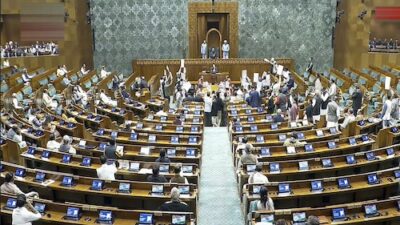
Parliament is set to deliberate on three pieces of legislation aimed at introducing 33% reservation for women and increasing the Lok Sabha to 850 seats through a new delimitation process. A two-thirds majority is essential for the bills to pass, yet current projections indicate the government may not achieve this. Prime Minister Narendra Modi has called on all parties to back the initiatives, despite opposition groups expressing concerns over linking reservation with delimitation.
Journalist and columnist Neerja Chowdhury expressed doubts regarding the government’s capacity to advance the bills. “No, I don’t believe the government will muster the numbers. The bills will fall,” she stated, noting that the absence of written assurances on key promises has fueled skepticism.
At the center of the political debate is delimitation — the adjustment of electoral boundaries — which numerous opposition parties contend should remain separate from women’s reservation. Leaders in southern states particularly fear losing relative representation, despite having better population control results. The DMK has labeled the effort a “trap,” while the Congress has accused the government of pursuing “gerrymandering.”
Chowdhury highlighted that while the Prime Minister and Home Minister have verbally guaranteed a uniform 50% increase in seats, with state-wise proportions remaining unchanged, these guarantees are not enshrined in the bill. “An assurance made in the House is important, but written provisions hold more significance. Why was this omitted? That is the critical question,” she remarked.
She also warned that the political ramifications of a failed bill could extend beyond Parliament. According to her, the issue might provoke a broader discussion on regional identity. “This could foster a divide — women versus regional sub-nationalism — Tamil pride, Bengali pride, Karnataka pride,” she warned, suggesting that such tensions could worsen the North-South divide and heighten public skepticism toward political commitments.
Highlighting the urgency of the legislation, Ranjana Kumari argued that further postponements would negatively impact women’s representation. “We have waited 30 years, which is far too long for any democratic system to rectify such an imbalance,” she asserted, pointing out that women constitute only about 14% of the Lok Sabha.
Kumari attributed the ongoing delay partly to structural resistance within the political landscape. “The reality is that no male Member of Parliament in the current House of 543 wants to relinquish their own seat. That fear has led to continuous excuses to postpone the bill,” she explained.
While acknowledging the concerns surrounding delimitation, she asserted that the two issues should be addressed independently to prevent hindering women’s representation. “Why should women be victimized by these delays repeatedly?” she questioned, urging Parliament to pass the reservation bill based on the 2011 Census and allow delimitation and census processes to proceed as intended.

Also Read | Modi pushes for early rollout of Women’s Reservation Bill, says decades of delay must end
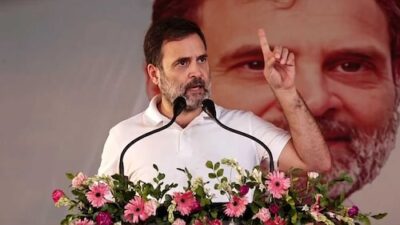
The discourse has also intensified due to the lack of explicit provisions in the bill concerning formulas for seat expansion, despite reassurances from Home Minister Amit Shah that no state would lose its proportional share. Opposition figures, including Rahul Gandhi, have additionally called for a quota within the quota for OBC women, further complicating efforts toward consensus.
Chowdhury critiqued the government’s legislative approach, suggesting that more extensive consultation might have helped avert the current deadlock. “It indicates a failure in political negotiation,” she pointed out, adding that relying on future promises rather than immediate action may not resonate with voters. “Women voters expect tangible benefits — not promises a decade away.”
The implications are significant not only for gender representation but also for the federal equilibrium. Should the bills falter, experts warn that the process might be delayed for years, with the census, delimitation, and potential legal challenges pushing timelines into the next decade.