A draft of the cancelled order that leaked to US media indicates that the White House had prepared new cybersecurity protocols for AI before Trump chose to halt the process on Thursday. His former AI advisor reportedly contacted Trump directly to express concerns.
This collapse highlights the ongoing inability of Washington to unify around even basic regulations for the technology, leaving the U.S. behind Europe and Asia, and falling short of what many safety advocates believe is necessary.
Had it been enacted, the withdrawn executive order would have granted the federal government up to 90 days of access to the most advanced AI models before their public introduction, while also laying the groundwork for a coordinated response to AI-related threats affecting banks, hospitals, and other vital infrastructure.
Reports from Politico and other outlets indicate that David Sacks, the Silicon Valley venture capitalist and Trump’s AI and crypto czar, called the president on Thursday morning — catching White House staff off guard — to caution that the measure could hinder innovation and disadvantage the U.S. in the AI competition with China.
Officials initially believed Sacks was in support of the order, but the night before the signing, he began voicing concerns that the voluntary review process could eventually be enforced as mandatory.
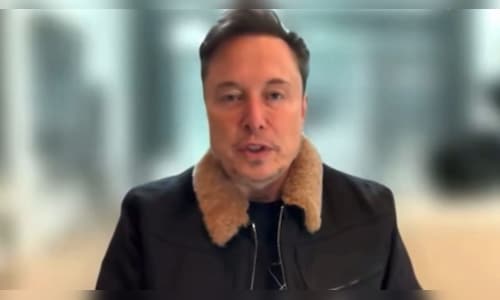
The Washington Post provided a broader overview, stating that last-minute communications from Sacks, along with input from SpaceX and Tesla CEO Elon Musk and Meta CEO Mark Zuckerberg, influenced the president’s decision not to sign.
Musk refuted this claim on his social media platform X.
“This is false. I still don’t know what was in that executive order and the president only spoke to me after declining to sign,” he stated.
Meta also contested the report, asserting that Zuckerberg only spoke to Trump after the order was rescinded.
Fear of Mythos
To alleviate fears regarding governmental overreach, the draft clearly stated that nothing within the order should be interpreted as establishing a compulsory licensing or approval process for AI models.
According to The Information and other outlets, tech firms also advocated for reducing the pre-release access period from 90 days to merely 14.
The order was prompted by worries about Anthropic’s Mythos model, which the AI startup has refused to unveil publicly due to its potential to reveal vulnerabilities in computer systems — including those of banks, governments, and hospitals.
Sacks acknowledged that concerns surrounding Mythos and similar models were valid, emphasizing the need for defensive measures. However, he cautioned that policymakers in Washington were attempting to exploit the situation.
On his “All-In” podcast this month, Sacks remarked that pre-release governmental approvals were “addressing a problem that didn’t really exist,” as Anthropic and other AI firms were already keeping models similar to Mythos away from public exposure.
For Sacks, “AI ideologues or doomers” were attempting to use Mythos to “establish a permanent new infrastructure in Washington.”
The failure of Thursday’s initiative leaves the administration without a formal strategy to tackle the security risks presented by the most advanced AI systems — and no clear timeline to develop one.
Trump abandoned an AI oversight order signed by his predecessor Joe Biden on his first day back in the White House. Biden’s 2023 order mandated that AI companies share safety test outcomes with the government and relied heavily on voluntary commitments — already a lenient approach that fell significantly short of the expectations of many experts.
In contrast, the European Union’s AI Act — which came into effect in 2024 — establishes binding regulations for high-risk AI systems, including mandatory transparency obligations and, for the most advanced models, requirements for safety testing and incident reporting.