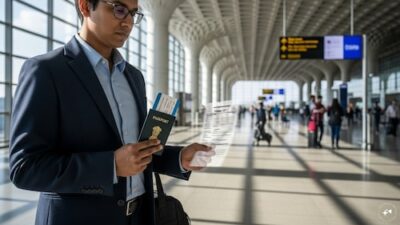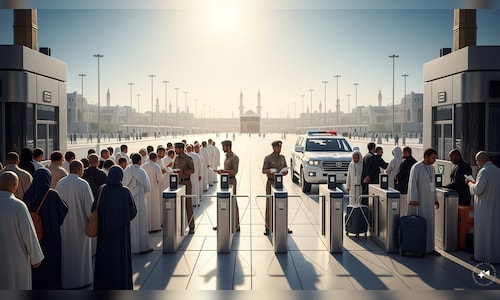
The Ministry of Interior announced that this regulation will be in effect from the beginning of Dhu Al Qi’dah until the 14th of Dhu Al Hijjah. Anyone who enters or remains in Mecca and the holy sites without proper authorization during this timeframe will be breaking the law. This initiative is part of a strategy to manage pilgrim movement and ensure safety during the annual pilgrimage.
Fines, deportation, and other consequences
Individuals holding visit visas who try to perform Hajj or access restricted zones risk facing fines of up to 20,000 Saudi riyals. The same penalty applies to those who enter or stay in Mecca during the restricted timeframe without official approval.
Residents, those overstaying their visas, and infiltrators found undertaking Hajj without a permit will be deported and barred from re-entering Saudi Arabia for 10 years.
Authorities will impose fines of up to 100,000 riyals on anyone who aids in such violations. This includes arranging visit visas, transporting unauthorized pilgrims, or providing accommodation. Fines may escalate based on the number of violators. Courts may seize vehicles used in the transportation of offenders.
The ministry noted that those penalized can submit a grievance within 30 days and appeal before the Administrative Court within 60 days.
Umrah deadlines and permit suspension
April 18, 2026, marked the last day for Umrah pilgrims to exit Saudi Arabia. Extending beyond that date constitutes a violation. Companies and service providers that do not report overstays may face fines of up to 100,000 riyals and additional legal consequences.
Saudi authorities have also halted the issuance of Umrah permits via the Nusuk platform for citizens, residents, and GCC nationals from the start of Dhu Al Qi’dah until the 14th of Dhu Al Hijjah, limiting access to Mecca solely to authorized Hajj pilgrims.
Enforcement campaign and reporting
The Ministry of Interior stated that these measures are intended to guarantee the safety, security, and efficient movement of pilgrims. The campaign is being conducted under the motto: “No Hajj without a permit.”
Authorities have encouraged the public to adhere to these regulations and report any violations using emergency numbers — 911 in Mecca, Medina, Riyadh, and the Eastern Province, and 999 in other areas.
Fraud case reported in Mecca
Law enforcement in Mecca apprehended a Sudanese resident suspected of promoting counterfeit entry permits via social media. Authorities confirmed that legal proceedings have commenced, and the individual has been referred to the Public Prosecution.
The Ministry of Hajj and Umrah asserted that performing Hajj without a permit is a serious offense. It stressed the importance of compliance to maintain safety standards, enhance crowd management, and ensure a smoother experience for pilgrims.
(With input from agencies)