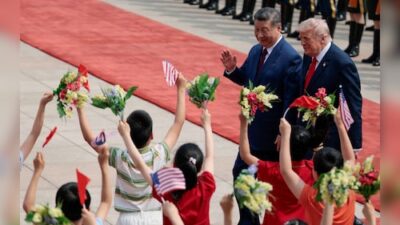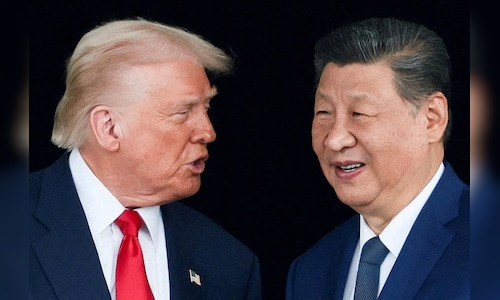
The concept of a “Board of Trade” was initially proposed by US Trade Representative Jamieson Greer in March as a crucial “deliverable” for this week’s pivotal summit between US President Donald Trump and Chinese President Xi Jinping.
Stay informed with the latest developments, trends, and innovations shaping the global automotive industry through the Reuters Auto File newsletter. Sign up here.
While the specifics of the plan remain vague, a significant shift from previous discussions is apparent: Washington is no longer insisting that Beijing alter its state-directed, export-driven economic approach to align more closely with the US consumer-driven, market-oriented model.
Instead, the focus is on establishing quantitative trading targets in non-strategic sectors while maintaining extensive tariffs and export restrictions on technologies sensitive to national security.
GREER’S ‘ADAPTER’ APPROACH
“It’s not a matter of altering China’s governance or economic management,” Greer conveyed to Fox Business Network last week. “That is deeply ingrained in their system, but I believe there’s a scenario where we can enhance trade between China and the United States to create more equilibrium.”
He compared the mechanism to a plug “adapter” that facilitates the connection of two incompatible economic systems.
US Treasury Secretary Scott Bessent and Chinese Vice Premier He Lifeng convened on Wednesday for a three-hour meeting in Incheon, South Korea, to finalize economic proposals for Trump and Xi to consider in Beijing. However, the two top economic officials did not release any statements regarding their initial meeting.
Four individuals familiar with the Trump administration’s goals indicated that they anticipate a $30 billion-for-$30 billion arrangement to reduce trade barriers as part of the new mechanism. It remains uncertain whether specific goods will be identified by Trump and Xi, or if that will be addressed in later discussions.
Wendy Cutler, a former USTR negotiator now leading the Asia Society Policy Center in Washington, mentioned that both parties “are converging around” a $30 to $50 billion range of goods for reduced tariffs or other barriers.
“The non-sensitive basket currently represents a minor portion of our overall trade with China. Perhaps this Board of Trade starts with that and expands later,” Cutler shared during a virtual Asia Society forum on Tuesday.
According to data from the US Census Bureau, US-China two-way goods trade declined by 29% to $415 billion from $582 billion in 2024, with the US trade deficit plummeting nearly 32% to $202 billion in 2025, its lowest level in two decades.
The US Trade Representative’s office and the US Treasury declined to provide further comments on the proposed mechanism prior to the Beijing summit.
China has refrained from adopting the Board of Trade label, stating in March that both sides had “agreed to explore the establishment of working mechanisms to expand economic and trade cooperation,” without offering additional specifics.
ENERGY, AGRICULTURE IN FOCUS
As the US seeks to boost energy and agricultural product sales to China, Beijing’s disruptive tariffs on these commodities are one possibility.
China imposes a general additional 10% tariff on all US imports, matching the current 10% US temporary tariff on Chinese goods.
Alongside this and existing “most favored nation” tariffs, Beijing implements retaliatory duties on US imports of 10% on crude oil, 15% on liquefied natural gas, 15% on coal, and up to 55% on beef.
The US maintains a 7.5% tariff on various Chinese consumer products introduced in 2019 amid Trump’s first-term trade war with China. These include flat-panel TV sets, flash memory devices, smart speakers, Bluetooth headphones, bed linens, multifunction printers, and many types of footwear. The 10% temporary global US tariff, set to expire in July, adds to these duties.
Additionally, the US may revive some of the more than 2,200 product-specific exemptions from China tariffs granted during Trump’s first term, which have since mostly lapsed.
In November 2025, Trump extended for one year temporary tariff exemptions on solar product manufacturing equipment and 164 categories of industrial and medical products, from printed circuit boards to electric motors and blood pressure monitoring equipment. Some of these may be made permanent.
BOARD OF INVESTMENT
The two sides are also likely to address the underdeveloped concept of a “Board of Investment” to handle investment issues, but Greer stated to the Hudson Institute last month: “I don’t believe we are at a point in our relationship with China where we want to discuss significant investment initiatives on either side.”
US lawmakers, along with automotive, steel, and tech groups, have cautioned Trump against any agreement that would allow Chinese investment in the US vehicle sector, asserting that it would undermine the foundation of US manufacturing.