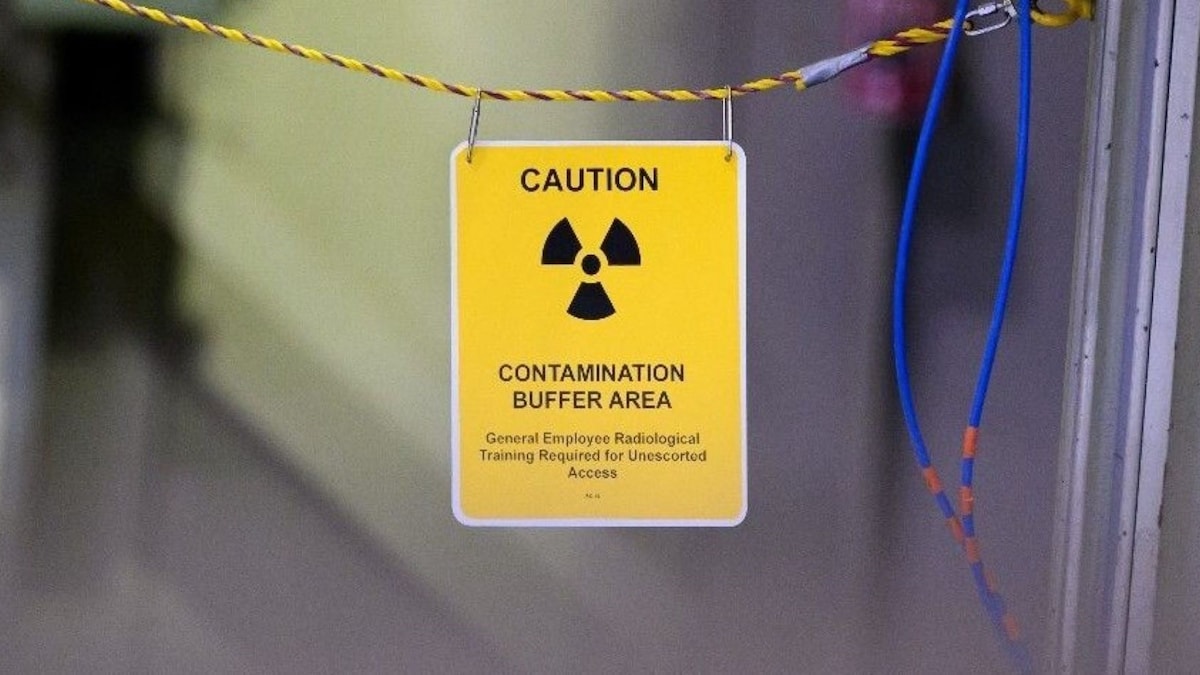
Central to this advancement is the Idaho National Laboratory (INL), a research hub located in the Idaho wilderness, as reported by AFP. While it may look unremarkable from the outside, it has become a focal point for American nuclear innovation, safeguarded by rigorous security measures, armed personnel, and cautionary signs about radioactivity.
On June 4, Antares made history as the first company in nearly fifty years to operate a newly designed nuclear reactor in the country. Antares’ CEO, Jordan Bramble, hailed the achievement as “the first real moment in this new nuclear renaissance” for the nation, according to AFP.
A new generation of small nuclear reactors is up and running — or nearly so — in the United States, in what backers are calling a turning point for the industry. pic.twitter.com/2ifrGPvgiK
— AFP News Agency (@AFP) June 29, 2026
Another firm, Aalo Atomics, is anticipated to reach a similar milestone shortly. This company is part of a nuclear development program initiated in 2025 under President Donald Trump and aims to accomplish this goal just before July 4, coinciding with the nation’s 250th anniversary.
Moreover, on June 18, Valar Atomics successfully achieved criticality at its Utah reactor. Criticality signifies the moment when a nuclear reactor can sustain its own nuclear chain reaction. The Idaho National Laboratory has been instrumental in pushing nuclear technology forward for decades.
Having developed over 50 reactor prototypes, including the world’s first reactor to supply electricity to the grid in 1951, research efforts dwindled after the disasters at Three Mile Island and Chernobyl.
However, the ongoing war in Ukraine and the rise of artificial intelligence have intensified demands on the energy sector. Consequently, both the Biden and Trump administrations have taken steps to reinvigorate civilian nuclear power.
The revival primarily focuses on Small Modular Reactors (SMRs), with billions of dollars from government and private investors directed toward their advancement. These smaller reactors are compact enough that one could be moved to the site using a pickup truck.
SMRs offer a more cost-effective and quicker-to-construct source of nuclear energy. They can be deployed in diverse locations, including remote military installations and large data centers.
Despite this potential, the technology has yet to be validated on a commercial scale, and some experts raise concerns about its competitiveness with wind and solar energy in terms of cost.
In addition to investments, the government has provided select companies with access to the facilities and knowledgeable personnel at the Idaho National Laboratory. The new reactors utilize technology distinct from traditional nuclear plants, minimizing the risk of major accidents while simplifying and reducing the cost of construction.
At a ‘celebration of the golden age of nuclear energy’ in Idaho Falls, Energy Secretary Chris Wright expressed optimism for the future. “We’ll have hundreds by the end of the decade. In fact, our aggressive goal is we will have some of these reactors producing electricity for beneficial use next year,” he reportedly stated, as per AFP.
If development continues on this trajectory, Radiant Nuclear and Antares will deploy their initial SMRs at U.S. military bases, while Aalo Atomics intends to power data centers. Wright indicated that numerous countries are expressing interest in American nuclear technology and predicted it “will be a massive American export a decade from now.”