
While Apple’s iPhone shipments dropped by 3% year-on-year, the overall smartphone market decreased by a sharper 10%, as reported by Counterpoint Research.
Also Read: India overtakes China as the top exporter of smartphones to the US; Apple leads the shift
This gap illustrates the concentration of the slowdown. Budget smartphone buyers were hit much harder by affordability challenges than premium consumers, with shipments of devices priced below ₹15,000 plummeting by 45% compared to the previous year, while demand for high-end smartphones remained relatively strong.
This disparity sheds light on how rising handset prices and financing options are influencing purchasing behavior in one of the world’s largest smartphone markets.
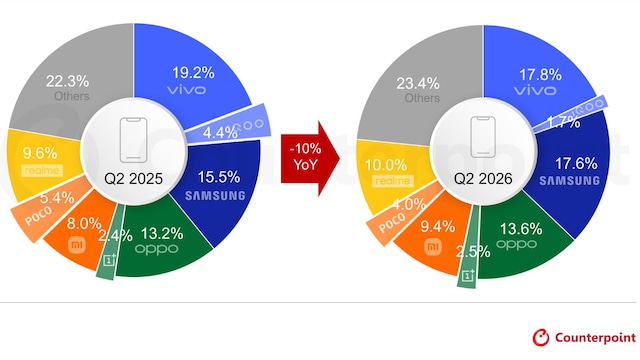
India’s smartphone market volume share by brand in Q2 2026 vs Q2 2025
What’s causing the decline in affordable smartphones?
Counterpoint highlights affordability as the industry’s primary challenge.
The research firm pointed to the significant drop in the sub-₹15,000 sector due to multiple price increases for handsets, escalating component costs, and a slowdown in discretionary spending, which led many consumers to postpone upgrading their devices.
Also Read: Indian consumers seek flagship features in compact smartphones, survey reveals
“The market faced pressure as both supply and demand were negatively influenced,” stated Counterpoint Senior Research Analyst Prachir Singh. The firm noted that repeated price adjustments have raised average smartphone selling prices by about 15% by the end of the June quarter.
According to Research Director Tarun Pathak, prices for smartphone memory have surged nearly fourfold since September 2025 and are anticipated to increase further in the coming months, compelling manufacturers to absorb or pass on these higher costs.
Many brands have also broadened their 4G offerings alongside 5G models to provide more affordable options for budget-conscious consumers.
Why did the premium segment perform better?
The premium segment, although facing similar economic conditions, benefitted from more accessible financing options.
Counterpoint noted that over half of the smartphones sold through India’s main retail channels during the quarter were financed through equated monthly installments (EMIs) or loans offered by non-banking financial firms, which eased the upfront burden for pricier devices.
Also Read: The diminishing presence of ₹15,000 smartphones
This helped maintain premium demand even amidst broader market weaknesses.
The data indicates that consumers weren’t shifting from affordable phones to premium models.
Instead, it suggests that those in the entry-level segment were more likely to delay their purchases, while consumers contemplating premium smartphones continued with their purchases, supported by financing.
How does Apple fit into the landscape?
Apple’s performance highlights the distinction between demand and actual shipments.
The tech giant’s shipments in India decreased by 3% year-on-year during the April-June quarter, halting a streak of four consecutive years of growth in June-quarter shipments, according to Counterpoint.
However, the research firm primarily attributed this drop to supply shortages across both online and offline sales channels, rather than weak consumer demand. It noted that the demand for Apple’s latest iPhone models remained robust despite these supply limitations, which explains why Apple’s decline was less severe than the overall market’s 10% drop.
Which brands saw gains and which faced losses?
Vivo maintained its position as the leading smartphone brand in India, despite a decline in shipments during the period.
Samsung was the only brand among India’s top five smartphone vendors to record year-on-year shipment growth, increasing by 2% due to demand for its Galaxy A-series and flagship models.
Brands like Oppo, Xiaomi, and Realme experienced shipment declines as affordability challenges impacted their mass-market offerings.
Among emerging brands, Nothing showed the fastest growth in shipments at 105%, while Google’s Pixel grew by 68%, indicating sustained momentum in the premium Android market.
What lies ahead?
Counterpoint forecasts that affordability will persist as the industry’s foremost challenge throughout the remainder of 2026, with high component costs keeping handset prices elevated.
The research firm predicts that smartphone brands will concentrate on financing options, refining their portfolios, and enhancing premium offerings, while anticipating a 13% decline in India’s smartphone shipments for the entire year.