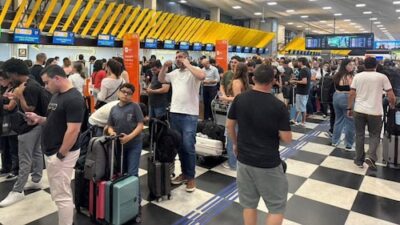
At Lisbon international airport, many flights were cancelled as pilots, flight attendants, and baggage handlers participated in the walkout. Although the airport remained operational, it was largely empty.
The national carrier TAP Air Portugal operated just 63 out of its 283 scheduled flights, adhering to the minimum service level mandated by law. The airline had warned travelers in advance about the strike and offered alternative flight options.
Also read | US plans to mandate social media screening for foreigners permitted to travel without a visa
The two labor organizations representing nearly a million Portuguese workers claim this could be the largest strike the country has seen in over a decade as they oppose the center-right government’s proposed amendments to employment laws.
The unions argue that the changes undermine workers’ rights, while the government contends they are necessary for enhancing economic flexibility and promoting growth.
The proposed modifications include easing the process for firing employees, removing the right to strike in additional sectors, and limiting breastfeeding breaks for mothers to the initial two years of a child’s life, as opposed to the current indefinite period.
Also read | US embassy in India cautions visa applicants that entry to consulate may be denied if…
Downtown Lisbon was notably quiet, with fewer pedestrians and light traffic compared to a typical weekday as some individuals participated in the strike while others chose to work from home to sidestep transportation issues.
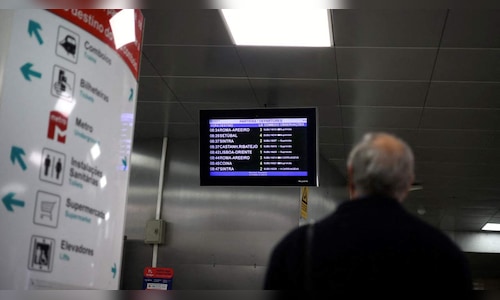
Train and bus operations throughout Portugal also operated on a limited schedule. The Lisbon Metro announced that services were halted at 11 PM on Wednesday and would not resume until Friday morning.
Private sectors were similarly affected, with manufacturing and distribution companies reporting walkouts. Some stores in Lisbon were closed.
This marked the first collaboration between the umbrella groups—the General Workers’ Union and the General Confederation of Portuguese Workers—since 2013.
The government’s Minister for the Cabinet, António Leitão Amaro, stated that the strike had minimal impact on the private sector. “Most Portuguese people are at work,” he remarked.
However, the unions, which organized street marches in the afternoon, declared the strike a success.
“We are witnessing workers demanding that the government retract this labor (reform) package,” said Tiago Oliveira, leader of the General Confederation of Portuguese Workers. The strike “highlights the government’s attacks and represents the workers’ response.” Portugal has one of the smallest economies in the European Union, with its workers among the lowest paid in the 27-nation bloc. The average monthly wage is approximately 1,600 euros ($1,870) before tax, according to the National Statistics Institute. The minimum wage earned by hundreds of thousands of workers is 870 euros ($1,018) before tax.
Portuguese citizens are grappling with a housing and cost of living crisis as property prices rise and inflation hovers just above 2%. The European Commission anticipates that Portugal will achieve a GDP growth of about 2% this year, surpassing the EU average of 1.4 percent. Unemployment remains below 6 percent, roughly in line with the EU average.
Social Democrat Prime Minister Luis Montenegro has called the strike “irrational” given the country’s positive economic performance.
(Edited by : Jerome Anthony)