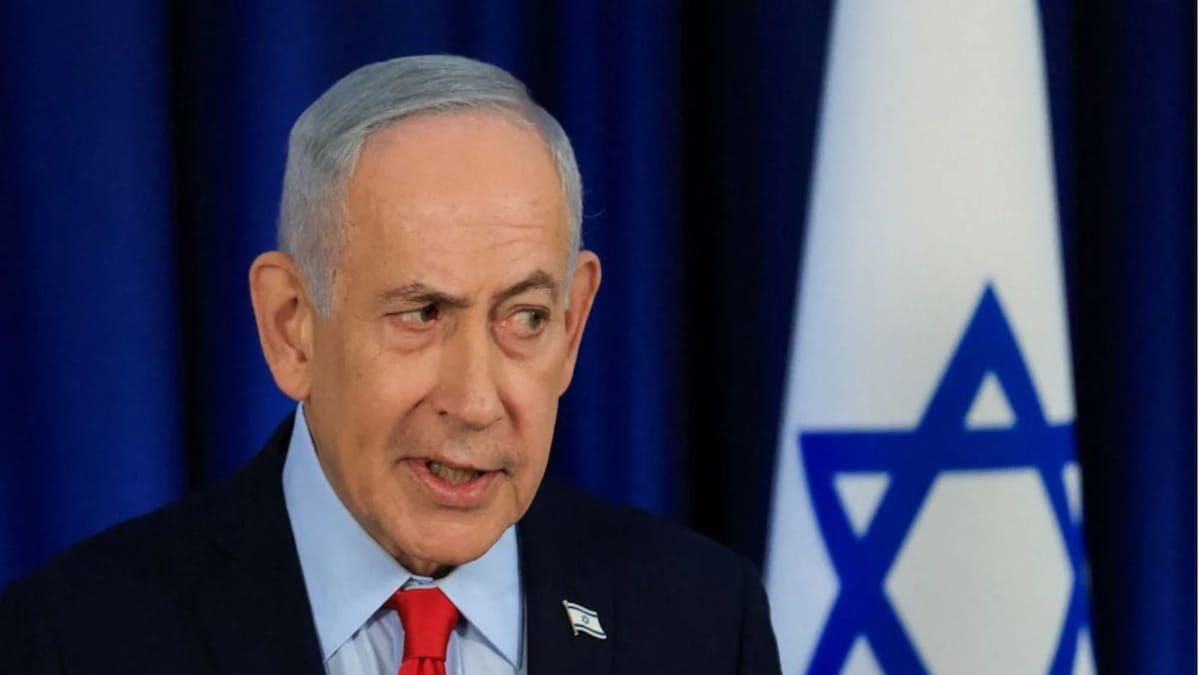
This marks Netanyahu’s first visit to the occupied territory since last Friday, when the Israeli and Lebanese governments, facilitated by the United States, reached a security agreement that involves Israel transferring control of two areas to the Lebanese army.
”We are firm in our stance that we will not vacate southern Lebanon until the threat is neutralized,” Netanyahu stated to the troops, as per a statement from his office, referring specifically to Hezbollah.
”As long as Hezbollah is armed and presents a threat to us, we will stay here,” he added.
Netanyahu, who last visited the occupied territory publicly in April, was accompanied by Defence Minister Israel Katz and senior military officials.
The U.S.-backed security agreement outlines Israeli forces withdrawing from two designated “pilot zones” and enabling the Lebanese armed forces to assume control. Detailed information on the implementation of this plan has yet to be released.
Israel’s incursion into Lebanon followed Hezbollah’s attack on March 2, which was a retaliation for U.S. and Israeli assaults on Iran on February 28, igniting a regional conflict that resulted in thousands of casualties, primarily in Iran and Lebanon, but also affecting the Gulf and Israel.
The Israeli military has established a “buffer zone” that extends approximately 10 km (6 miles) into Lebanon along the entire border. Israeli officials assert that this zone is crucial for shielding northern Israeli communities from Hezbollah’s attacks.
The military has displaced local Lebanese residents and conducted operations in villages, resulting in the destruction of infrastructure. They claim to be eliminating facilities, including underground tunnels utilized by Hezbollah.
Since March, more than 4,000 Lebanese have died, and over a million have been displaced due to the ongoing Israeli military operations. Hezbollah’s actions have led to the deaths of at least 32 Israeli soldiers and four civilians, most of whom were located in southern Lebanon.
During his address to Israeli troops, Netanyahu indicated that Hezbollah possesses approximately 12,000 rockets and missiles and noted that the Israeli military has killed 9,000 militants in Lebanon. Although he did not specify a timeframe for this figure, he seemed to reference casualties since March 2.
Hezbollah has not released its own casualty numbers. Reuters reported on May 4 that thousands of Hezbollah fighters have died during the conflict.
Iran has consistently called for a ceasefire in Lebanon as part of its discussions with the U.S. aimed at ending the war that began in February. Israel, which is not directly engaged in these discussions, opposes any attempt to link the conflict in Lebanon with the situation in Iran.
Under U.S. pressure, Israel agreed to a ceasefire with Hezbollah on June 19, although hostilities have continued.
Hezbollah has expressed recurrent opposition to the negotiations between Israel and Lebanon and is not involved in those discussions.
Also Read: US Supreme Court blocks Trump’s birthright citizenship order, allows transgender sports bans
First Published: Jun 30, 2026 10:56 PM IST