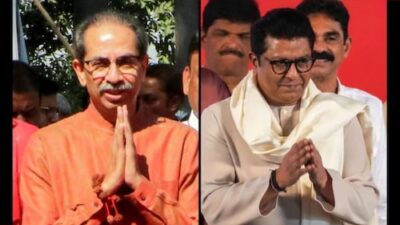
The political arena is both fierce and intricate. The Shiv Sena (UBT), spearheaded by Uddhav Thackeray, has formed an alliance with cousin Raj Thackeray, leader of the Maharashtra Navnirman Sena (MNS), after nearly two decades apart.
This partnership also receives support from the Sharad Pawar faction of the Nationalist Congress Party (NCP). Conversely, the Congress is contesting a substantial number of seats alongside its allies.
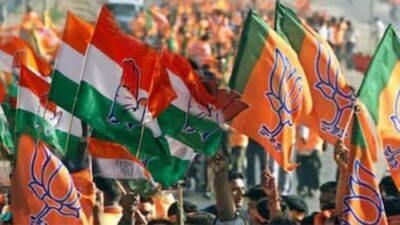
The incumbent Mahayuti alliance, which encompasses the Bharatiya Janata Party and the Shiv Sena (Eknath Shinde) under Eknath Shinde’s leadership, is also fiercely competing. Meanwhile, Ajit Pawar’s faction of the NCP is vying for several seats independently.
Experts suggest that despite the bewildering alliances, political calculations are unlikely to sway voters. Instead, campaigns are focusing on overarching themes like transforming Mumbai into a global metropolis, Hindutva, and Marathi nationalism.
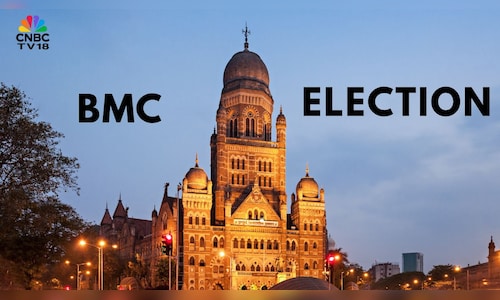
The stakes are significant. The victor will manage Mumbai’s extensive civic budget, estimated at around ₹90,000 crore. Nevertheless, fundamental civic concerns such as monsoon flooding, pothole-filled roads, traffic jams, insufficient green spaces, and deteriorating air quality are largely absent from the discourse. Rather, promises of incentives like cash support for women workers and free electricity dominate the agenda.
As election day approaches, Mumbai’s civic future hangs in the balance; however, the emphasis remains more on political maneuvering than practical solutions.
Watch video for more
Also Read | ‘Marathi manoos’ will be powerless if BJP controls civic bodies, warns Raj Thackeray