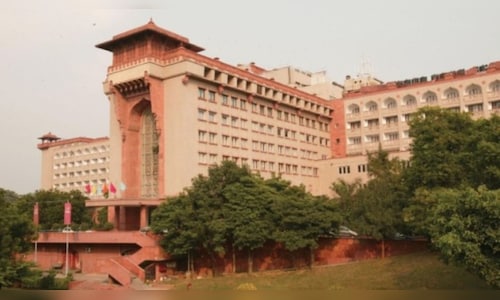
Out of this amount, ₹820 crore has been allocated for The Ashok Hotel and ₹380 crore for Hotel Samrat.
According to year-wise projections, the award for redeveloping The Ashok is scheduled for FY27, while the Hotel Samrat redevelopment is anticipated to commence in FY30, indicating a staggered rollout within the five-year NMP 2.0 timeline.
Due to its larger scale, the government has indicated that The Ashok project will be initiated in the first phase of the tourism monetisation programme, while Hotel Samrat will be addressed later in the cycle.
The redevelopment will focus on upgrading infrastructure along with the operations and management of the properties.
Monetisation will primarily occur through the public-private partnership (PPP) model under the Operations, Management and Development Agreement (OMDA), involving private entities investing in modernization and assuming operational roles.
Also read: National Monetisation Pipeline 2.0: How India aims to monetise ₹16.72 lakh crore via GAIL, Coal India, AAI
The Ashok Hotel is a five-star deluxe establishment situated in the Diplomatic Enclave of Chanakyapuri, New Delhi. It is owned and operated by the India Tourism Development Corporation (ITDC), which is a central public sector undertaking under the Ministry of Tourism.
Opened in 1956 to accommodate foreign dignitaries and significant international events, the hotel enjoys a prime location near several foreign missions and key government residences.
Hotel Samrat, also managed by ITDC, is positioned in central New Delhi.
In contrast to The Ashok, which has undergone several attempts at long-term leasing or privatisation, Samrat has remained largely under governmental oversight due to its closeness to sensitive establishments.
ITDC, established in 1966, manages both hotels as part of its extensive hospitality portfolio throughout India.
The redevelopment is part of the wider NMP 2.0 initiative, where the government aims to monetise ₹16.72 trillion worth of public assets from FY26 to FY30 to reinvest capital into new infrastructure projects.