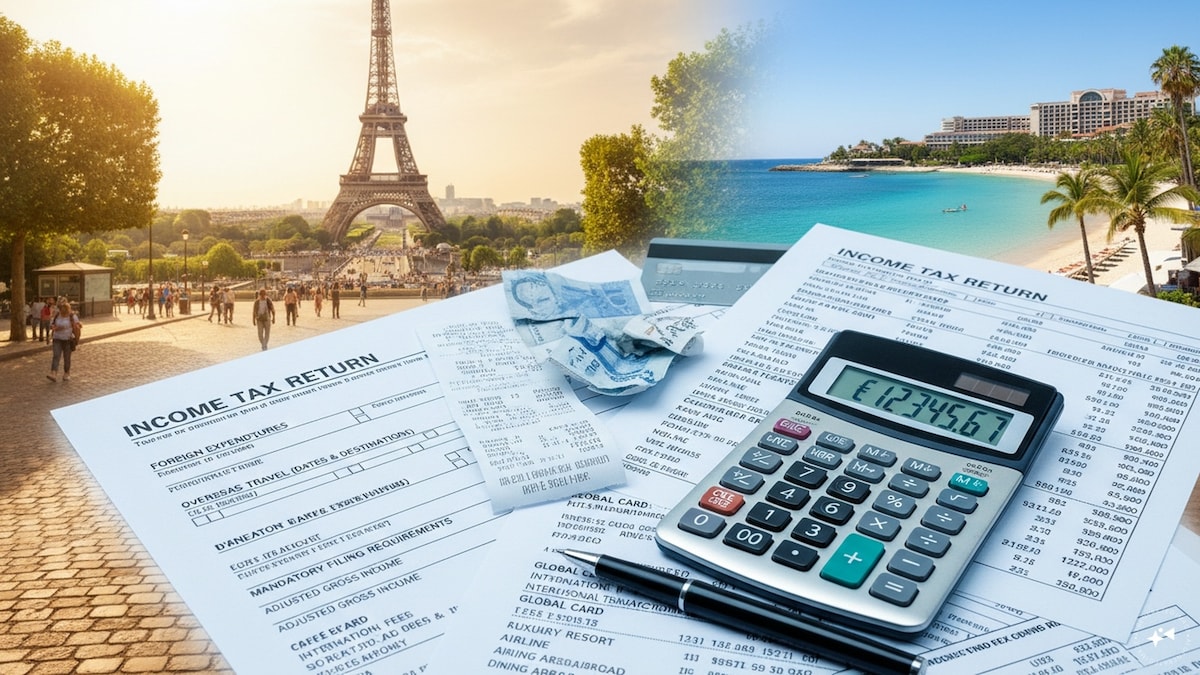
This regulation forms part of the government’s comprehensive strategy to oversee high-value transactions linked to PAN. As overseas travel becomes increasingly common among middle-income families, many taxpayers might inadvertently find themselves subject to mandatory return filing rules.
When does foreign travel necessitate ITR filing?
According to income tax regulations, an individual may need to file an ITR if their total foreign travel expenditures surpass ₹2 lakh in a financial year.
This requirement pertains to expenses rather than income. Thus, even if an individual’s earnings fall below the taxable limit, ITR filing could still be obligatory once the spending cap is exceeded.
The computation typically encompasses costs such as:
- Bookings for international flights
- Accommodation in foreign hotels
- Visa fees
- Costs for travel packages
- Expenses incurred on behalf of family members or others
This threshold applies on an annual aggregate basis. In real terms, a single family trip abroad can quickly surpass this limit.
Which ITR forms are relevant?
The reporting obligation is included in:
- ITR-1 (Sahaj) — typically utilized by salaried residents earning up to ₹50 lakh.
- ITR-4 (Sugam) — pertinent for eligible individuals, HUFs, and small businesses choosing presumptive taxation.
These forms request information related to foreign travel spending above the established threshold and may also seek passport-related details.
How TCS affects overseas tour packages
Another significant aspect associated with foreign travel is Tax Collected at Source (TCS).
When purchasing an overseas tour package from an Indian seller or tour operator, TCS is collected at the time of payment and recorded against the buyer’s PAN.
This collected amount does not serve as a separate final tax. Instead, it acts as an advance tax credit that can be adjusted when filing the income tax return.
If the overall tax liability is less than the TCS collected, the surplus can be claimed as a refund through the ITR process.
Why are these transactions increasingly important?
Transactions related to foreign travel are detectable by tax authorities via systems such as:
- Annual Information Statement (AIS)
- Form 26AS
- PAN-linked financial reporting systems
Due to the digital capture of these records, high-value travel expenditures may already be accessible to the Income Tax Department, even if a taxpayer has not voluntarily disclosed them.
Tax professionals suggest this is one reason individuals should meticulously review their AIS and tax documents before determining the necessity of filing a return.
Is this applicable only to leisure travel?
The emphasis is on the spent amount rather than the travel purpose.
What about domestic vacations?
Travel within India is governed by different tax regulations.
Eligible salaried employees can still avail tax benefits through Leave Travel Allowance (LTA) for domestic trips, subject to specific conditions. However, this exemption generally covers travel fares and does not include hotel accommodations, meals, entertainment, or sightseeing expenses.