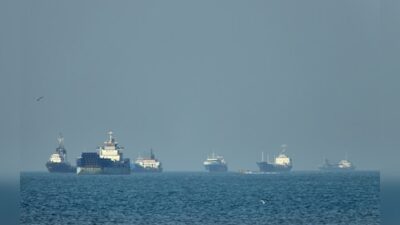
The ship, operated by Oceanwide Expeditions, commenced its journey from Ushuaia, Argentina, on April 1 and arrived at Spain’s Canary Islands on Sunday after the outbreak was identified. There were approximately 150 people on the vessel, including the two Indian crew members.
The Indian mission noted that passengers disembarked following protocols established by the World Health Organisation (WHO) and Spanish authorities.
“As stated by the Spanish National Centre for Emergency Monitoring and Coordination (CENEM), the two Indian crew members have been evacuated to the Netherlands, where they will undergo quarantine in accordance with relevant health safety regulations,” the embassy reported in a social media statement.
The embassy also mentioned that Indian Ambassador to Spain Jayant N. Khobragade is in close communication with Spanish officials and the two Indian nationals to ensure their safety and well-being.
Three fatalities, five infections as countries initiate evacuation efforts
Three individuals have died since the outbreak was initially reported. According to AP, five passengers who disembarked earlier tested positive for hantavirus.
Passengers from more than 20 countries began to leave the ship after it anchored in Tenerife, part of Spain’s Canary Islands. Evacuation flights, arranged by several governments, continued through Sunday and are anticipated to extend into Monday.
WHO Director-General Tedros Adhanom Ghebreyesus mentioned that WHO experts are collaborating with Spain’s Health Ministry to evaluate the outbreak and coordinate charter flights with the Interior Ministry.
“Exterior Health confirms that all are asymptomatic,” Tedros stated following the commencement of the evacuation process.
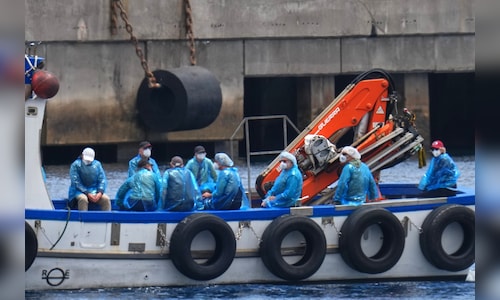
The operation included disinfection procedures and the use of personal protective equipment during the transfer of passengers. Video footage from Tenerife showed evacuees and port workers in protective suits, respirators, and face masks during the evacuation.
Spanish passengers were flown to Madrid and taken to a military hospital. French passengers arriving in Paris were met by emergency vehicles after one of the five evacuees showed symptoms during the flight. French authorities indicated that all five passengers were placed in strict isolation and scheduled for testing.
A Dutch evacuation flight carrying 26 individuals, including passengers from India, Germany, Argentina, Belgium, Greece, Portugal, Ukraine, Guatemala, the Philippines, and Montenegro, landed in Eindhoven on Sunday evening. Dutch officials stated that local health agencies would implement quarantine measures.
US asserts ‘This is not Covid’ as one American tests positive
The United States announced plans to repatriate 17 Americans from the MV Hondius. Acting CDC Director Jay Bhattacharya indicated that the passengers, who were initially asymptomatic, would undergo evaluation at the University of Nebraska Medical Center and may not necessarily face quarantine.
“We’re going to interview them and assess them for risk… if they have been in close contact with someone who was symptomatic,” Bhattacharya said during an interview on CNN’s “State of the Union.”
He emphasized the importance of remaining calm regarding the outbreak.
“This is not Covid,” Bhattacharya reiterated. “Panic is unwarranted given the current evidence.”
Later on Sunday, US health officials confirmed that one of the 17 American passengers had tested positive for hantavirus but was not exhibiting symptoms. Nebraska Medicine spokesperson Kayla Thomas noted that the passenger would be transferred to the Nebraska Biocontainment Unit, while the remaining passengers would be monitored at the National Quarantine Unit.
Bhattacharya explained that passengers would be observed for several weeks. He added that seven Americans who had disembarked earlier were already in the United States and were being monitored by health authorities.
The University of Nebraska Medical Center activated its specialized biocontainment facility in preparation for the arrivals. This facility had previously been utilized for Ebola and COVID-19 patients.
WHO indicates public risk is low, yet countries enhance monitoring
Tedros stated that the outbreak does not present a significant risk to the general public.
“This is not another COVID. The risk to the public is low. Therefore, there is no need for fear or panic,” he remarked.
WHO epidemiologist Maria van Kerkhove advised that countries receiving passengers should conduct daily health monitoring either at home or in specialized facilities.
“We leave it up to the countries to develop their own policies,” she mentioned. “However, our recommendations are unequivocal.”
Several nations have announced quarantine or observation protocols for returning passengers. British officials stated that evacuees would undergo 72 hours of hospital quarantine followed by six weeks of self-isolation. French authorities indicated that the five passengers evacuated to France would remain hospitalized “until further orders.”
Japan reported that one of its nationals arrived in Britain on a chartered evacuation flight and would be monitored by British authorities for up to 45 days. Australia also organized an evacuation flight for its citizens and passengers from adjacent countries.
Norway dispatched an ambulance aircraft equipped with personnel trained to transport patients with high-risk infections.
What is hantavirus and how does it spread?
Health officials indicated that hantavirus is primarily transmitted through contact with infected rodents or their saliva, urine, and droppings.
Individuals are usually infected after inhaling aerosolized virus particles in poorly ventilated environments, such as ships, barns, warehouses, and storage areas.
Authorities noted that the Andes strain linked to the outbreak may infrequently spread between humans. Symptoms typically manifest between one and eight weeks after exposure.
Spanish authorities stated that some crew members and the body of a deceased passenger would remain on the ship as it travels to Rotterdam in the Netherlands for disinfection. This journey is expected to take approximately five days.
Separately, British Army medics parachuted into the remote South Atlantic territory of Tristan da Cunha after identifying a resident who had previously traveled on the MV Hondius as a suspected hantavirus case.