The initiative, launched under the India-EU Trade and Technology Council (TTC) Working Group 2 focused on Green and Clean Energy Technologies, is co-financed by the EU’s Horizon Europe programme and India’s Ministry of Heavy Industries, as indicated in statements from the Office of the Principal Scientific Adviser and the Delegation of the European Union to India.
This coordinated call for proposals welcomes participation from companies, startups, small and medium enterprises, universities, and research institutions from both India and the EU, with submission deadlines set for September 15, 2026.
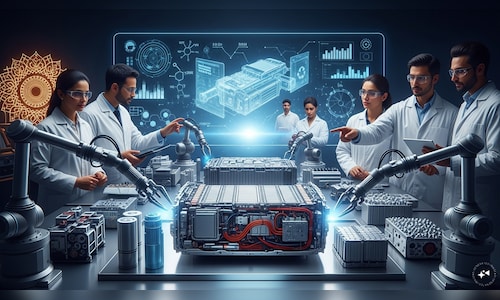
The programme aims to advance recycling technologies, improve high-efficiency material recovery systems, enhance digitalised collection and sorting infrastructure, and facilitate pilot-scale demonstrations of recycling processes.
Additionally, it will support the establishment of a joint EU-India pilot line in India for industrial-scale validation and deployment, as per the statements released.
As the adoption of electric vehicles accelerates, both India and the EU are paying closer attention to the recovery of essential materials like lithium, graphite, and cobalt to lessen their reliance on imported critical minerals.
“By 2030, India alone is expected to have 128 GWh of recyclable battery capacity,” according to the EU statement, highlighting that the collaboration aims to transform battery waste into a “virtual mine” by recovering high-purity materials for reuse in battery production.
The initiative will concentrate on lithium recovery, adaptable recycling systems for various battery chemistries, digitalised collection systems, logistics models that incorporate the informal sector, as well as diagnostics and safety monitoring technologies for second-life batteries.
EU Ambassador to India, Hervé Delphin, emphasized that batteries are “far too strategic to be discarded after a single use.”
“Our aim is to carry these innovations from development to practical deployment—an effort that signifies a direct investment in our mineral security and shared climate objectives,” Delphin stated.
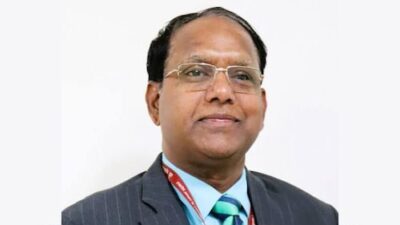
Ajay Kumar Sood, Principal Scientific Adviser to the Government of India, noted that this initiative would help establish a “robust domestic recycling ecosystem” as India’s electric vehicle market continues to grow.