
The CEO of Coforge, Sudhir Singh, indicated that the company’s EBITDA margin forecast for FY27, expected to range from 20.5% to 21%, might even be exceeded due to automation, stricter control over operational costs, and productivity improvements across various functions.
Despite worries related to global economic uncertainty and geopolitical issues, the firm remains confident about growth in crucial sectors such as banking and travel.
Coforge expects sustained interest in airport modernization, digital transformation, and AI-ready data infrastructure to continue propelling business momentum. The company is also focused on enhancing free cash flow and accelerating growth in the forthcoming years.
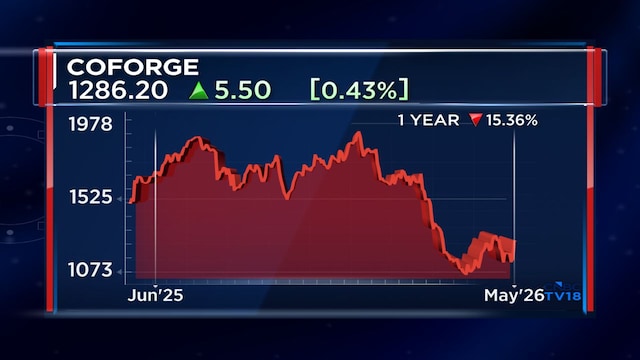
In the January–March quarter (Q4FY26), Coforge posted revenues of ₹4,450 crore, an EBIT margin of 16.6%, and a profit after tax amounting to ₹612.3 crore.
These excerpts have been edited from the interview.Q: You are guiding for margins of 20.5% to 21% next year, which indicates an approximate 200 basis points margin expansion. You’ve mentioned factors such as Encora synergies and cost reductions; how much of that expansion is attributable to AI, including internal AI use and better pricing due to AI?
A: The majority is driven by AI interventions and automation throughout our operational functions. One of the significant achievements over the past year has been our commitment to becoming ‘client zero’ in implementing automation and AI-driven integrations within our organization. When we provided guidance of a more than 200 basis points increase during the investor call, we are confident that we will achieve that target.
Q: You’re indicating that most of the margin improvement stems from AI factors within that 200 basis points?
A: To clarify, AI-based interventions in our internal processes mean we’ve committed to maintaining our absolute G&A costs as they are, despite the considerable expected growth in revenue.
Q: Is the future direction set in that manner? Can these AI foundational models really transform IT services, and do we have a playbook for it, or is it still evolving?
A: Changes will occur within the LLM sets and tools, but the framework for service and integration layers is well established. For teams that traditionally relied on labor, growth will become increasingly difficult, while the expanding value pool lies in AI-native process redesign and the creation of delivery models with domain-enabled agents, enabling enterprises to create AI-ready data pipelines.
Again, to your immediate question, the framework for service firms in the integration and solution construction layers is set. While changes and advancements in foundational models will continue, the path is clear.
Q: You mentioned plans to keep G&A costs steady as the company grows rapidly. What does that imply for your staffing strategy, particularly if AI is enhancing both productivity and cost efficiencies? Do you foresee a structural uptrend in margins? While I’m not asking for FY28 margin guidance, just the trend based on your FY27 outlook?
A: The short answer is yes. If we truly believe in the technology we promote for enterprises, then we must become our own client zero. The margin guidance for 20.5% to 21% EBITDA for FY27 is conservative, and I believe we can exceed that in FY28.
Q: Regarding free cash flow, you previously raised your guidance to aim for 70% to 80% of free cash flow as a percentage of PAT; now, it has been increased to 100%. What prompted this revision?
A: We are building on what we achieved in Q4, where our normalized free cash flow to PAT ratio hit 150%. The forward-looking guidance of 100% is the minimum expectation. Over the last 12 months, we’ve effectively integrated large-scale AI interventions into our operations and meticulously adjusted our cost structure to ensure that the free cash flow to profit after tax ratio continues to improve. Aiming for 100% is our absolute target moving forward.
Q: In relation to travel and BFS, since travel is a significant sector for you, it was a major contributor to your growth last year. However, concerns about the Middle East crisis have arisen. Have any clients paused projects or reconsidered their expansion plans? Regarding BFS, it was the only major sector to decline in the previous quarter; can you provide insights regarding this decline and the growth outlook?
A: In FY26, Coforge’s travel segment grew by over 70%, while banking experienced more than 12% growth. Given the long-term benefits from the sector’s ongoing transformation and retail redesigns at airports, travel is likely to remain one of our fastest-growing sectors in FY27 as well.
Banking is expected to outperform the 12% growth recorded in FY26.
Q: We’ve been pushing for years regarding an annualized run rate of $1.5 billion to $2 billion; now you are close to $2.5 billion with Encora included. When do you expect to reach around $3 billion? A recent Nomura note mentioned a $3 billion target for FY28; is that your aim as well?
A: We anticipate reaching that milestone soon. Over the last nine years, we’ve maintained a CAGR over 21%, with our PAT growing at over 24%. This track record is unmatched within the IT services industry in recent years. I agree—it’s time to fulfill that goal. Hopefully, by this time next year, we will be discussing our crossing of the $3 billion threshold.
For the complete interview, watch the accompanying video

Follow our live blog for more updates on Q4 results